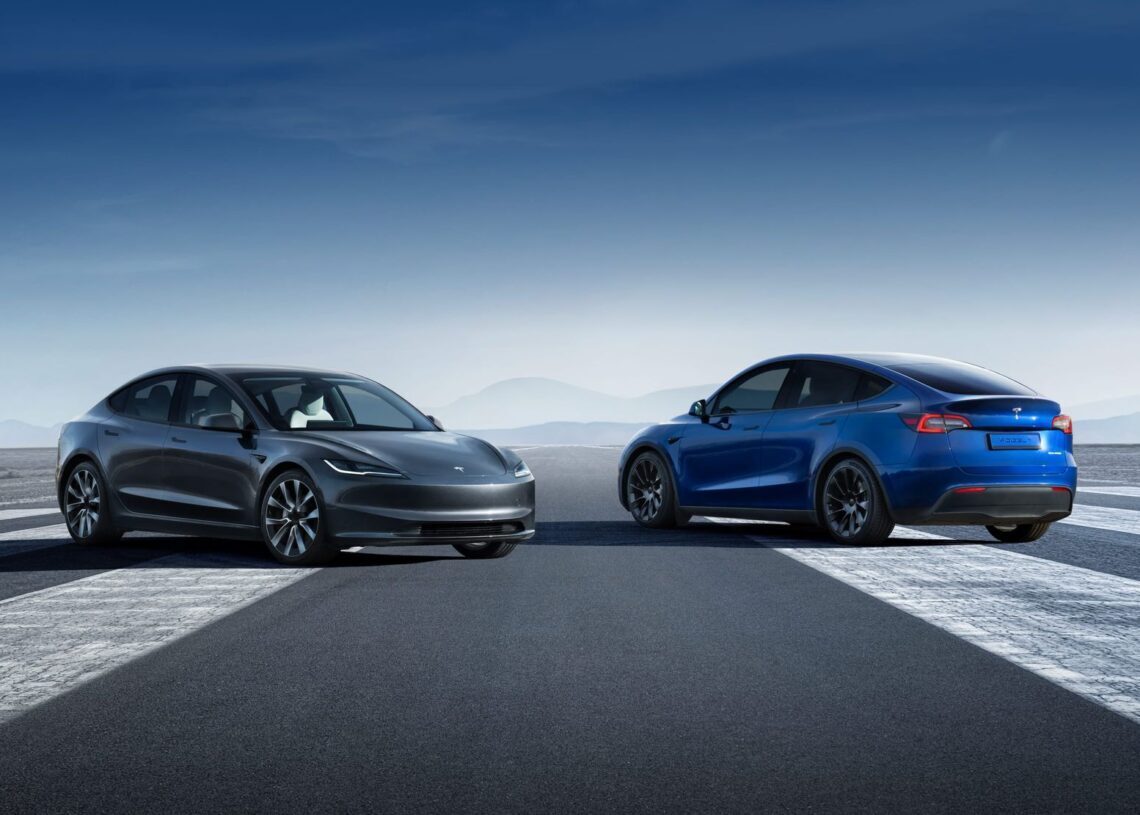

According to a recent study by iSeeCars, Tesla vehicles have the highest fatal accident rate among all car brands in the U.S. The report analyzed fatal collisions involving 2018 to 2022 models, focusing on data from 2017 to 2022. The Tesla Model S and Model Y ranked among the most dangerous vehicles by occupant fatality rate, challenging the company’s claims of being the “safest cars on the road.”
The study reveals that Tesla’s vehicles had a fatal crash rate of 5.6 deaths per billion miles driven, which surpasses Kia’s rate of 5.5 and Buick’s at 4.8. This starkly contrasts with the average fatal crash rate for all vehicles in the U.S., which stands at 2.8 per billion miles. The Model S had a fatal accident rate 3.7 times higher than the average car and 4.8 times higher than the average SUV, with its fatality rate recorded at 5.8 per billion miles driven. The Model Y, in particular, reported a staggering fatal crash rate of 10.6, nearly four times the national average.
Tesla models lead in fatal accident rates despite safety claims
Karl Brauer, an executive analyst with iSeeCars, indicated that while new car models are generally safer, driver behavior and road conditions play a critical role in the observed accident rates. He suggested that “a focused, alert driver, traveling at a legal or prudent speed, without being under the influence of drugs or alcohol, is the most likely to arrive safely regardless of the vehicle they’re driving.” The study reflects that many cars still face elevated accident rates despite receiving high safety ratings, indicating a broader issue within driver vigilance and behavior.

| Rank | Model | Fatal accident rate (Cars per billion vehicle miles) | Compared to overall average |
|---|---|---|---|
| 1 | Hyundai Venue | 13.9 | 4.9x |
| 2 | Chevrolet Corvette | 13.6 | 4.8x |
| 3 | Mitsubishi Mirage | 13.6 | 4.8x |
| 4 | Porsche 911 | 13.2 | 4.6x |
| 5 | Honda CR-V Hybrid | 13.2 | 4.6x |
| 6 | Tesla Model Y | 10.6 | 3.7x |
| 7 | Mitsubishi Mirage G4 | 10.1 | 3.6x |
| 8 | Buick Encore GX | 9.8 | 3.4x |
| 9 | Kia Forte | 8.1 | 2.9x |
| 10 | Buick Envision | 8.0 | 2.8x |
| 11 | Kia Soul | 7.3 | 2.6x |
| 12 | Toyota Corolla Hybrid | 7.3 | 2.6x |
| 13 | Chevrolet Camaro | 7.3 | 2.6x |
| 14 | Nissan Versa | 7.2 | 2.5x |
| 15 | Kia K5 | 7.1 | 2.5x |
| 16 | Kia Seltos | 6.8 | 2.4x |
| 17 | Ford Bronco | 6.6 | 2.3x |
| 18 | Ford Bronco Sport | 6.2 | 2.2x |
| 19 | Dodge Charger | 6.1 | 2.1x |
| 20 | Toyota Prius | 5.9 | 2.1x |
| 21 | Tesla Model S | 5.8 | 2.0x |
| 22 | INFINITI Q50 | 5.8 | 2.0x |
| 23 | Toyota Venza | 5.6 | 2.0x |
Despite Tesla’s advanced driver-assist systems, including Autopilot and Full-Self Driving (FSD), concerns persist regarding their effectiveness. The investigation did not factor in these systems, which some critics argue may contribute to driver complacency. Reports have indicated that the National Highway Traffic Safety Administration (NHTSA) and the Department of Justice are looking into whether Tesla misled customers about the capabilities of these technologies. Tesla hasn’t responded directly to these findings but continues to promote its vehicles as paragons of safety.
Adding to the context, the iSeeCars study also noted that although the Tesla Model S and Model Y achieved excellent safety ratings from agencies like the NHTSA, the data reflects a troubling trend regarding fatal accidents. The findings coincide with ongoing investigations surrounding Tesla’s autonomous features, particularly cases where these systems have been engaged during crashes. Critics contend that overestimating these technologies might lead drivers to disengage from attentive driving, paving the way for accidents.
The fatal accident findings come amidst promises from CEO Elon Musk regarding a more advanced version of FSD, which he asserts will operate autonomously without human oversight. Musk’s recurring claims hint at an ongoing push within Tesla to innovate, yet they raise questions on the balance between advancement and safety. The company aims to produce an autonomous “Robotaxi” by 2027, yet skepticism persists regarding the practical safety of fully self-driving cars in real-world conditions.
Image credit: Tesla