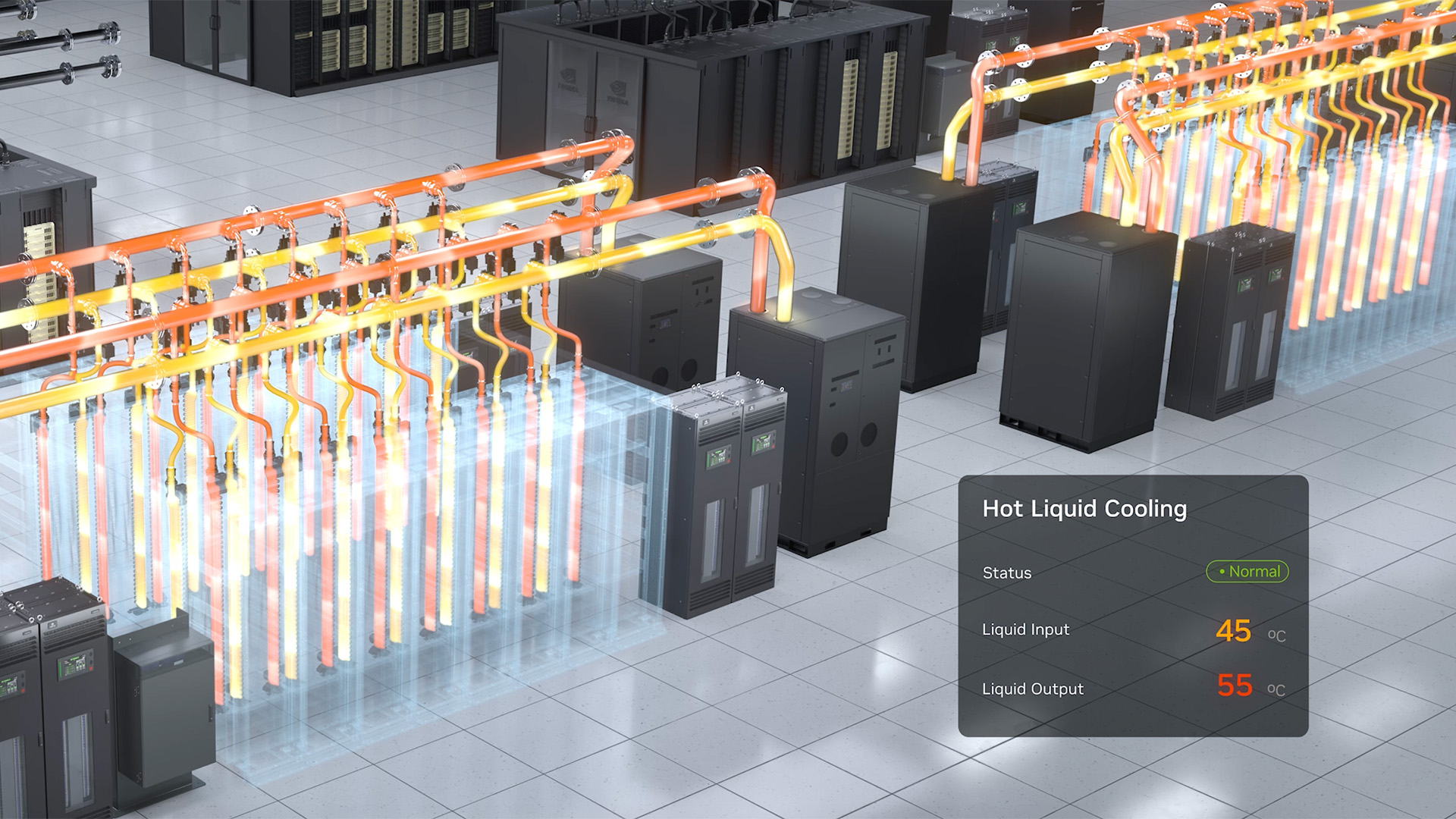

NVIDIA’s latest AI servers are utilizing a liquid cooling system that operates at temperatures up to 45 degrees Celsius (113 degrees Fahrenheit), marking a significant shift in data center cooling technology. This approach replaces traditional air cooling methods, which require substantial energy and noisy equipment like fans and chillers, with outdoor dry coolers that naturally dissipate heat.
Historically, cooling accounted for up to 40% of a data center’s electricity costs. Estimates indicate that elevating chiller temperatures by just one degree can reduce cooling energy expenses by approximately 4%. For a 50-megawatt facility, such a temperature adjustment could lead to annual savings of around $4 million, according to industry estimates.
Additionally, conventional cooling systems consume around 2.6 million gallons of water per megawatt each year. In contrast, NVIDIA’s system is expected to decrease water usage to nearly zero by eliminating the need for evaporative cooling and water towers.



This transition to liquid cooling is not just cost-effective but also environmentally beneficial, as it represents a complete overhaul of traditional data center cooling systems. NVIDIA’s Rubin generation infrastructure operates without mechanical chillers, depending on geographical conditions to effectively manage heat rejection.
The coolant in NVIDIA’s processors enters at 45 degrees Celsius and exits at about 55 degrees Celsius after absorbing heat, maintaining full operational performance. This design significantly reduces noise pollution in data centers by eliminating the need for cooling fans, allowing for quieter server operations. Previously, systems requiring six rack units now fit into just two, making them more space-efficient.
NVIDIA’s new architecture aims to alleviate several common issues in data centers, including high energy consumption, excessive water usage, noise pollution, and land use. While this solution may not immediately improve existing facilities, it has the potential to influence future data center designs.