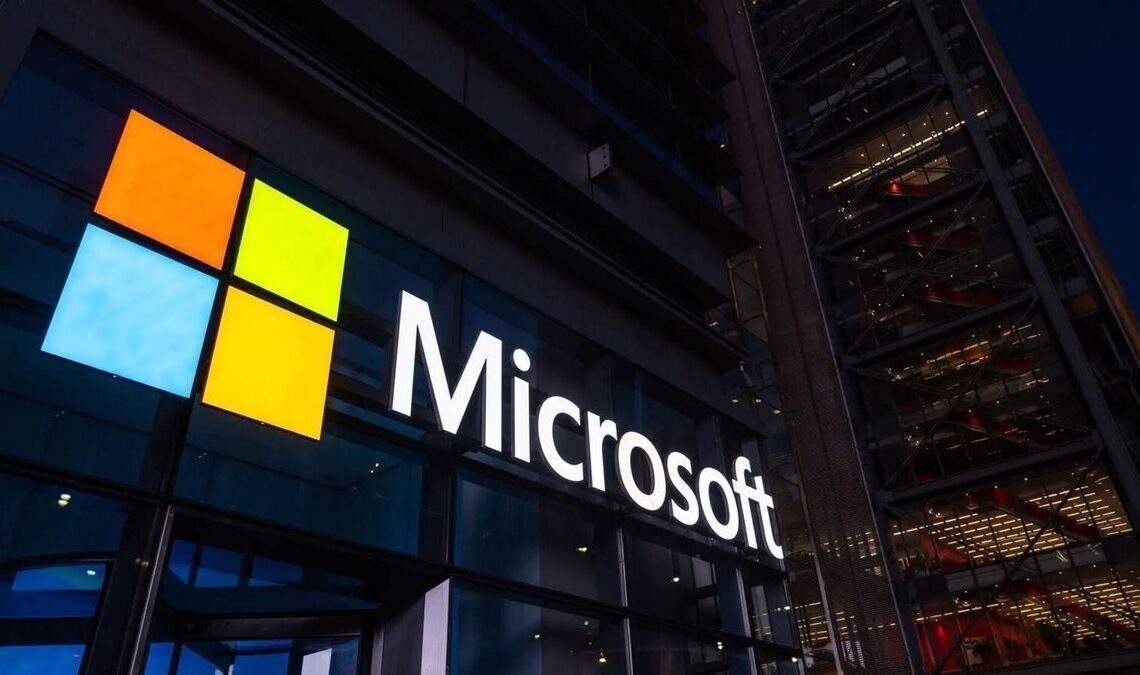

Microsoft has initiated public testing of its proprietary AI language model, MAI-1-preview, signaling a move to decrease its dependence on OpenAI. The model is currently accessible for evaluation on the LMArena platform, a website dedicated to AI model benchmarking. According to Microsoft, MAI-1-preview will be progressively integrated into select Copilot text features in the coming weeks, allowing the company to gather user feedback and refine the model’s performance.
Developers interested in exploring MAI-1-preview can request early access via an online application form. Preliminary assessments on LMArena placed MAI-1-preview in the 13th position for text-based tasks, trailing behind models developed by OpenAI, Google, Anthropic, and xAI. Microsoft has disclosed that the model’s training involved approximately 15,000 Nvidia H100 GPUs, supplemented by a cluster of Nvidia GB200 chips.
The development of MAI-1-preview highlights the evolving dynamics between strategic partners in the rapidly advancing tech landscape. Microsoft’s relationship with OpenAI began in 2019 with a $1 billion investment, establishing Microsoft as OpenAI’s exclusive cloud provider through Azure. However, the relationship has transformed significantly. Microsoft’s total investment in OpenAI has now exceeded $13 billion, but the company is also actively developing its own AI models, effectively positioning OpenAI as a competitor.


OpenAI’s exponential growth, now valued at $500 billion with ChatGPT boasting 700 million weekly users, has shifted the company’s role from a collaborative research partner to a potential challenger to Microsoft’s AI dominance. This competitive environment is reflected in OpenAI’s decision to diversify its cloud infrastructure, now utilizing services from CoreWeave, Google, and Oracle, in addition to Microsoft’s Azure.
Microsoft’s strategy for developing MAI-1 model included key talent acquisitions. The company recruited Mustafa Suleyman from Inflection, an AI startup, along with several of his colleagues. Furthermore, Microsoft added approximately two dozen researchers from Google’s DeepMind in recent months. Suleyman’s experience, which includes co-founding DeepMind before its acquisition by Google in 2014 and leading Inflection as an OpenAI competitor, brings valuable AI leadership and industry connections to Microsoft.
This strategic hiring approach enables Microsoft to expedite the development of competitive AI technologies by integrating experienced teams rather than relying solely on internal expertise. The MAI-1-preview is described by Microsoft as its “first foundation model trained end to end in house,” indicating a strategic shift towards independent AI capabilities despite its substantial investment in OpenAI.