
Xbox is charting a course that increasingly blurs the lines between traditional gaming consoles and PC gaming, signaling a significant shift in its hardware strategy. This week, Xbox announced a strategic partnership with chipmaker AMD, aimed at delivering “cutting-edge graphics” to “future Xbox consoles.”
Xbox President Sarah Bond confirmed in a video posted to X that a new Xbox console is indeed on the horizon. While details were scarce, Bond revealed that the upcoming console will be powered by AMD silicon and will feature backward compatibility, allowing players to retain their existing game libraries. Significantly, Bond also stated that the next-generation Xbox console will not be “locked to a single store or tied to one device,” a characteristic that aligns it more closely with the open nature of PC gaming than a traditional closed-ecosystem console.
This strategic move is part of Microsoft’s broader “all-of-the-above” approach to Xbox and gaming, which encompasses cloud gaming, partnerships with other hardware manufacturers, and potentially even support for third-party devices. Rumors suggest that the successor to the Xbox Series X/S, the next-gen Xbox console, could arrive in 2027.



Expanding hardware ecosystem
Beyond the primary console, Microsoft is actively developing other hardware to expand the Xbox family, particularly in the realm of handheld gaming and virtual reality.
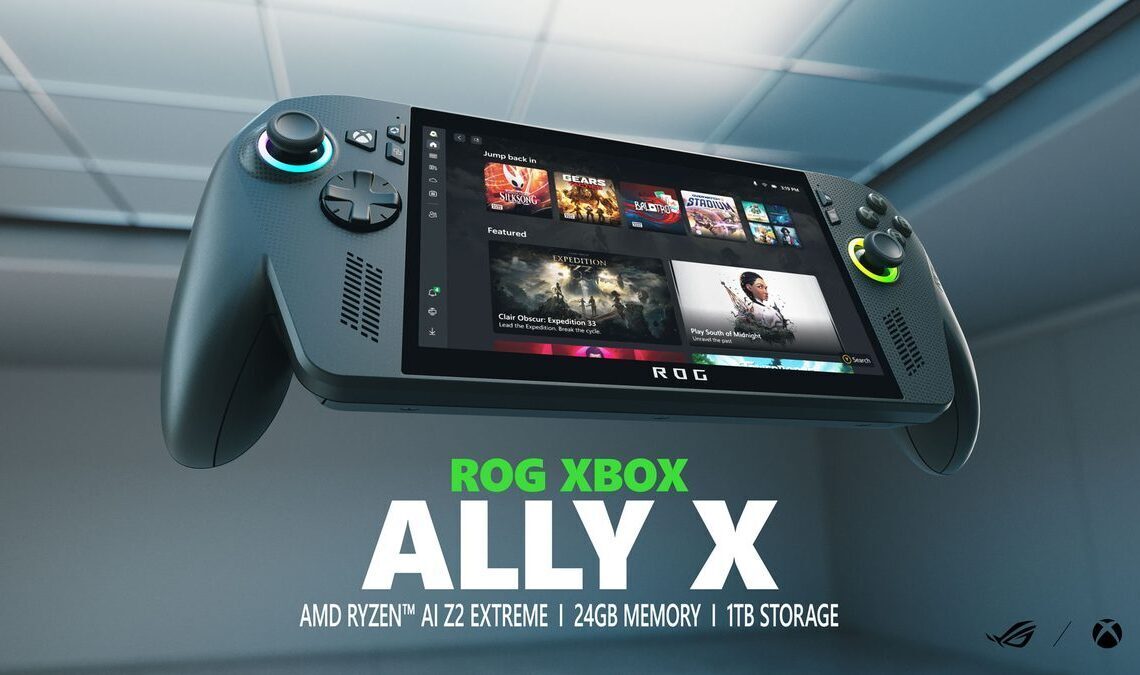
Microsoft has already confirmed the 2025 launch of two new handheld devices: the ROG Xbox Ally X and the ROG Xbox Ally. These handheld gaming consoles are the result of a collaboration with Asus, known for its ROG Ally devices. While Microsoft’s website currently indicates “Holiday 2025” for a potential release date, and offers an “Email When Available” option, some reports suggest that pre-orders could commence as early as August 2025.
Pricing details for these new handhelds have not been disclosed, possibly due to ongoing tariff-related uncertainties. These devices will enable gamers to play both PC games and their favorite Xbox titles on the go.
The ROG Xbox Ally X is set to come equipped with 24GB of RAM and 1TB of storage, offering robust performance and ample space for games. Its counterpart, the ROG Xbox Ally, will feature 16GB of RAM and 512GB of storage, providing a solid option for portable gaming.
Potential Xbox VR headset on the horizon
The landscape of Xbox hardware could also soon include a dedicated virtual reality headset. In 2024, Meta announced its intention to allow third parties to build devices utilizing the Quest 3 operating system. At that time, Meta CEO Mark Zuckerberg teased a potential partnership with Microsoft to develop an Xbox Meta Quest VR headset.
Further fueling speculation, Laptop Mag has reported that Xbox is poised to “build upon its partnership with Meta following Xbox Cloud Gaming’s arrival to Horizon OS by developing a limited edition Meta Quest headset.” While not officially confirmed, rumors point to a possible 2025 launch for a potential Xbox VR headset.
The cumulative effect of these announcements and rumors paints a clear picture: Microsoft is moving towards an ecosystem where Xbox experiences are accessible across a wider array of devices, not just a single console. The emphasis on an open platform, where the next-gen console isn’t “locked to a single store or tied to one device,” suggests a future where Xbox’s software and services are paramount, transcending traditional hardware boundaries.
The partnership with AMD for future consoles, the imminent launch of the ROG Xbox Ally handhelds in collaboration with Asus, and the strong indications of a dedicated Xbox VR headset built on Meta’s Quest 3 OS, all underscore Microsoft’s commitment to a more versatile and accessible gaming future. This multi-pronged approach allows Xbox to reach a broader audience, catering to different gaming preferences and styles, from high-fidelity console gaming to portable experiences and immersive virtual reality.