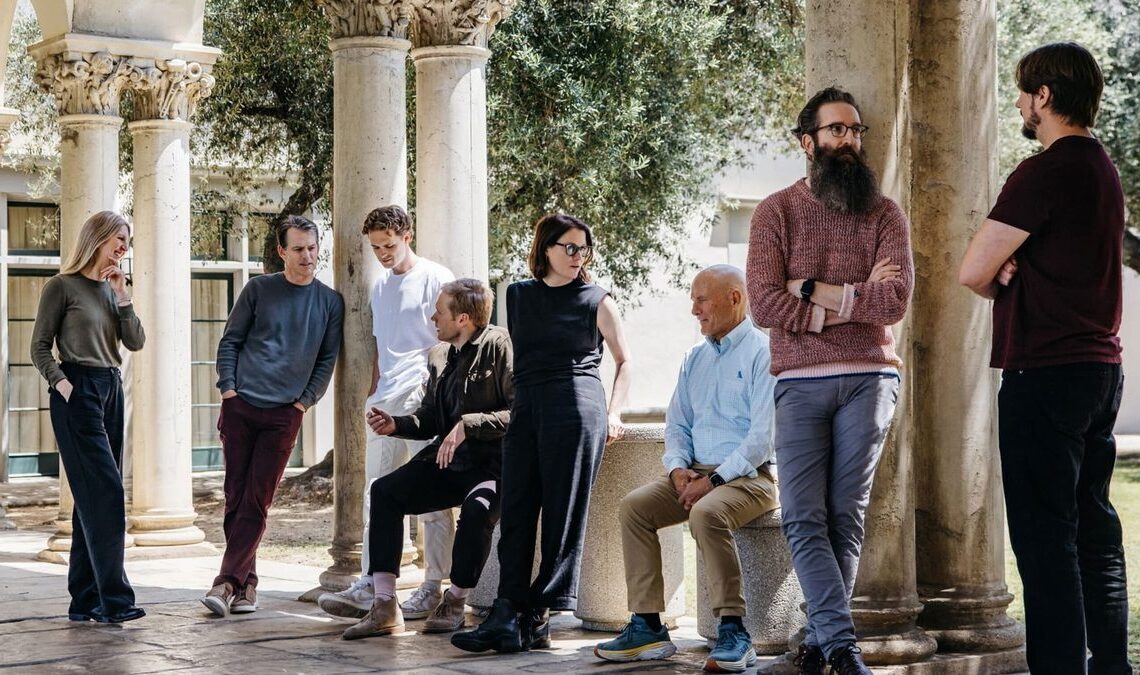

Andy Konwinski, a co-founder of both Databricks and Perplexity AI, has officially announced the establishment of the Laude Institute, a new AI research organization. This ambitious undertaking is being personally funded by Konwinski with an initial commitment of $100 million, underscoring his deep dedication to shaping the future of AI. Konwinski, a highly successful computer scientist and a driving force behind the open-source data processing platform Apache Spark, articulated his vision for the Laude Institute in a June 23 blog post, stating that its core mission is to champion AI research that holds the most potential for widespread, beneficial impacts on humanity. He described this endeavor as “the most personal project of my life, and it’s been a long time coming,” highlighting the profound personal investment he has in this initiative.
The Laude Institute has already begun to assemble a formidable team of experts, attracting a number of prominent AI researchers. Key hires include Chris Rytting, K. Tighe, Justin Fiedler, and Lindsey Gregory, bringing diverse expertise to the institute’s foundational efforts. The strategic direction of the institute will be guided by an esteemed board of directors, comprising luminaries in the field of artificial intelligence. This board includes individuals such as David Patterson, a recipient of the prestigious Turing Award, Jeff Dean, the Chief Scientist at Google DeepMind, and Joelle Pineau, who previously served as the head of AI research at Meta Platforms Inc. This collection of talent at both the research and governance levels signals the Laude Institute’s serious intent to become a leading force in responsible and impactful AI development.
To kickstart its research initiatives, the Laude Institute is launching with two distinct programs: Slingshots and Moonshots. The Slingshots program is designed to provide small, rapid-response grants to early-stage AI projects. This initiative operates in close collaboration with researchers from Stanford University, fostering a dynamic environment for nascent ideas to flourish. A notable early success of the Slingshots program is its backing of a new benchmark for AI agents specifically designed to automate business workflows. The significance of this benchmark was underscored when it was referenced by Anthropic Chief Executive Dario Amodei in May during the launch of their latest large language model, Claude 4, demonstrating the practical relevance and impact of the research supported by Slingshots.



The second initiative, Moonshots, represents a more expansive approach, aiming to provide substantially larger grants to AI research laboratories dedicated to tackling some of humanity’s most pressing and complex challenges. Konwinski has specified that the Moonshots program will strategically focus on projects addressing critical areas such as healthcare, workforce reskilling, scientific discovery, and civic discourse. The program is ambitious in its scope, with plans to award two seed grants of $250,000 in each of these designated categories, providing significant impetus for groundbreaking research in these vital sectors.
Beyond these two core initiatives, Konwinski emphasized that the Laude Institute will also make targeted investments in “foundational work” that promises to advance the broader computing industry. As an early demonstration of this commitment, the institute has already provided a substantial grant to the newly established AI Systems Lab at the University of California at Berkeley. This partnership is particularly significant, as the Laude Institute has pledged to provide $3 million annually to the Berkeley lab for a period of five years. The AI Systems Lab at UC Berkeley is projected to commence operations in 2027 and will be led by a cohort of prominent AI researchers and computer scientists. Notably, two of Konwinski’s co-founders from Databricks, Ion Stoica and Matei Zaharia, are slated to lead this new lab, further solidifying the strong ties between Konwinski’s past successes and his current philanthropic endeavors.
Konwinski articulated the overarching philosophy behind the Laude Institute, stating, “We exist to catalyze work that doesn’t just push the field forward but guides it towards more beneficial outcomes. We help get ideas out of the lab and into the world by giving the right resources to the right researchers at the right time.” This statement encapsulates the institute’s proactive approach to ensuring that AI development serves the greater good, facilitating the transition of theoretical research into tangible, real-world impact. His ultimate goal is straightforward yet profound: “For years, I’ve wanted to build something that would help more researchers take that journey from idea to impact. Our goal is simple: get more world-changing research into people’s hands.”
Konwinski’s impressive track record in the AI and tech industry lends considerable weight to the potential of the Laude Institute. Over a decade ago, he co-founded Databricks, a company that has since become a dominant force in the AI landscape. His involvement was pivotal in the development of Apache Spark, an open-source data processing platform that has evolved into a foundational technology for thousands of enterprises worldwide. Databricks’ success is evident in its remarkable valuation, which reached $62 billion earlier this year following a substantial $10 billion funding round. More recently, Konwinski extended his entrepreneurial reach by co-founding Perplexity AI, a generative AI search engine. Perplexity AI has rapidly gained prominence, achieving a $14 billion valuation and causing significant ripples within the search industry, including at Google LLC, a testament to its disruptive potential.
In addition to these ventures, Konwinski further expanded his influence in the tech ecosystem last year by establishing Laude Ventures. This venture capital firm operates as a “sister organization” to the Laude Institute, maintaining a focus on early-stage startups. While Laude Ventures is distinctly a commercial entity, the Laude Institute is characterized by its philanthropic mission, prioritizing the funding of projects that promise broad societal benefits rather than solely financial returns. This dual approach underscores Konwinski’s multifaceted commitment to both commercial innovation and the advancement of AI for the public good, positioning the Laude Institute as a significant new player in the global effort to develop artificial intelligence responsibly and for the betterment of humanity.