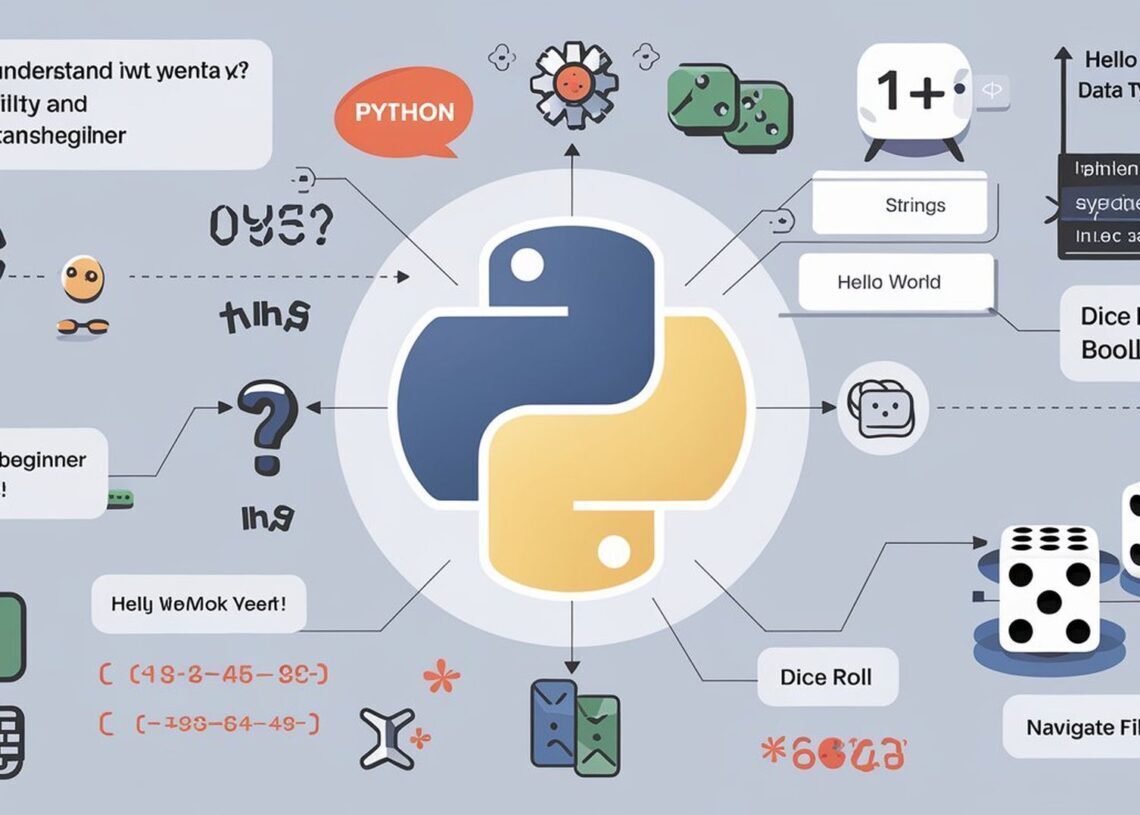

Many new learners latch onto Python because it aims to make coding accessible. Its easy syntax and versatility are no surprise. It’s ruling the roost as the go-to for beginners. You’ll have questions (even about a new skill) at the beginning, though. In this post, we will answer the five most common questions beginners ask about Python and break them down in a digestible way, even if you’ve never written a line of code before.
It’s not about Python’s syntax or features; it’s about how easy it is to learn. Python’s most frequently asked questions revolve around its core capabilities and how to get started, and it is a great language for the beginner looking to dip his or her toes in the coding water.
What is Python and why should you learn it?
The question, “What is Python?” leads every beginner’s inquiry. Python is a high-level programming language that makes computer processing tasks easier to program. If you can’t code, even if you never have or will, then glancing at the Python script will give you an idea of what it’s trying to do, however vague. It stands out on this account.



Python shines in several areas: doing something as simple as automating repetitive tasks, data analysis, and web development, to name a few. Python is used for more than creating simple applications like an expense tracker; it is crucial for data science. That’s why it’s an ideal tool for crunching numbers, manipulating data, and producing data visualizations. Libraries such as Pandas, NumPy, & Matplotlib are some of the libraries necessary for working with libraries on data, data crunching, and helping you create the best visualizations using your data. It’s not a straight beginner’s tool—it’s a serious powerhouse.
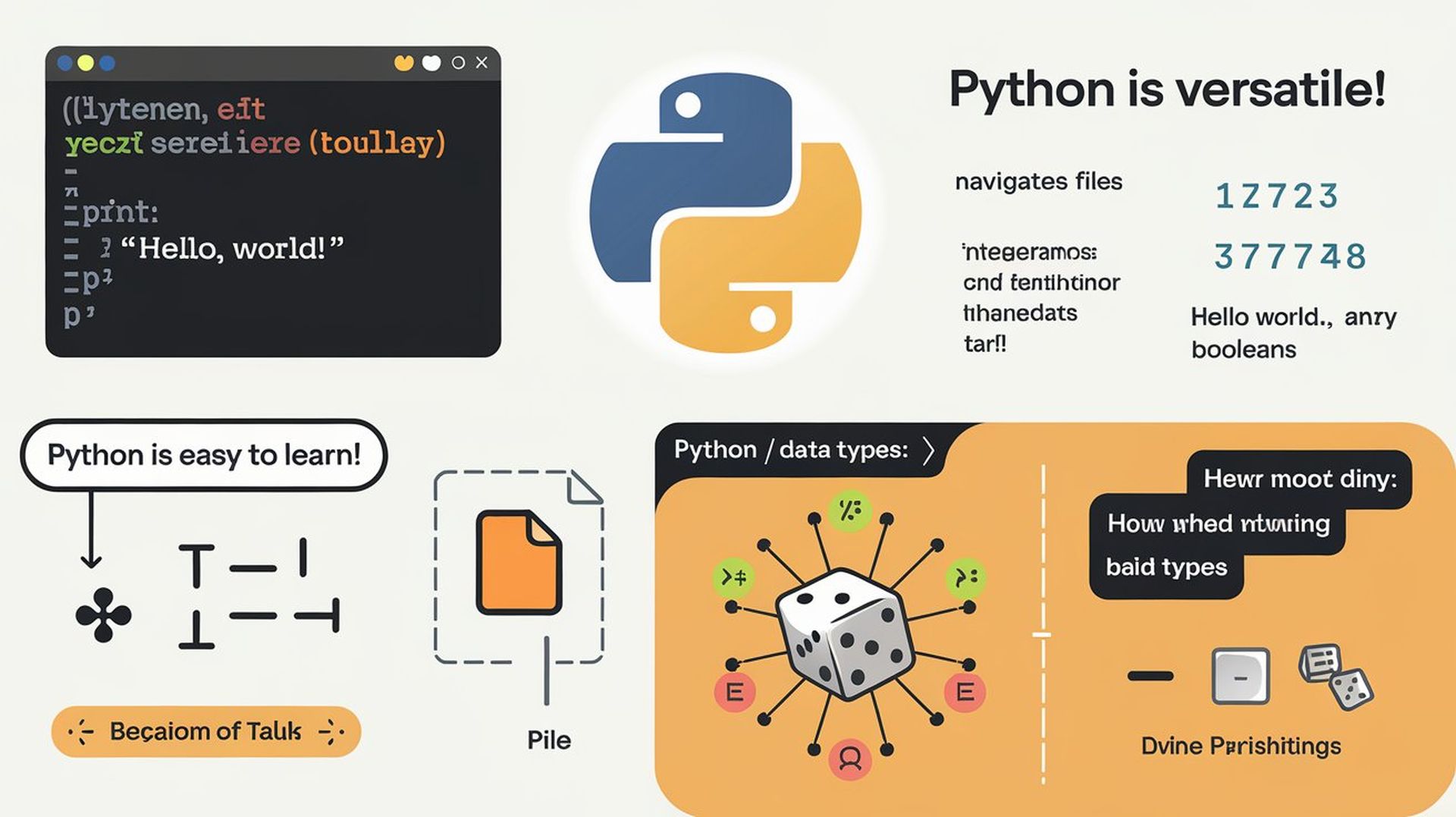
Python’s gentle learning curve is the perfect entry point for anyone who has ever found themselves in front of a computer without any idea of code. The main advantage is its easy-to-understand syntax for programming building blocks, and mastering Python is the key to learning other languages in the future.
What Are Python’s Basic Data Types?
Again, one of the key concepts to learn early on is data types, so this question is frequently asked. In Python, there are several fundamental data types that every beginner should get familiar with:
- int: For whole numbers (e.g., 7, -3).
- float: For decimal numbers (e.g., 3.7, 0.83).
- str: For text (e.g., “hello world”).
- bool: For True or False values.
Another important data structure allows you to store a collection of items in one location, such as a to-do list or the names of people. Learning about these types will give you an idea of how to work with information in Python.
However, in practice, coders combine these basic data types to construct more complicated structures in Python as they learn the language more deeply. For instance, you can extend lists to create more advanced applications such as quizzes or calculators. The first step to succeeding is to learn the basics without going further.
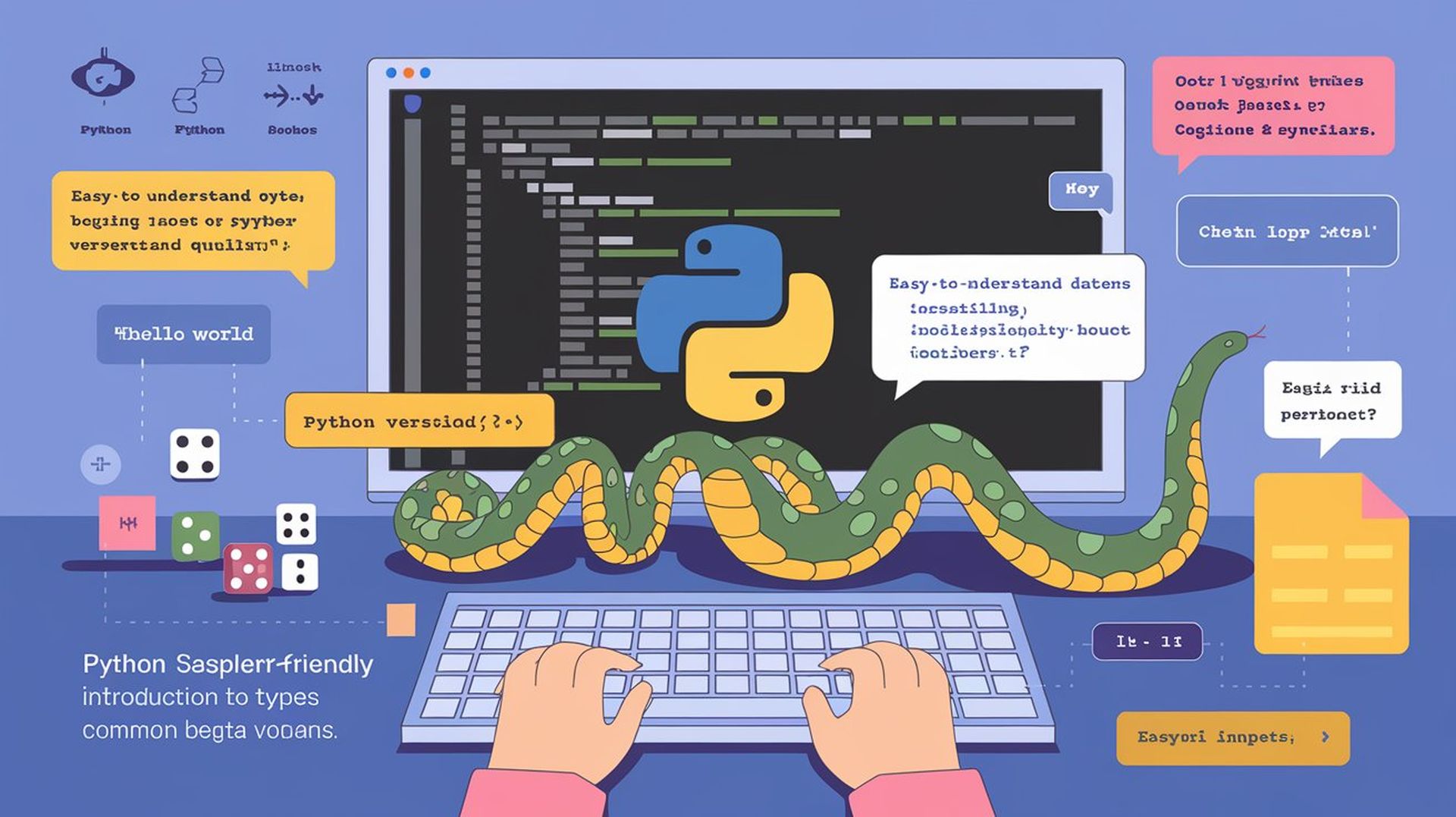
How do you start coding in Python?
For beginners, it’s one of the biggest hurdles: getting started. First, Python is installed on your system, and we need to try some simple programs to familiarize ourselves with this language. These “starter projects” help you understand the basics and build confidence. Some examples include:
- A “Hello World” program that prints a message to the screen.
- A basic calculator for adding, subtracting, multiplying, and dividing numbers.
- A number guessing game that challenges users to guess a random number generated by the program.
But these beginner projects are a foundation for more complex applications later. Presuming people have never done this before, starting small also answers many common questions beginners will have, such as how to structure programs and get past simple problems.
How do you simulate a dice roll in Python?
This is a fun question often asked by hobbyist programmers interested in game development. Python’s random module makes it easy to simulate a dice roll. Using the randint() function, you can generate random numbers that mimic a six-sided die. For example:
import random

roll = random.randint(1, 6)
This bit of code rolls a number between 1 and 6, just like a standard die. What’s even better? You can modify this to simulate dice with any number of sides, such as the twenty-sided dice used in role-playing games. With this foundation, you can easily create games or projects that rely on random outcomes.
How do you navigate the file system in Python?
Navigating files and directories can be daunting for new Python users who are used to pointing and clicking through graphical interfaces. However, in Python, the os module simplifies this process. Two key functions to know are:
os.getcwd(): Gets the current working directory (where your Python program is running).os.chdir(): Changes your current directory by clicking through folders.
Navigating the file system in Python allows us to manage data more effectively by storing it in our files, reading from it, and writing to it. File handling can be tricky for beginners, but it’s second nature once they understand how Python talks to the operating system.
If I were to start learning programming from scratch, I would recommend starting with Python. With answers to all these questions, beginners can learn more confidently. First, they must learn about basic data types and write simple programs. Finally, they need to be able to simulate dice rolls and work with files. The more you practice, the easier it becomes, and…
Image credits: Furkan Demirkaya/Ideogram