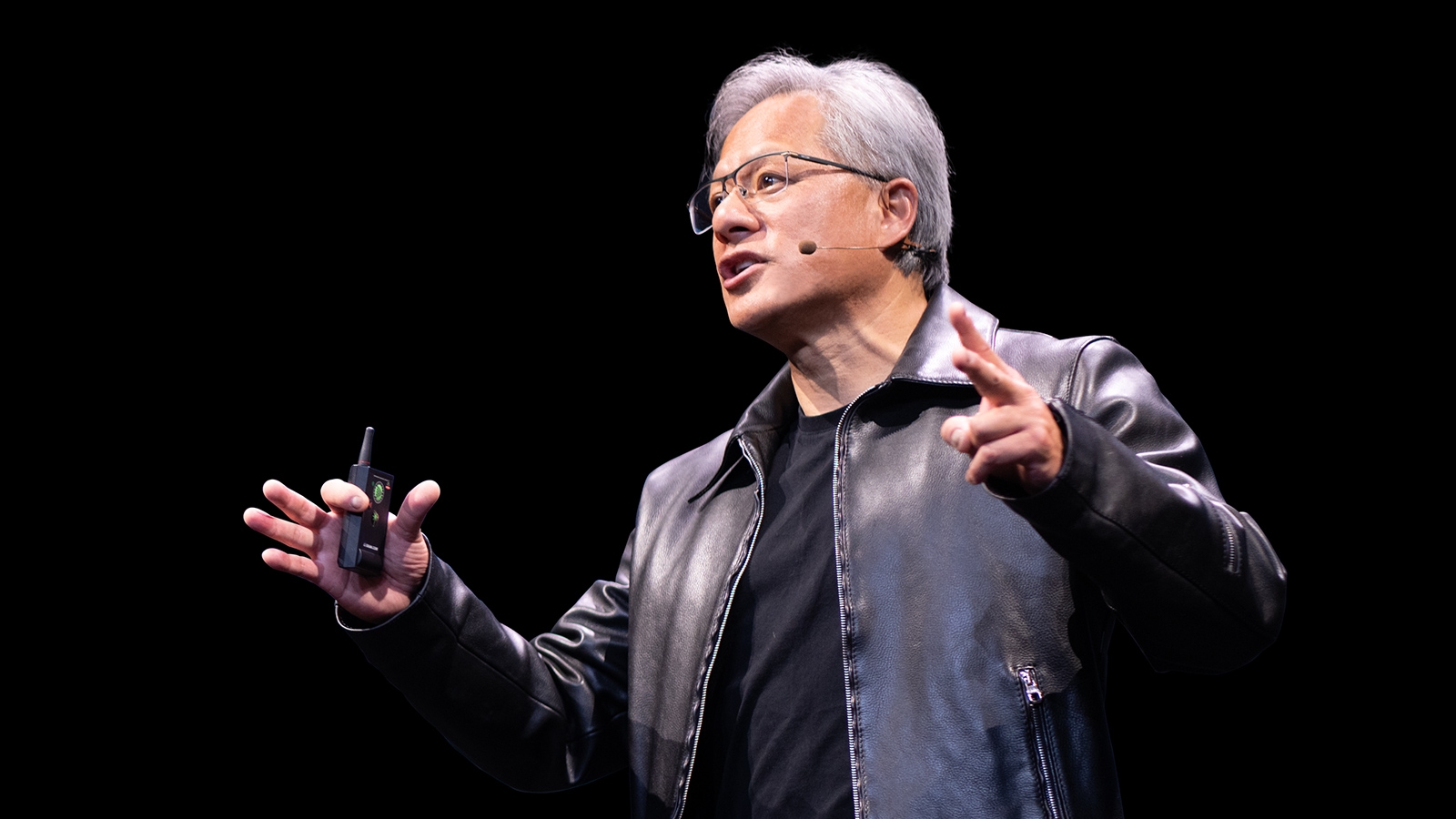

Nvidia Chief Executive Jensen Huang said the semiconductor boom has years left to run and that the chip industry must expand fivefold to tenfold over the next decade to meet demand for artificial intelligence infrastructure.
In an interview published on July 25, Huang told Axios co-founder Mike Allen that a bust in the chip sector is not likely soon. Asked whether the industry was due for a downturn, Huang replied, “No, not for a while.”
Huang said the current cycle differs from past bubbles because, in his view, it is being driven by a shift in computing technology rather than by temporary demand. “This time is different because this is not demand driven,” Huang said. “This is industrially driven, meaning the fundamental technology of computers is changing.”


He said the world needs a new layer of computing infrastructure dedicated to AI. Huang added that constraints in chips, power, land and construction labor were limiting supply and helping prevent the kind of overbuilding that often comes before a bust.
“We basically are constrained in every single direction, in every single way,” Huang said. “That constraint is what holds the system back.”
Huang said a bust would come eventually, but not in the near term. He has previously projected that global AI infrastructure investment could reach $3 trillion to $4 trillion a year by the end of the decade.
The interview followed Huang’s visit to Tokyo, where Nvidia announced partnerships with Fujitsu, Toyota, Fanuc, Kawasaki Heavy Industries and Kioxia to deploy what the company calls “physical AI” in robots and factory systems.
Huang said Japan’s manufacturing base made it a natural fit for that push. Nvidia also said it would build a Vera Rubin AI factory in Japan that is expected to deliver 140 megawatts of computing power by 2028.
Nvidia said its work with Fujitsu and other robotics companies is intended to combine Japan’s mechatronics expertise with Nvidia’s AI platforms for factories and autonomous robots.
Chip stocks have fallen in recent weeks amid doubts about the durability of heavy AI spending. Hyperscalers including Alphabet have posted negative free cash flow as they raise money in bond markets to fund infrastructure expansion, and Huang dismissed concerns about customers borrowing to buy Nvidia chips, saying the spending reflects a lasting change in computing rather than cyclical demand.