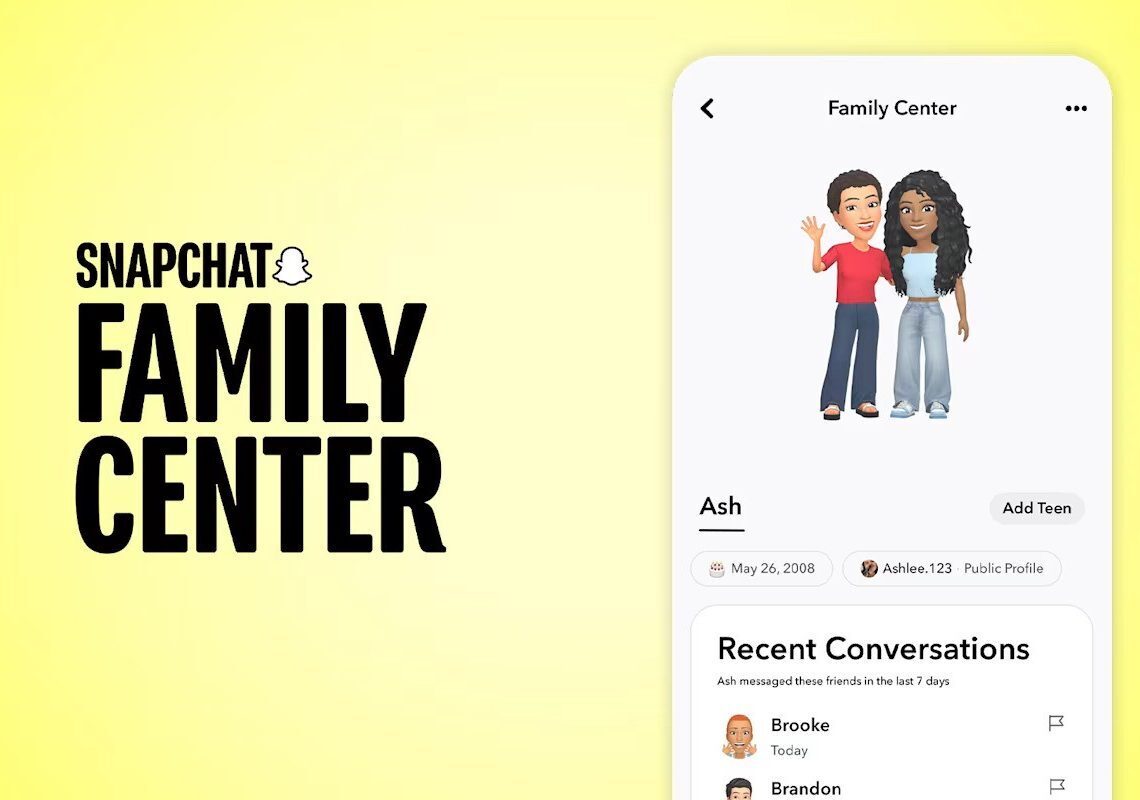

Snapchat has introduced new parental controls, two days after settling a lawsuit regarding social media addiction. Parents can now access the “Family Center” tool to monitor their teen’s screen time and recent friend additions.
This initiative likely addresses regulatory and parental concerns over platform safety and screen time. Parents can now view the average daily time their teen spent on Snapchat during the previous week. This includes usage breakdowns across chatting, snapping, camera use, Snap Map, and content consumption on Spotlight and Stories.
While parents could already view a teen’s full friend list, they can now ascertain how a new user is connected to their teen. This includes whether they share mutual friends, are saved as a contact, or belong to shared communities. Snap stated in a blog post that these “trust signals make it easier for parents to understand new connections and have greater confidence that their teen is chatting with someone they know in real life.” The company also indicated, “If a parent or guardian sees a new friend they aren’t familiar with, they have the information they need to start a productive conversation.”



Snap initially launched Family Center in 2022. This suite of parental monitoring tools emerged in response to regulatory pressure on social media companies regarding minor protection. Since its launch, Snap has integrated additional features, such as the ability to view recent interactions, set time restrictions, and block access to the app’s My AI chatbot.
The new features follow Snap’s recent settlement of a lawsuit filed by a 19-year-old, K.G.M., who claimed the company and other social media platforms designed algorithms and features contributing to addiction and mental health issues. Other platforms, including Meta, YouTube, and TikTok, are named in the lawsuit, but no settlements have been reached with these entities. Jury selection for the remaining case against Meta, TikTok, and YouTube is imminent.
Snap remains a defendant in other social media addiction cases. Documents from ongoing litigation reveal that Snap employees expressed concerns about mental health risks for teens as far back as nine years ago. The company has asserted that these examples were “cherry-picked” and taken out of context.