
Google has announced new features for NotebookLM, its AI-powered tool designed to assist with learning and studying. The updates, announced on Monday, include the ability to generate flashcards, quizzes, and more versatile reports, enhancing its utility for students and researchers.
NotebookLM differentiates itself from other AI tools by exclusively utilizing user-provided source material to answer questions and generate content. This focus makes it particularly suitable for academic tasks, allowing users to upload notes, lesson plans, or research papers for analysis and summarization.
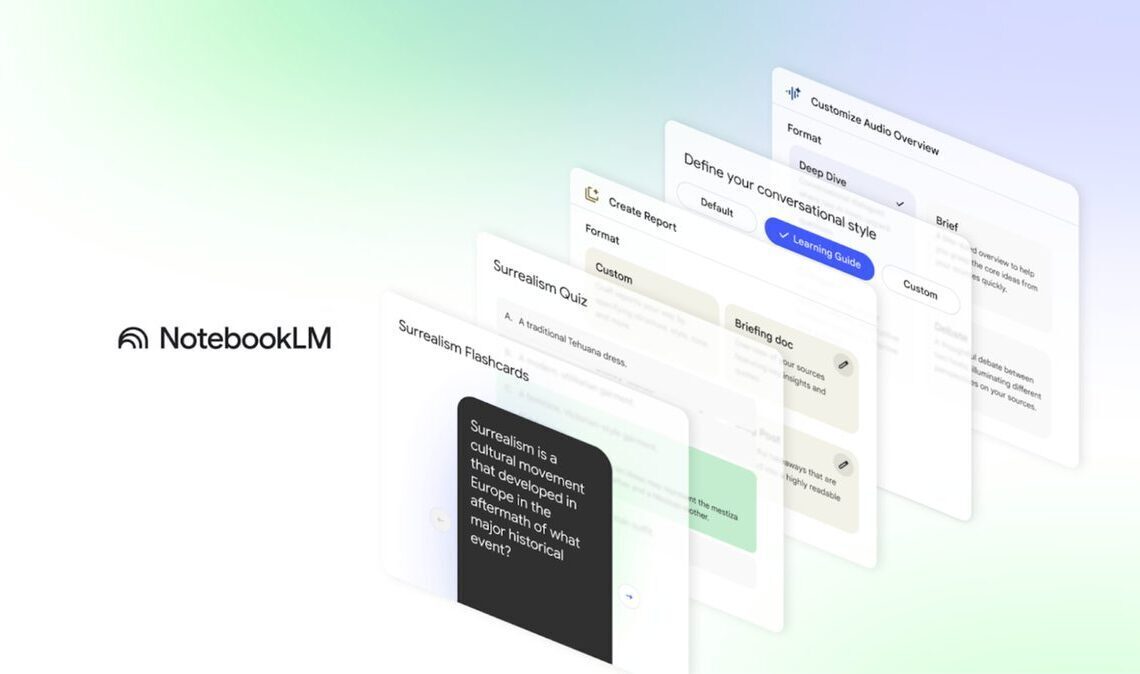
The new flashcard feature allows users to create customized study aids. Users can adjust the number of flashcards generated (fewer, standard, more) and the difficulty level of the questions (easy, medium, hard). The tool also enables users to focus on specific sections of the source material or shorten the prompts on the front of the cards for improved memorization.

The quiz generation feature enables users to test their knowledge on specific subjects. Similar to flashcards, users can customize the number of questions and the difficulty level. Upon completion, the tool provides a score and the option to review the quiz.
NotebookLM’s report generation capabilities have been upgraded to offer greater flexibility. Users can now create custom reports based on their own prompts, in addition to generating briefing documents, study guides, and blog posts. The “Reports” button in NotebookLM’s Studio tab now opens a new interface with a format section offering options such as “Create Your Own,” “Briefing Doc,” “Study Guide,” and “Blog Post.” The platform also offers four AI-generated formatting choices tailored to the user’s specific sources.
The Learning Guide feature, which allows users to interact with Gemini within NotebookLM, has also been enhanced. Users can now modify Gemini’s conversation style to options like “Analyst” or “Guide” and adjust the length of the responses.
Google has also partnered with OpenStax, a publisher of open educational resources, to add six new public Notebooks based on peer-reviewed academic books. These new additions expand the existing library of public Notebooks, which includes titles from various publishers, researchers, and non-profit organizations.