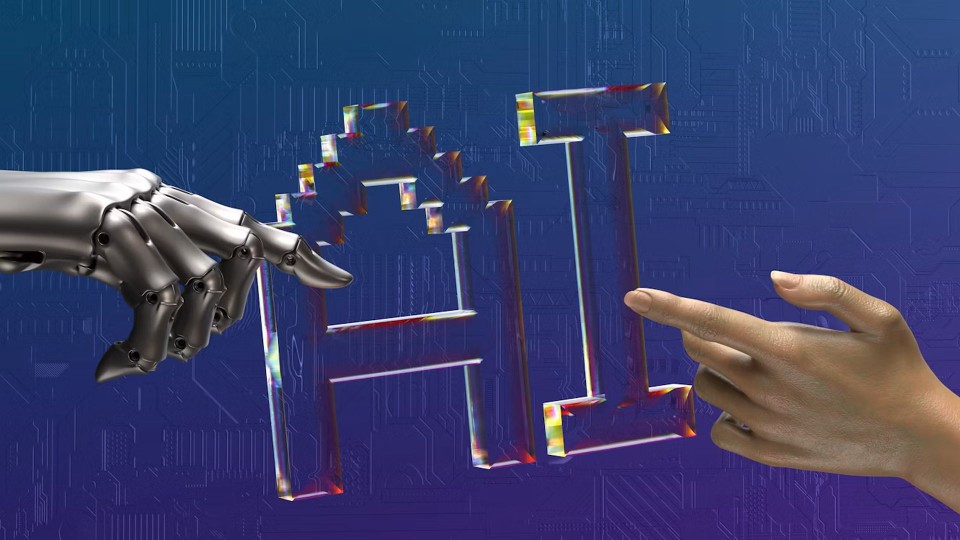

Artificial intelligence is evolving rapidly, moving beyond text-based applications to systems that can understand and process multiple forms of information simultaneously. Today’s leading AI models can interpret images, analyze speech, understand video content, and generate text responses within the same interaction. These capabilities are driving innovation across industries, from healthcare and autonomous vehicles to customer service and robotics. At the heart of this transformation is multimodal training data, which provides the foundation for AI systems to understand the world in a way that more closely resembles human perception.
Multimodal training data refers to datasets that combine multiple types of information, such as text, images, audio, video, and sensor data, to train AI models. Rather than learning from a single source of information, multimodal models learn to identify relationships between different data types. For example, an AI model might be trained using images paired with descriptive text, videos linked to transcripts, or medical scans accompanied by physician notes. These connections help AI systems develop a richer understanding of context, allowing them to perform more complex tasks and make more accurate decisions.
The growing importance of multimodal AI stems from its ability to process information in a way that more closely mirrors human cognition. Humans rarely rely on a single source of information when making decisions. We combine what we see, hear, read, and experience to build a complete picture of our environment. Multimodal AI aims to replicate this capability by integrating diverse data sources into a unified understanding. As a result, these models often achieve higher accuracy, stronger contextual awareness, and improved performance in real-world situations where information is rarely presented in a single format.


However, building effective multimodal AI systems is far more challenging than developing traditional machine learning models. The quality of the training data becomes even more critical because multiple data sources must be accurately connected and aligned. An image must correspond correctly to its caption, a video must match its transcript, and audio recordings must be synchronized with related annotations. Even small inconsistencies between modalities can reduce model performance and lead to unreliable outputs.
Creating high-quality multimodal training data also requires specialized annotation processes. Different data types demand different forms of labeling and validation. Images may require object identification and segmentation, audio files need transcription and speaker labeling, while videos often involve temporal annotations that track events across time. These tasks become even more complex when relationships between modalities must be verified and maintained throughout the dataset.
This complexity is one of the reasons why human expertise remains essential in the AI development process. While automated tools can accelerate data collection and preprocessing, they often struggle with nuance, ambiguity, and contextual understanding. Human annotators play a critical role in ensuring that multimodal datasets are accurately labeled, properly aligned, and representative of real-world scenarios. Their ability to recognize subtle relationships and identify edge cases helps improve the overall quality of training data and, ultimately, the performance of AI models.
The demand for multimodal training data continues to grow across industries. In healthcare, AI systems are increasingly trained on combinations of medical images, patient records, and clinical notes to support diagnostics and treatment planning. In the automotive sector, autonomous vehicles rely on camera feeds, radar, LiDAR, and sensor data working together to understand complex driving environments. Retail companies use multimodal AI to improve product discovery and personalization by analyzing product images, descriptions, and customer interactions. Even customer service platforms are adopting multimodal capabilities that allow AI assistants to process voice, text, and visual inputs simultaneously.
As multimodal AI becomes more sophisticated, organizations are recognizing that model performance depends heavily on the quality of the underlying data. Advanced architectures and powerful computing resources cannot compensate for poorly labeled, misaligned, or incomplete datasets. Success requires training data that is accurate, diverse, scalable, and continuously validated to ensure consistency across modalities.
The future of artificial intelligence is inherently multimodal. Models that can understand and connect information across text, images, audio, video, and other data sources will unlock new levels of capability and innovation. Organizations that prioritize the creation of high-quality multimodal training data today will be best positioned to lead the next generation of AI advancements.