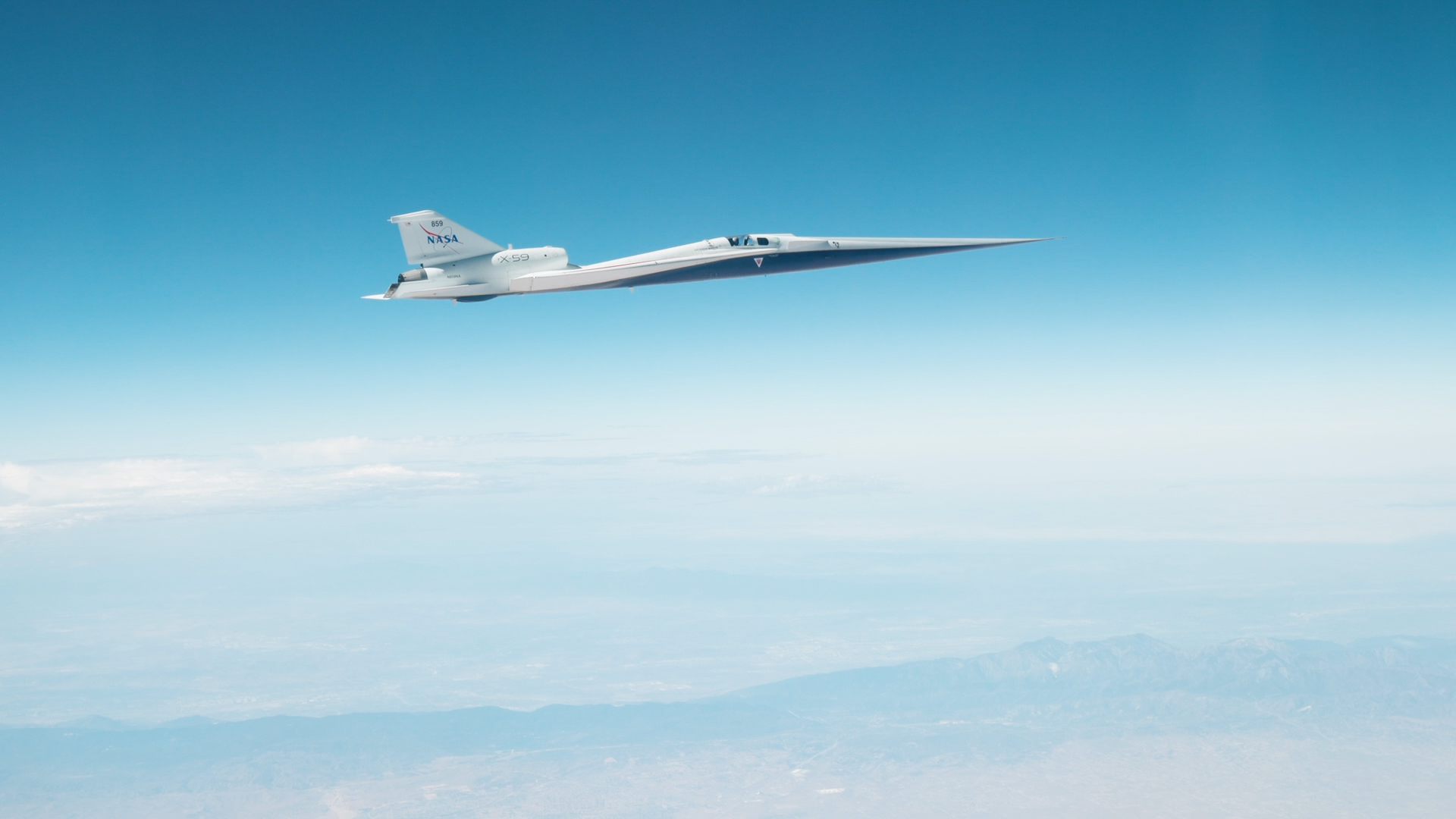

NASA’s X-59 research plane successfully completed its first supersonic flight earlier this month, reaching critical speed and altitude milestones necessary for planned overflights of US communities. The X-59 is engineered to fly at supersonic speeds while minimizing noise, producing a “quiet sonic thump” rather than a typical loud sonic boom, according to NASA.
On a recent test flight, the X-59 achieved Mach 1.4, equivalent to approximately 924 mph, and reached an altitude of 55,000 feet. This follows a previous flight on June 5, during which it reached Mach 1.1.
The agency stated that the recent test flight is “an even more critical step” than the prior one, as it successfully met vital targets for the upcoming Quesst mission. This mission will involve the X-59 flying over populated areas to gather public feedback regarding the sound generated by the sonic thump.



Prior to the Quesst mission, the X-59 will undergo an acoustic validation phase to measure its supersonic acoustic signature, ensuring it breaks the sound barrier without generating a traditional sonic boom.