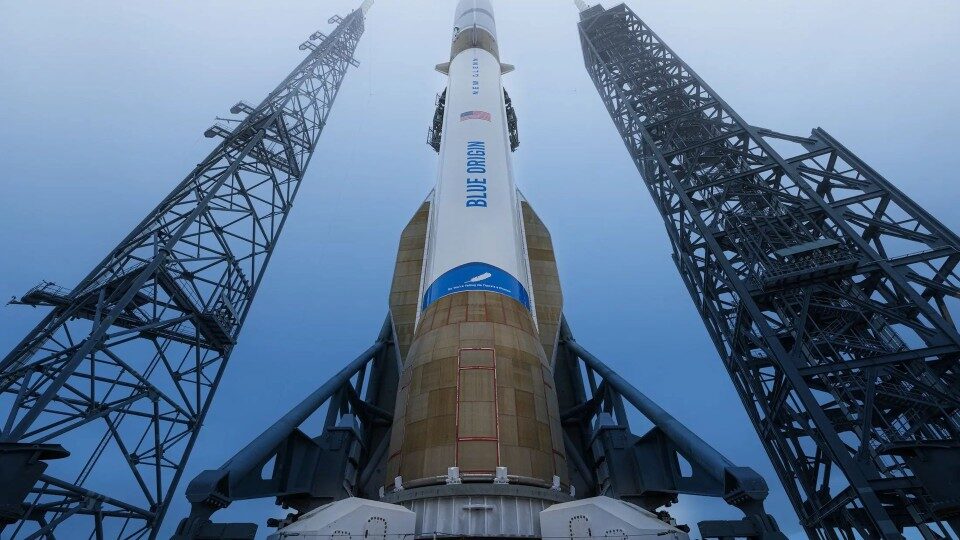

Blue Origin CEO Dave Limp stated that the company will resume operations of its New Glenn launchpad before the end of 2026. In contrast, NASA Administrator Jared Isaacman cautioned that repairs to the pad, which exploded on May 28, might not be completed until 2028. The explosion occurred during a hotfire test while preparing for New Glenn’s fourth mission.
Isaacman assessed the damage at Launch Complex 36 on May 29, following the incident. Blue Origin had just restarted testing New Glenn after being grounded by the Federal Aviation Administration (FAA) due to a prior failure to deliver its payload into orbit during its third mission. The FAA’s investigation concluded a “cryogenic leak” caused that earlier incident.
The cause of the recent explosion remains unclear. Limp indicated that after regaining access to the launchpad, inspections showed that the rocket’s fuel tanks remained in good condition. He noted the support tower was damaged but could be repaired on-site.



The urgency of repairs is heightened by Blue Origin’s role as a key launch provider for NASA’s Artemis and Moon Base programs. NASA has selected Blue Origin for its Moon Base I mission, scheduled for this fall. Additionally, Amazon, owned by Jeff Bezos, relies on Blue Origin to launch Leo satellites for its broadband service, with New Glenn’s fourth mission set to carry 48 Leo satellites into orbit.
Meanwhile, Blue Origin is constructing another launchpad at Vandenberg Space Force Base in California, which is not expected to be operational until 2028. The company recently secured a lease for Space Launch Complex (SLC)-14 with the US government, but it will require significant preparation time before it can support launches.