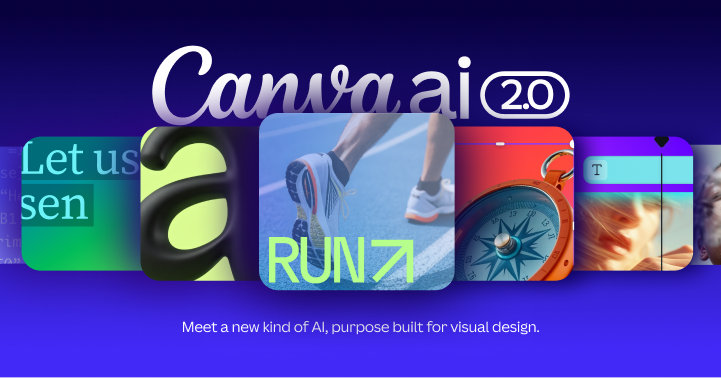

Canva has released an updated version of its AI assistant that enables users to create editable designs from text prompts, enhancing automation for design professionals. The revised assistant aims to become central to user workflows by offering features such as image and website generation.
The announcement comes amid increasing competition in the AI design space. Adobe introduced its Firefly AI assistant this week, while Figma integrated AI agents within its platforms last month. These developments highlight a trend among companies to streamline workflows through automation.
Canva co-founder and COO Cliff Obrecht emphasized the platform’s critical role in the final stages of design. “A lot of small businesses start and end their day in Canva… they always need to end up doing the final mile of editing,” Obrecht stated.

Canva’s enterprise division is experiencing significant growth, with revenue increasing 100% year-on-year. The company is currently valued at $42 billion and expects to go public next year.
The latest AI update includes integrations with Slack, Gmail, Google Drive, Calendar, and Zoom, allowing the AI assistant to build context from various sources. Additionally, a new web research skill will enable the AI to browse the internet to assist with tasks.
New scheduling features will allow users to set repeatable background tasks, which can be drafted for review before posting. Canva is also refining its existing AI tools, including an AI code generator capable of importing HTML and generating spreadsheets from text prompts.
Canva claims increased efficiency in its AI models, stating that the Lucid Origin image-generation model is now five times faster and 30 times cheaper, while the 12V image-to-video model is seven times faster and 17 times cheaper. Canva AI 2.0 is launching in research preview this week and will be accessible to all users in the coming weeks.