
Traveling in Japan is exciting for many reasons. The country offers an incredible mix of tradition and innovation, from centuries-old temples and quiet gardens to futuristic train stations, smart vending machines, and ultra-connected cities. But no matter how prepared a traveler may be, one practical issue often becomes obvious as soon as the trip begins: staying connected is essential.
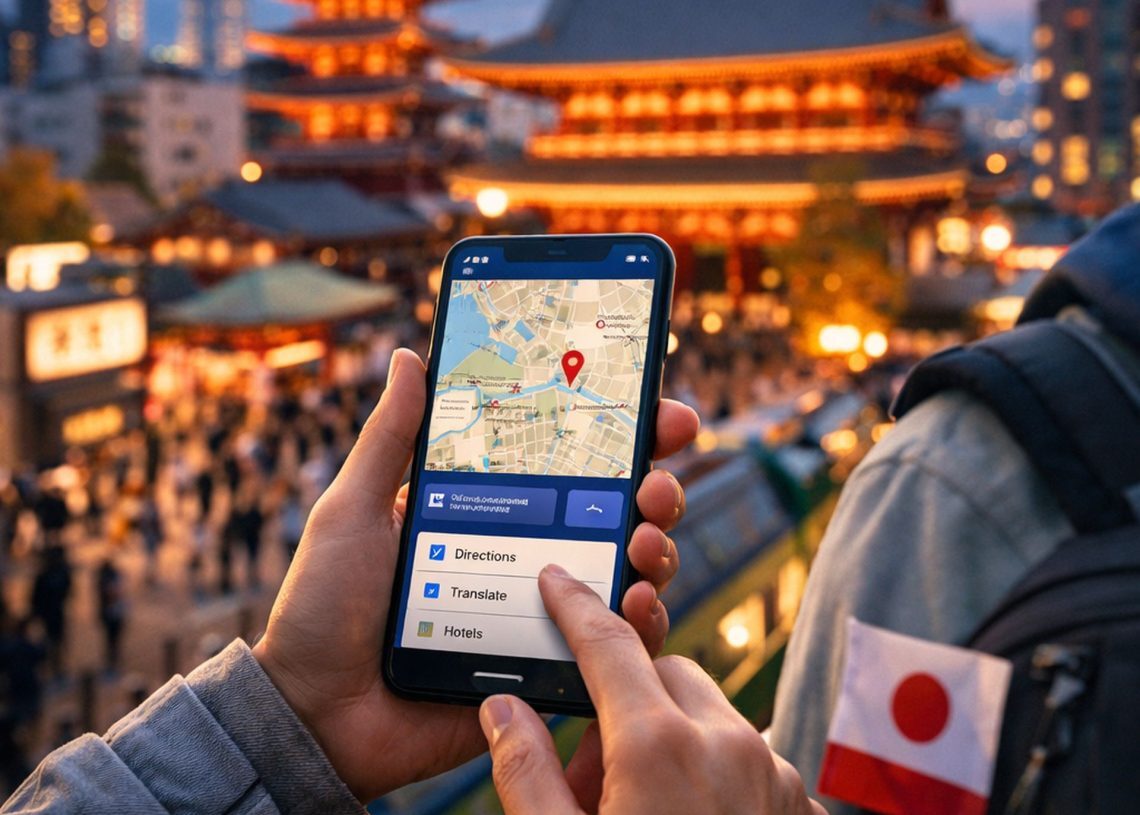
Today, most travelers depend on their phones for nearly every part of the journey. Mobile data is used to check directions, translate signs and menus, book train tickets, communicate with hotels, access QR codes, search for nearby restaurants, and upload travel memories in real time. In a destination like Japan, where many visitors move between airports, rail stations, cities, and more rural areas, having reliable internet access can make the entire experience much smoother.
Many people assume they can simply rely on free Wi-Fi during their trip. While that may seem like an easy and budget-friendly solution, it is often less convenient than expected. Public Wi-Fi can be helpful in some places, but it is rarely the best option for travelers who want stable, immediate, and secure connectivity throughout the day.



Why public Wi-Fi is not always enough
Japan does offer public Wi-Fi in some airports, hotels, cafés, and train stations. However, coverage can be inconsistent depending on where a traveler is and what they need at that moment. A connection that works well in one station may become weak or unavailable just a few minutes later. In some cases, travelers need to complete a registration process, re-enter login details, or deal with time-limited sessions. That can be frustrating when trying to quickly check a route or confirm a booking.
Another issue is that public networks are not always ideal from a security point of view. Travelers often use their phones to access personal emails, bank apps, travel documents, and booking platforms. Connecting to unsecured networks in public places can increase privacy and security risks, especially when people are frequently moving from one hotspot to another.
There is also the problem of convenience. Depending on Wi-Fi means planning around access points instead of simply using the internet when needed. That may not sound like a major issue, but in practice it can become a real obstacle. Imagine arriving in Tokyo and needing to locate the correct train line immediately, or trying to message a host when entering a neighborhood with no obvious café or hotspot nearby. In those moments, having mobile data already working on the phone is far more practical than searching for a connection.
Why constant connectivity matters in Japan
Japan is one of the easiest countries to explore in many ways, but it also presents situations where digital access becomes especially useful. Railway systems are highly efficient, but they can also feel overwhelming for first-time visitors because of the number of lines, stations, transfers, and operators involved. Real-time navigation helps reduce stress and saves time.
Language can also be a factor. Although many popular tourist areas provide some English support, not every sign, menu, or local service will be fully accessible to international visitors. Translation apps can be extremely helpful in daily situations, from reading product labels in a convenience store to understanding instructions on public transport or communicating specific dietary needs in a restaurant.
Digital access is also valuable for flexibility. Travelers may need to change reservations, check weather conditions, confirm opening hours, manage mobile payments, or look up alternative routes if their plans change. This is particularly important for people visiting multiple destinations in one trip, such as Tokyo, Kyoto, Osaka, Hiroshima, or Hokkaido.
The rise of eSIMs for international travel
Because of these needs, more travelers are turning to eSIMs instead of depending on Wi-Fi or buying a physical SIM card after arrival. An eSIM is a digital SIM that can be installed directly on a compatible smartphone, allowing users to activate a mobile data plan without swapping physical cards.
This option is especially appealing for international trips because it saves time and reduces friction before departure. Instead of searching for a local store, waiting in line at the airport, or handling tiny SIM cards while jet-lagged, travelers can prepare their data plan in advance and arrive with connectivity ready to go.
For people who want a simple setup and predictable internet access, one practical option is to get unlimited data with Holafly before the trip starts. That kind of solution is attractive for travelers who expect to use maps, messaging apps, streaming, translation tools, and booking platforms regularly throughout their stay.
What travelers should look for in a mobile data solution
Not all connectivity options are equally convenient, so it is worth thinking about what really matters during a trip to Japan. Ease of activation is one of the most important factors. A solution should be simple enough to install without technical complications, especially for travelers who just want something that works from day one.
Coverage is another key point. Travelers may spend time in major cities, but they could also visit smaller towns, countryside destinations, or transit routes between regions. A stable connection matters far more than a cheap option that only works well in limited urban areas.
Data allowance also deserves attention. Modern travelers often use more data than they realize. Navigation apps, cloud-based photo uploads, video calls, social media, and streaming can all consume significant bandwidth. For this reason, many people prefer options that remove the stress of counting gigabytes every day.
Finally, flexibility matters. Travel plans can evolve quickly, and the best connectivity solution is one that supports movement, spontaneity, and constant access rather than forcing users to depend on specific locations.
A better travel experience from the start
In the past, staying connected abroad often meant compromise. Travelers had to choose between high roaming fees, unreliable Wi-Fi, or the inconvenience of buying a local SIM card after landing. Today, that is changing. With digital options such as eSIMs, it is much easier to land in Japan with internet access already available on a smartphone.
That may seem like a small detail, but it can improve the trip from the very first moment. Being able to call a rideshare, check train schedules, contact accommodation, or use navigation straight from the airport creates a smoother arrival experience and reduces unnecessary stress.
Japan rewards travelers who are curious, mobile, and open to exploring both famous landmarks and less obvious places. Reliable mobile data supports that kind of travel. Rather than searching for the next hotspot, visitors can focus on enjoying the journey itself.