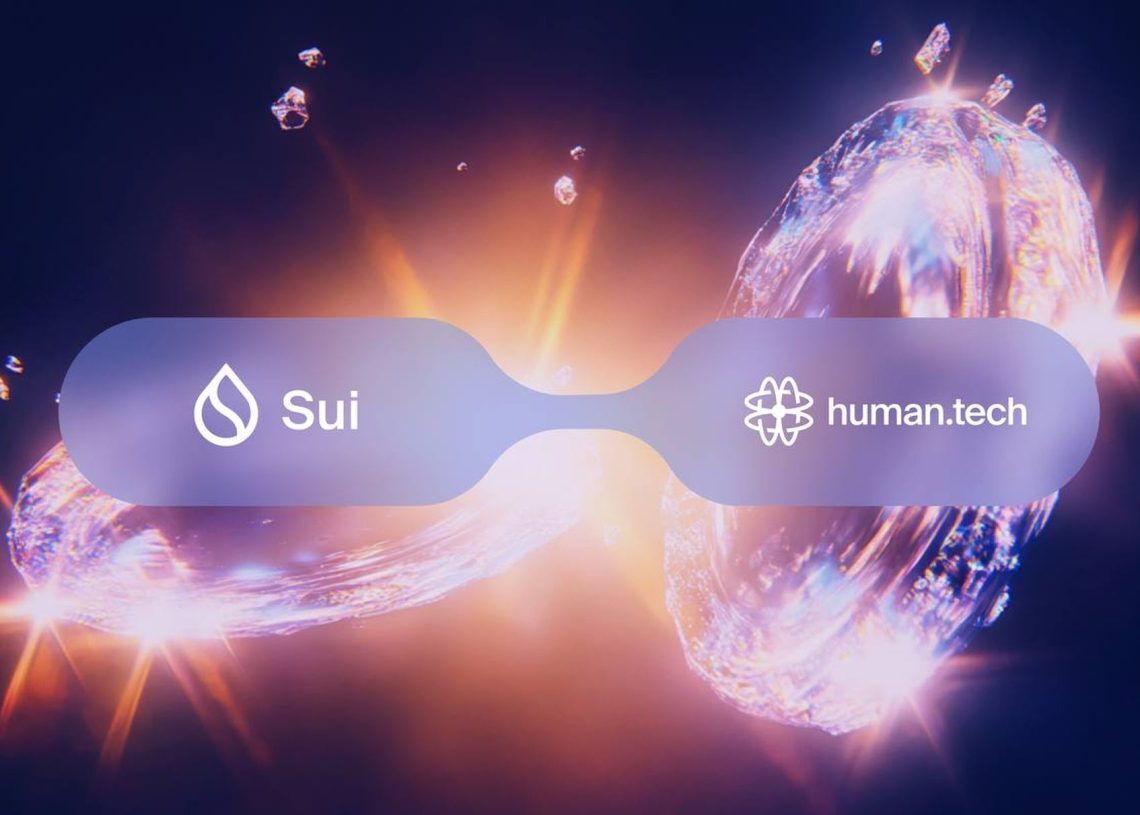

Human.tech, the framework developed by the Holonym Foundation, has just completed its most significant integration to date. Its Wallet-as-a-Protocol product – better known as “WaaP” – is now live on Sui, giving developers access to a dedicated layer for seamless user onboarding and account management.
WaaP is unique in a number of ways, not least in its ability to combine decentralized design – including robust security – with social login that relieves users of the need to store a mnemonic phrase. But WaaP is not another Sui wallet begging for the Layer 1’s users to show it some love. It’s actually targeted at Sui builders, who can integrate the wallet into their tech stack and in the process gain a host of new capabilities, from account management to agentic compatibility.
WaaP turns on the tap for Sui onboarding
The correct way to describe WaaP is the next stage of Wallet-as-a-Service evolution. In other words, it’s software that enables any crypto company to launch a wallet bearing their brand without being burdened with the need to develop and maintain it. But the human.tech wallet does much more than save devs from coding. It’s designed to make onboarding feel effortless, even for crypto beginners, which is ideal for networks such as Sui, whose speed and low fees are capable of delivering a smooth user experience – but users first need to enter its ecosystem to feel those effects.

There’s a few things that make WaaP interesting over and above it being Sui’s first fully decentralized embedded wallet layer. That achievement, incidentally, may be niche, but it’s significant. Because whatever WaaP is, it’s more than merely a whitelabel wallet. Because it operates as a separate layer, anchored to Sui, it’s able to utilize smart contracts to automate core processes and eliminate friction.
At the same time, this is all achieved without having to make compromises in terms of self-custody. As Mysten Labs Evan Cheng puts it, “Using an embedded wallet shouldn’t require giving up ownership. With WaaP built on Ika and native to Sui, developers and users both get a brand new way to access Sui.” Devs will be the first to benefit, but the real winners will ultimately be Sui users, who’ll transition between Web2 and Web3 with not so much as a jolt.
Clever tech meets custom UI
Behind the scenes, WaaP makes use of two-party computation, better known as 2PC, coupled with MPC to split signing authority between the user’s device and the decentralized network on which it operates, known as Ika. This arrangement is basically a fancy multisig that ensures neither party can unilaterally move funds. At the same time, users who get locked out of their wallet can still regain access via a secondary authentication method – email coupled with Face ID for instance.
This sophisticated technology comes wrapped in a custom UI that can be configured any way the dapp integrating WaaP wishes. This is what an “embedded wallet” means: it’s third-party developed, but looks and feels like it was always a part of the application it’s housed in. To call WaaP a wallet, then, would be like calling Bitcoin a distributed ledger: it’s massively underselling it.
WaaP has the potential to be so much more. If widely implemented across the Sui ecosystem, it will become the de facto gateway to everything the network has to offer, from gaming to trading.