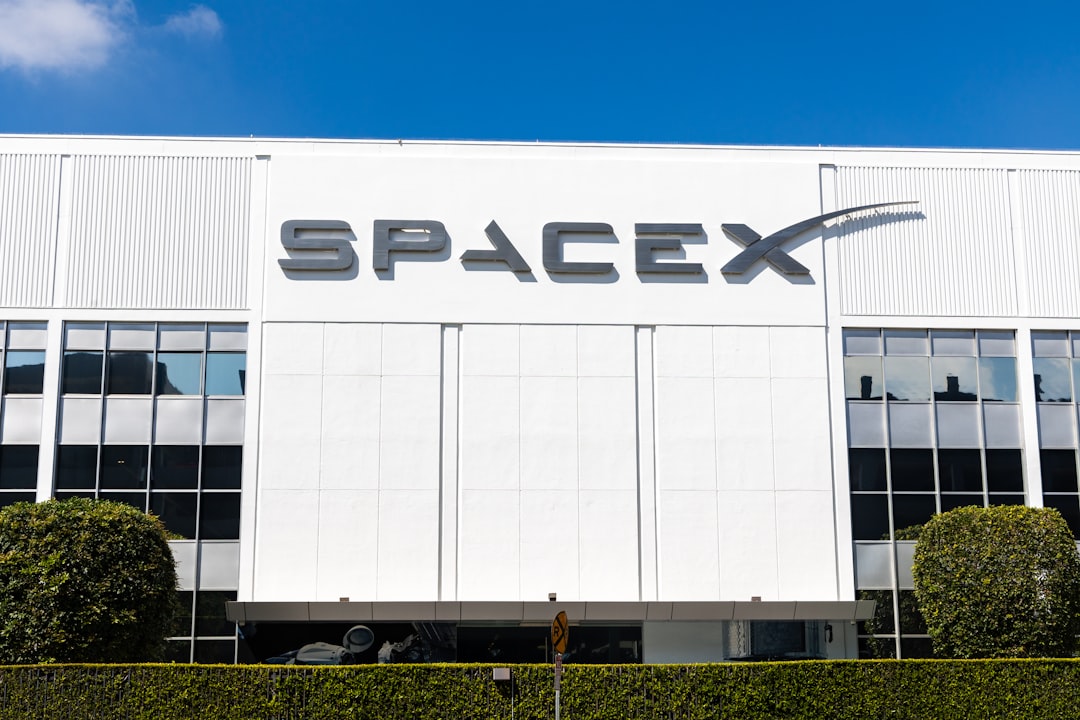
SpaceX filed plans with the Federal Communications Commission on Friday for a network of one million satellites to serve as data centers. The filing signals serious intent from Elon Musk to develop orbital data centers.
One week later, on Monday, SpaceX and xAI completed a formal merger. The move unites Musk’s space and artificial intelligence ventures, aligning them for potential joint infrastructure projects like orbital computing networks.
On Wednesday, the FCC accepted the SpaceX filing and established a schedule for public comments. FCC Chairman Brendan Carr shared the filing on X, an unusual step that highlights regulatory attention to the proposal.

Elon Musk elaborated on the concept of orbital data centers during an episode of Patrick Collison’s podcast “Cheeky Pint,” which also featured guest Dwarkesh Patel. Musk argued that space offers advantages for scaling AI computing infrastructure.
“It’s harder to scale on the ground than it is to scale in space,” Musk said. “Any given solar panel is going to give you about five times more power in space than on the ground, so it’s actually much cheaper to do in space.”
Musk emphasized that solar panels in orbit generate approximately five times more power than on Earth, reducing a key operating expense for data centers.
Dwarkesh Patel challenged the argument, noting that power costs represent only one factor in data center operations. Solar panels are not the sole power source available. Patel also questioned the challenges of servicing graphics processing units that fail during AI model training in orbit.
Musk remained confident, identifying 2028 as a tipping-point year for orbital data centers. “You can mark my words, in 36 months but probably closer to 30 months, the most economically compelling place to put AI will be space,” Musk said.
He made a bolder prediction: “Five years from now, my prediction is we will launch and be operating every year more AI in space than the cumulative total on Earth.”
For context, global data center capacity is projected to reach 200 gigawatts by 2030. That scale equates to roughly a trillion dollars in infrastructure investment on the ground.
SpaceX’s core launch business supports the orbital data center vision, as the company profits from sending payloads to space. The merger creates a SpaceX-xAI conglomerate, which is scheduled for an initial public offering in the coming months.
The FCC filing describes a constellation of one million satellites equipped for data processing. This network would form clusters of computers operating in low Earth orbit, addressing growing demands for AI compute power.
Musk’s public comments coincide with surging investments in data centers by tech companies, which spend hundreds of billions of dollars annually on ground-based facilities. Orbital alternatives could shift some of that capacity to space.
The podcast episode provides deeper insight into technical considerations. Musk focused on power generation efficiencies, while Patel highlighted maintenance logistics and total cost structures. SpaceX submitted the FCC application amid rapid advancements in satellite technology. The company’s Starlink constellation already demonstrates capabilities for large-scale orbital deployments.
The merger between SpaceX and xAI occurred shortly after the filing, streamlining operations for integrated space-AI projects. xAI develops AI models, complementing SpaceX’s launch and satellite expertise.
FCC Chairman Carr’s decision to publicize the filing on X draws attention to the proposal’s progress. Public comments will follow the agency’s set schedule.
Musk’s timeline projections—30 to 36 months for economic viability and five years for surpassing Earth-based AI operations—underscore the aggressive pace envisioned for orbital infrastructure.
Global data center growth to 200 gigawatts by 2030 reflects the scale of current investments. A trillion-dollar valuation for ground infrastructure provides a benchmark for space-based alternatives. The SpaceX-xAI entity’s upcoming IPO may accelerate announcements and funding for orbital data center initiatives.