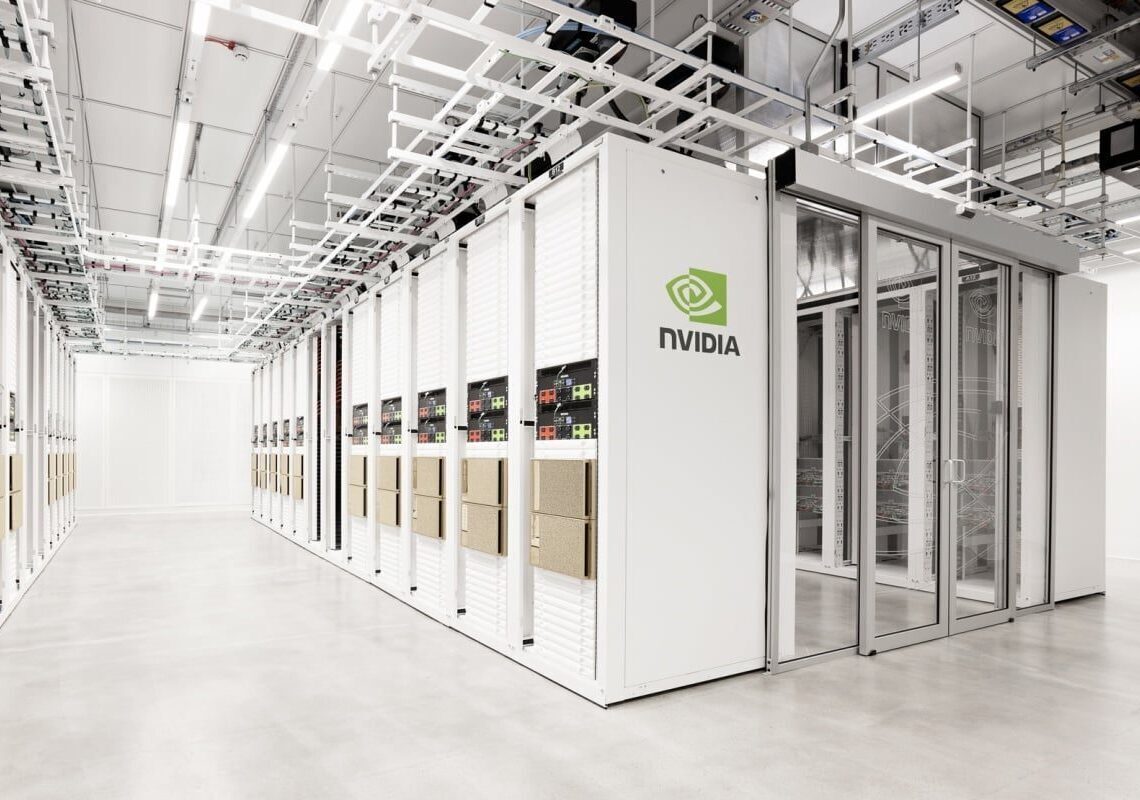

Nvidia has reportedly invested $683 million in Nscale, a UK-based AI infrastructure company spun off from cryptocurrency mining firm Arkon Energy, as part of a broader effort to bolster the United Kingdom’s artificial intelligence capabilities. The investment, announced by Nvidia CEO Jensen Huang according to a Bloomberg report, aims to expand the UK’s GPU capacity to 60,000 units by 2026, with the hardware to be deployed in Nscale’s data centers.
Nscale emerged as an independent entity in May 2024, focusing on providing AI cloud services across Europe. This move aligns with the UK government’s aggressive push to develop national AI infrastructure. In January 2025, Prime Minister Keir Starmer unveiled a comprehensive plan incorporating 50 recommendations to harness AI’s potential for economic growth. Supporting this initiative, Nscale, alongside Vantage Data Centres and Kyndryl, pledged approximately $17 billion in combined investments toward AI infrastructure development.
The partnership underscores Nvidia’s pivotal role in the global AI landscape. Headquartered in California, the chip design giant achieved a historic $4 trillion market capitalization in July 2024, eclipsing other major tech firms. Analysts attribute this surge to heightened investor confidence in AI-driven technologies. Notably, Nvidia’s valuation at that point slightly exceeded the combined market cap of all cryptocurrencies, which has stabilized around $4 trillion since then.



Nscale CEO Josh Payne emphasized the strategic importance of the expansion, stating, “Sovereign AI infrastructure is key to national resilience, economic growth and strategic autonomy.” He added, “This milestone deepens our commitment to providing critical AI infrastructure for the next industrial revolution.”
This collaboration highlights the convergence of cryptocurrency origins and cutting-edge AI infrastructure, positioning the UK as a competitive player in the global AI race. As demand for high-performance computing grows, such investments are expected to accelerate innovation while addressing challenges related to energy consumption and data sovereignty.