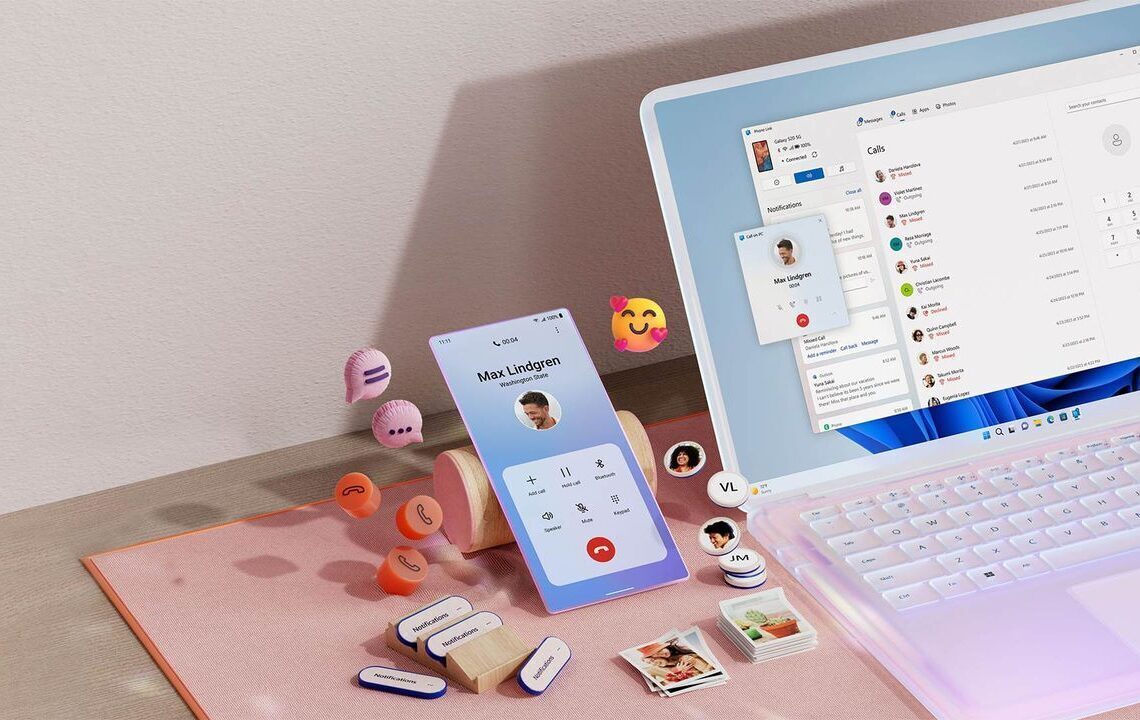

Microsoft is currently testing new functionalities for its Phone Link application, aiming to enhance the integration between Android phones and Windows PCs. These upcoming features will allow users to remotely lock their PC and access its clipboard directly from their Android device.
While Phone Link already offers features like displaying notifications, texts, and photos from a phone on a Windows PC, some advanced capabilities require manual activation. For instance, using an Android phone as a PC webcam or accessing its files through Windows File Explorer necessitates enabling specific toggles within the Windows Settings app under “Bluetooth & devices” > “Mobile devices” > “Manage devices.” In this same menu, users on recent Insider Preview Builds of Windows 11 are discovering additional options.
One notable new option appearing for users like Telegram user Lance Adams, on the latest Dev channel, is an “access PC’s clipboard” toggle. This feature enables a connected Android phone to access text and images copied on the PC. Currently, this synchronization is one-way, from PC to phone. This is particularly beneficial for users of Google Pixel phones, who typically lack native cross-device clipboard integration found in many Samsung, OnePlus, HONOR, and Xiaomi devices that often come with Phone Link preinstalled or support two-way sync via methods like SwiftKey’s “sync across devices” feature or Phone Link’s “cross-device copy and paste” option (which is unavailable for Pixel phones).


Furthermore, the user experience on the phone side is also being improved. Telegram user Legofan, utilizing the latest Canary build, reports that an updated Link to Windows app now displays a history of items copied to the PC’s clipboard, rather than just the most recent entry.
Legofan also observed a new “lock PC” button within the app, which facilitates remotely locking a Windows PC from the Android phone. This remote PC control functionality requires the corresponding “Remote PC controls” toggle to be enabled in Windows’ mobile devices menu.
These new integrations underscore Microsoft’s ongoing efforts to create a more cohesive ecosystem between Windows and Android. This focus from Microsoft contrasts with Google’s strategy, as Google is prioritizing its own Chrome OS ecosystem and reportedly working towards merging Android and Chrome OS into a single platform.