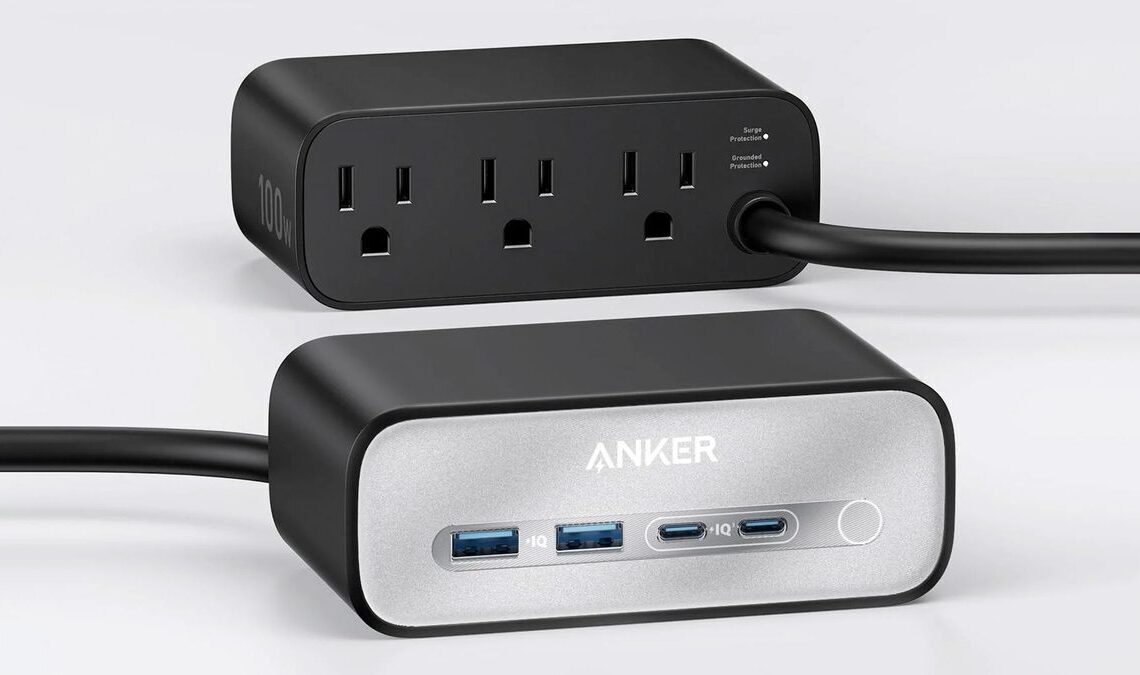

Anker has unveiled its new 7-in-1 Nano Charging Station, addressing desktop clutter with integrated retractable USB-C cables and a focus on convenience. This latest offering builds on a growing trend in USB chargers that prioritizes built-in, disappearing cables over simply adding more power or ports.
The Nano Charging Station is priced at $89.99, making it a more accessible option compared to Anker’s previous desktop charger, which retailed for $169.99. While the older model featured a dial for adjustable power output across six USB ports, the new Nano Charging Station focuses on integrated cables and a more compact design.
A key feature of the Nano Charging Station is its two 2.3-foot long retractable USB-C cables. These cables retract with a pull and utilize magnets to securely store their connectors, aiming to reduce cable clutter. In addition to these integrated cables, the device includes an extra USB-C port and a USB-A port, bringing the total number of USB charging options to four. Furthermore, the station incorporates three AC outlets on the back, offering additional versatility for powering other devices or adapters.



In terms of power output, the Nano Charging Station provides a maximum of 100W when only one device is connected. However, the power output adjusts based on the number of devices being charged. When two devices are connected, the maximum output drops to between 50W and 88W, depending on the specific ports in use. If all four USB ports are occupied, the maximum power output is limited to 30W, which may not be sufficient for charging a laptop. To assist users in monitoring power delivery, the charging station features a 1.3-inch LCD display that shows the wattage being supplied to each connected device.
Anker’s release of the 7-in-1 Nano Charging Station highlights a shift towards more integrated and user-friendly charging solutions. This trend, marked by the increasing availability of chargers and power banks with retractable cables, serves as a practical solution for managing cables while consumers await more advanced wireless charging technologies.