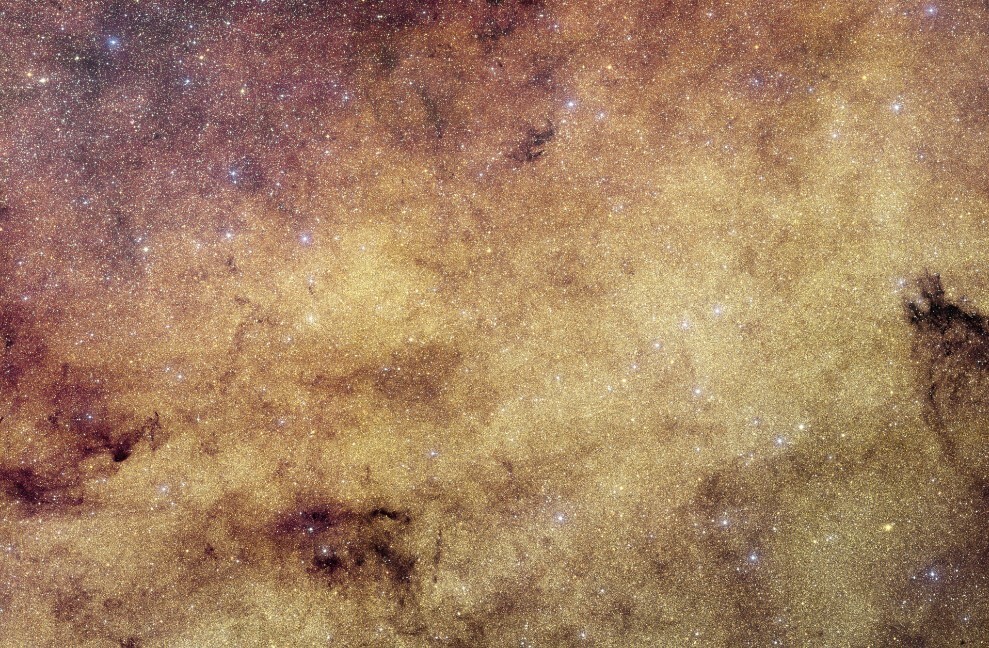

The European Space Agency’s Euclid telescope captured an image of the star-filled center of the Milky Way during a refocusing on the galactic bulge, the bulbous center of the galaxy. This image serves as foundational data for NASA’s upcoming mission, the Nancy Grace Roman Space Telescope, which is scheduled to launch later this summer to analyze changes in stars and celestial objects within a specified area of the bulge.
Jason Rhodes, a senior research scientist at NASA’s Jet Propulsion Laboratory, stated that having Euclid’s data before Roman begins its mission will enhance insights from both telescopes. “Adding Euclid’s snapshot to Roman’s future survey will help us map our galaxy better and identify hard-to-find cosmic treasures like isolated black holes and rogue planets more easily,” Rhodes said.
The Euclid image highlights the density of stars in the galactic bulge. Recent research has identified “bulge fossil fragments,” providing new insights into this challenging region. This collaboration between the Euclid telescope and the upcoming Roman mission underscores the significant data compatibility, which aims to enrich the study of this complex area of the galaxy.