
Samsung announced that its Galaxy Watch can predict fainting episodes related to vasovagal syncope (VVS) with high accuracy, potentially preventing falls and serious injuries. The technology, developed in collaboration with Chung-Ang University Gwangmyeong Hospital in Korea, is detailed in a study published in the European Heart Journal. Fainting episodes, which can be triggered by emotional distress or the sight of blood, affect up to 40 percent of individuals, according to Professor Jun Hwan Cho, a researcher involved in the study.
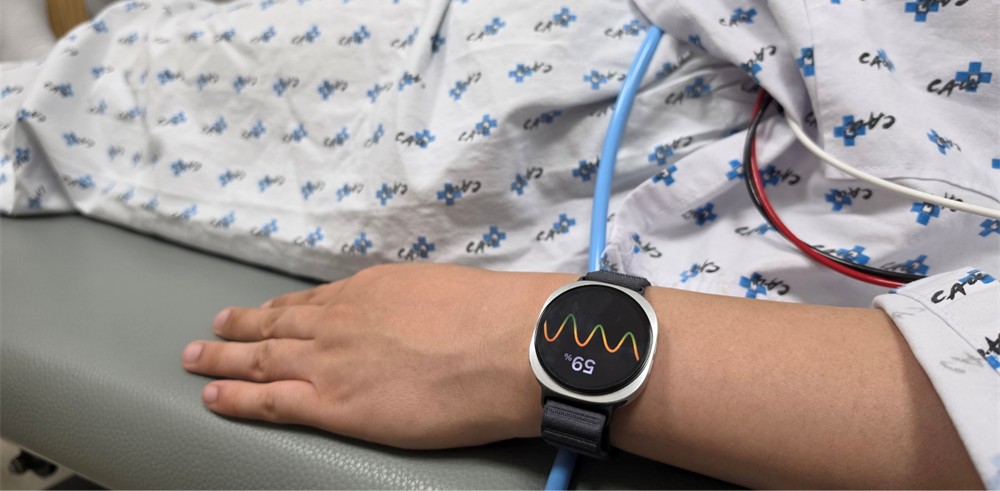
The research team evaluated 132 patients during induced fainting tests to assess the effectiveness of the monitoring technique. Utilizing the Galaxy Watch’s photoplethysmography (PPG) sensor, the researchers analyzed heart rate variability data using an artificial intelligence algorithm. The algorithm accurately predicted impending fainting episodes up to five minutes in advance, achieving an accuracy rate of 84.6 percent with a clinically meaningful sensitivity of 90 percent and specificity of 64 percent.
Jongmin Choi, Samsung’s head of Health R&D Group, emphasized that the study represents a shift from post-care to preventive care in healthcare technology. Samsung labeled this research as a “world-first breakthrough in fainting prediction.”



The company has not disclosed when or if the VVS detection feature will be made available to Galaxy Watch users. Samsung aims to accelerate the implementation of personalized and preventative health solutions. The latest model, the Galaxy Watch 8, includes various health alert features, such as sleep apnea detection, blood oxygen monitoring, and heart irregularity detection.