
Anthropic is testing a persistent agent platform called Conway that aims to transform Claude into an always-on autonomous environment, according to a report by TestingCatalog. The Conway project, first reported on April 1, introduces a dedicated web page linked to a “Conway instance” that operates as a standalone workspace rather than a standard chat interface.
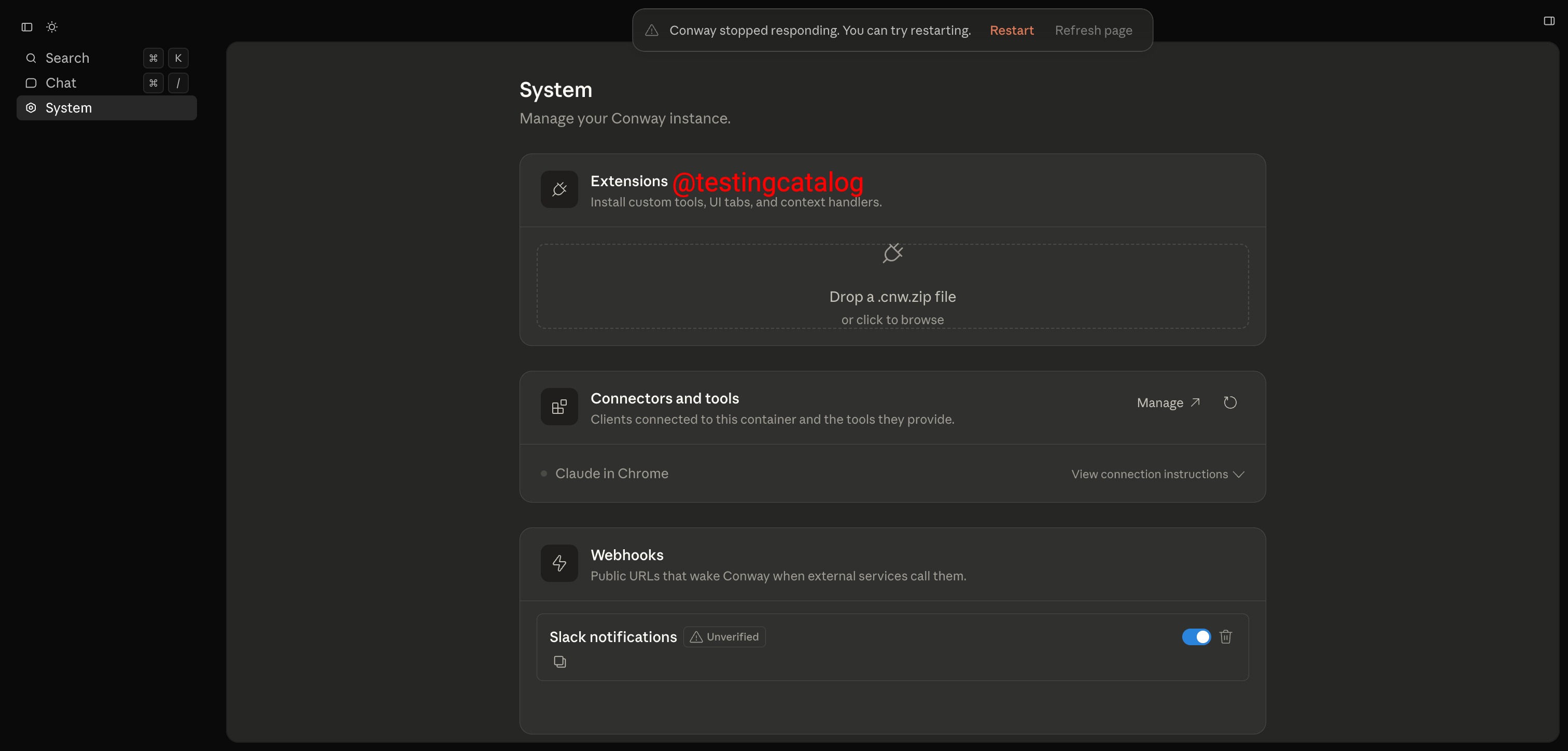
The Conway interface consists of three core areas: Search, Chat, and System. It can run Claude Code, support external webhooks, interface with Chrome, and send notifications. The platform includes a webhooks section that allows public URLs to initiate the Conway instance when triggered by external services, indicating the capability to connect to and respond to external systems continuously.
An “Extensions” area is being prepared under the “Manage your Conway instance” settings, allowing users to install custom tools and UI tabs. The system facilitates a new extension package format, .cnw.zip, designed for third-party add-ons, potentially resembling an “app store” for users. Additionally, references to Connectors and Tools on the settings page indicate the monitoring of client connections and available tools.



The rollout of Conway follows a significant incident on March 31, when Anthropic unintentionally published the complete source code for Claude Code. This leak involved approximately 500,000 lines of TypeScript and revealed 44 hidden feature flags, suggesting unreleased functionalities like background agents and multi-agent coordination. Anthropic attributed the incident to a release packaging issue caused by human error, asserting that it was not a security breach.
If launched, the Conway platform will position Anthropic competitively alongside firms such as OpenAI, enhancing Claude’s capabilities with a native extension layer and deeper integration features.