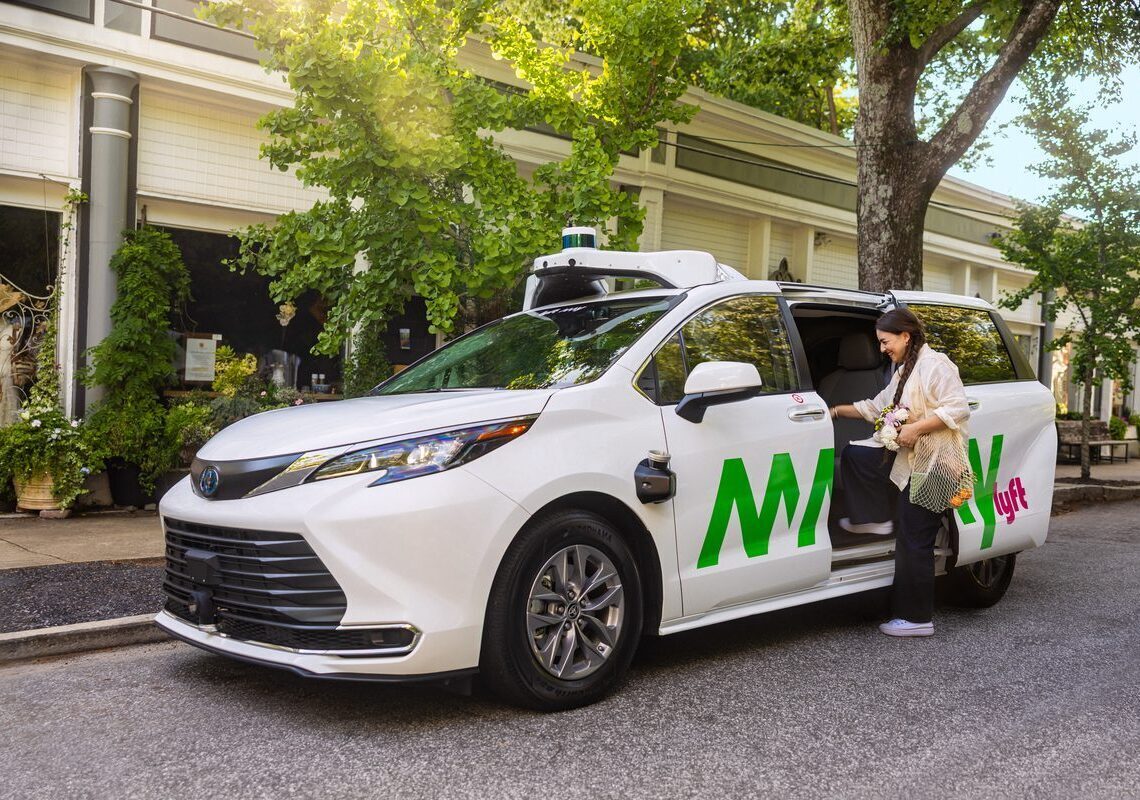

Lyft has launched its first customer-ready robotaxi pilot program in Atlanta, Georgia, partnering with May Mobility, a company backed by Toyota and BMW. This move comes as Lyft’s primary competitor, Uber, has been actively securing deals with various autonomous vehicle operators.
The robotaxi fleet consists of Toyota Sienna minivans equipped with cameras, radar, and lidar sensors. These vehicles will operate in a designated service area of approximately seven square miles around Midtown Atlanta, navigating both city and suburban streets. Lyft customers requesting rides within this zone will have the option to select a May Mobility autonomous vehicle.
During the initial phase of the pilot, each vehicle will have a “standby operator,” Lyft’s term for a safety driver, present in the driver’s seat. These operators are trained to manually drive during initial trips, intervening as needed. As the service matures and is optimized, the operators’ interventions will decrease. Their responsibilities also include answering customer questions and ensuring a comfortable ride experience. This approach is consistent with the cautious deployment strategies seen in other robotaxi rollouts; Waymo and Zoox are the only companies currently operating fully driverless commercial services.


Beyond the May Mobility partnership, Lyft has several other autonomous vehicle initiatives in development. The company is collaborating with Benteler Mobility to launch a self-driving shuttle service in late 2026. Furthermore, Lyft intends to deploy a fleet of robotaxis in Dallas in 2026, utilizing self-driving technology from Intel’s Mobileye, with plans to expand to thousands of vehicles in additional markets subsequently.
Lyft’s strategy mirrors Uber’s “asset-light” approach. Rather than owning and maintaining its own autonomous vehicle fleet, Lyft is providing its ride-hailing platform to self-driving developers, enabling them to connect with customers without developing their own customer-facing operations. This allows Lyft to remain focused on its core platform while leveraging the expertise of other companies in the autonomous vehicle space.
Lyft’s previous endeavors in autonomous vehicle development included an internal research and development division, which was sold to a subsidiary of Toyota in 2021. The current partnerships represent a shift towards collaboration and leveraging external expertise in the rapidly evolving autonomous vehicle landscape.