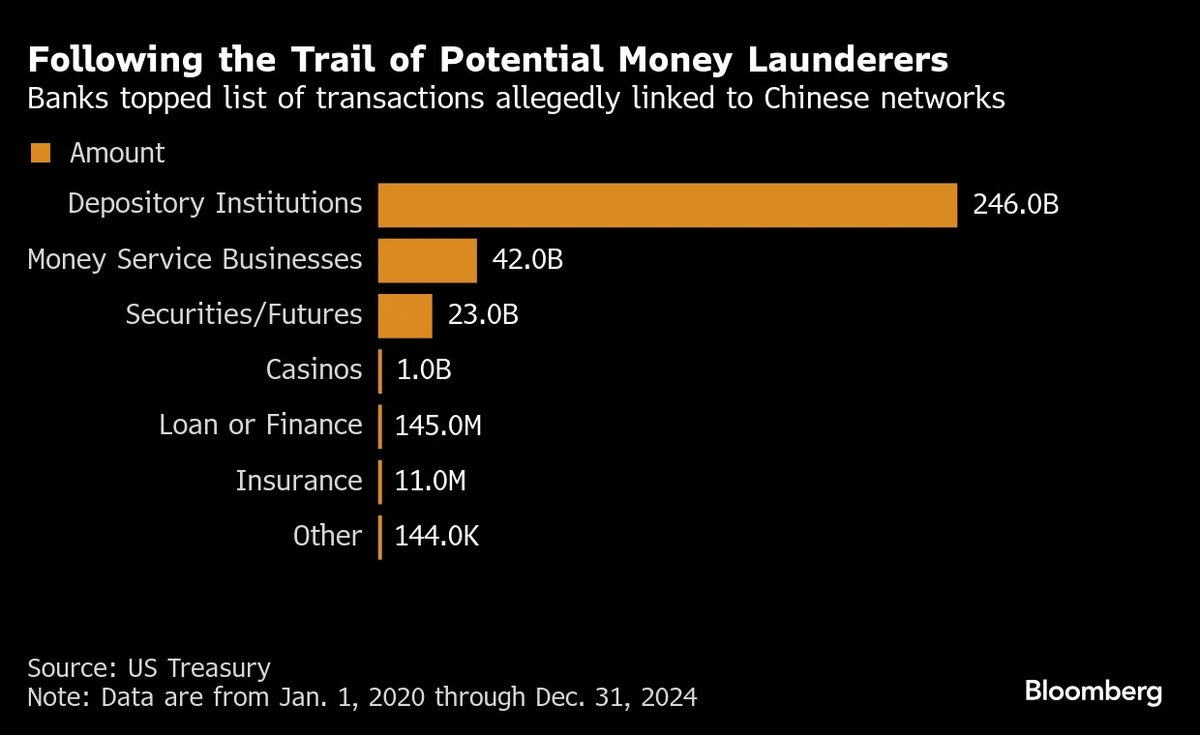

A recent report reveals that U.S. banks processed $312 billion in transactions linked to Chinese money launderers between 2020 and 2024, highlighting the significant role traditional financial institutions play in facilitating illicit financial flows.
The U.S. Financial Crimes Enforcement Network (FinCEN) analyzed over 137,000 Bank Secrecy Act reports during this period, uncovering that an average of $62 billion annually flowed through the U.S. banking system from Chinese money laundering operations. This activity is often tied to a symbiotic relationship between Chinese networks and Mexican drug cartels, where cartels seek to launder U.S. dollar drug proceeds, and Chinese gangs aim to acquire U.S. dollars to bypass China’s currency controls.
FinCEN Director Andrea Gacki stated, “These networks launder proceeds for Mexico-based drug cartels and are involved in other significant, underground money movement schemes within the United States and around the world.” The report indicates that these Chinese gangs are also involved in various other criminal activities like human trafficking, smuggling, healthcare fraud, elder abuse, and real estate money laundering, with suspicious real estate transactions amounting to $53.7 billion.
Despite the substantial figures associated with traditional banking channels, cryptocurrency often faces heightened scrutiny. Senator Elizabeth Warren, a member of the Senate Banking Committee, has previously called for stricter crypto regulations, stating, “Bad actors are also increasingly turning to cryptocurrency to enable money laundering.”
However, data suggests that money laundering through traditional financial systems far outweighs that involving cryptocurrencies. The United Nations Office on Drugs and Crime estimates that over $2 trillion is laundered globally each year. In comparison, Chainalysis reports that total illicit crypto volumes over the past five years amounted to approximately $189 billion.
Angela Ang, Head of Policy and Strategic Partnerships at TRM Labs, noted, “Illicit activity is but a small fraction of the crypto ecosystem. We estimate that it is less than 1% of overall crypto volume.” Ang added, “FinCEN’s findings align with a broader pattern – these underground banking networks function as a shadow financial system for organized crime worldwide, operating at the seams of banking systems.”
The report underscores that money laundering through cash and traditional banking systems significantly exceeds the amount laundered through cryptocurrency channels.