TechBriefly
  • Tech
  • Business
  • Crypto
  • Science
  • Geek
  • How to
  • About
    • About TechBriefly
    • Terms and Conditions
    • Privacy Policy
    • Contact Us
    • Languages
      • 中文 (Chinese)
      • Dansk
      • Deutsch
      • Español
      • English
      • Français
      • Nederlands
      • Italiano
      • 日本语 (Japanese)
      • 한국인 (Korean)
      • Norsk
      • Polski
      • Português
      • Pусский (Russian)
      • Suomalainen
      • Svenska
No Result
View All Result
TechBriefly
Home Tech Security
Here is why you need to disable Microsoft Recall AI feature

Here is why you need to disable Microsoft Recall AI feature

Barış SelmanbyBarış Selman
5 June 2024
in Security, Tech
Reading Time: 2 mins read
Share on FacebookShare on Twitter

You need to disable Microsoft Recall AI feature immediately! Even before it came to Windows 11, this feature had already raised the ire of security experts. Recall, which promises faster system-wide searches, saves all kinds of data on users’ computers.

Security researchers found that because this data is stored unencrypted, it becomes an easy target for hackers. Here are all the details…

You need to disable Microsoft Recall AI feature immediately

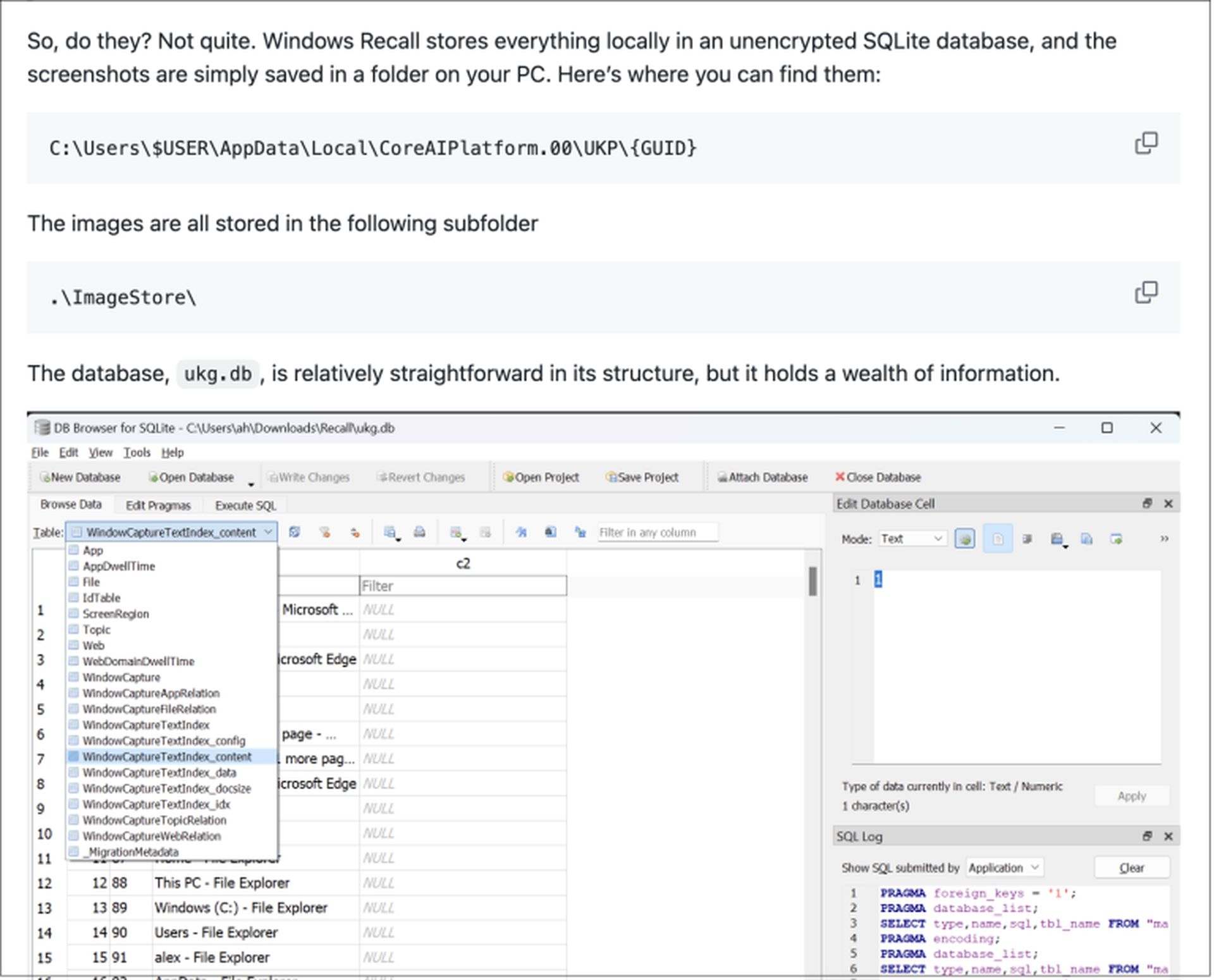
Cybersecurity researcher Alexander Hagenah has released TotalRecall, a demo tool that shows how Recall data can be easily stolen. Former Microsoft employee Kevin Beaumont discovered that Recall saves data in plain text and an easily accessible format.
Here is why you need to disable Microsoft Recall AI feature
Microsoft Recall AI feature has been criticized for security vulnerabilities (Image credit: Alexander Hagenah)

No comment from Microsoft yet

While Microsoft has not yet made Recall available to consumers, an early access version of the feature is being tested by some users. The company has not yet made an official statement on security concerns. However, this could cast a shadow over Microsoft’s ambitious Copilot project in the field of artificial intelligence.

The future of Recall is uncertain

Microsoft says Recall aims to improve the user experience. However, whether the vulnerabilities will be fixed and when the feature will be available remains unclear. Security experts caution users to be careful before enabling Recall and wait for Microsoft to announce that it has fixed the vulnerabilities officially.

If you’re annoyed by this, here’s how to disable Microsoft Recall AI feature.

How to disable Microsoft Recall AI feature?

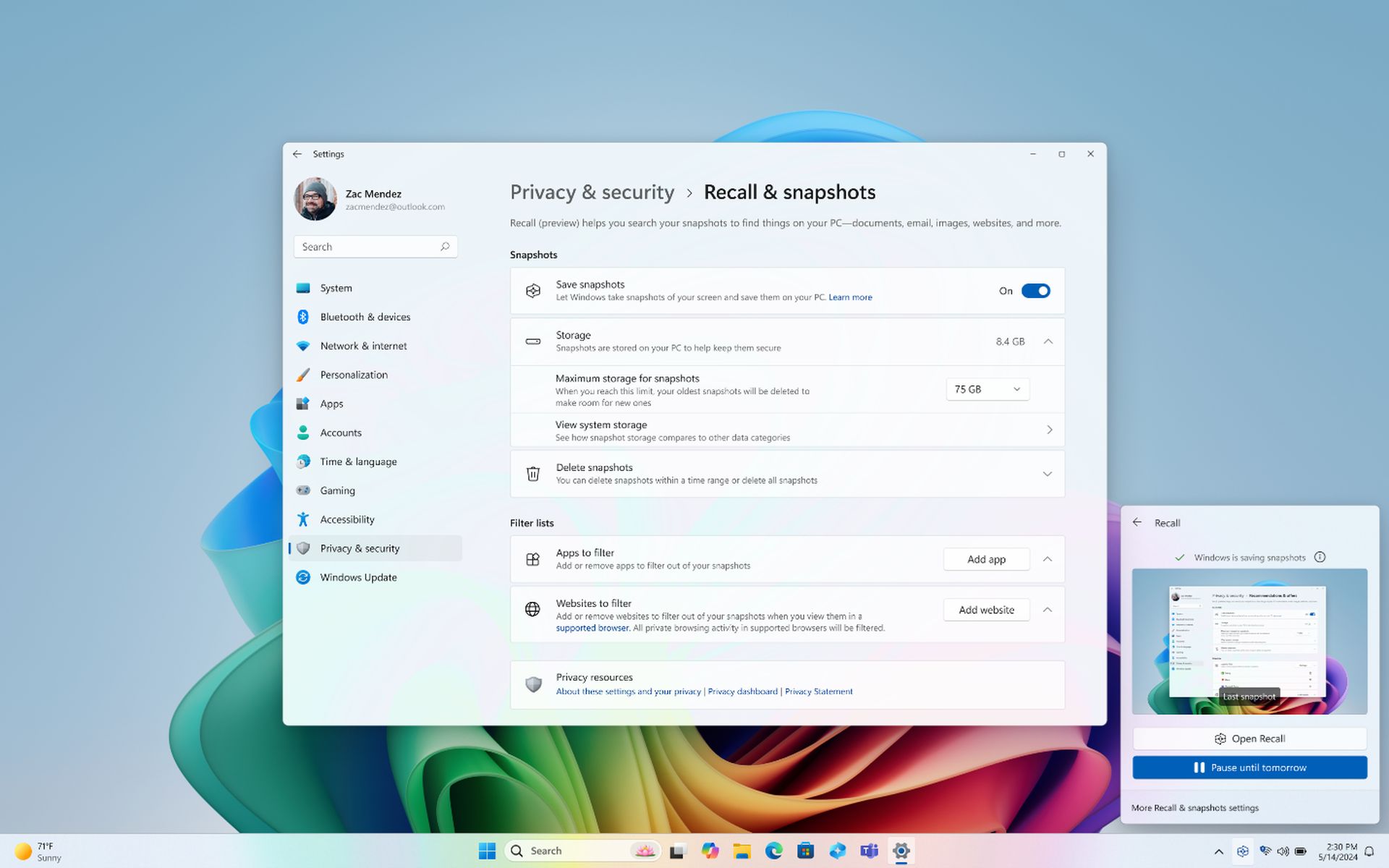
You can follow the steps below to disable the Recall feature:

  • Open Settings on your computer
  • Go to Privacy and Security
  • Then go to Recall and Snapshots
  • Here you can turn off the Recall feature completely

How does Microsoft Recall work?

Microsoft Recall is a feature that aims to enable users to save activities on their computers for faster and more comprehensive searches. However, the details of exactly how it works are not yet clear.

Possible working principle:

  • Data indexing: Recall is likely to continuously index files, applications, emails, visited websites, and other data on the user’s computer.
  • Search optimization: This indexed data is used to help the user find the information they are looking for faster. For example, when searching for a specific word or phrase within a document, Recall can use indexed data to find the document quickly.
  • Personalization: By learning users’ search habits and preferences, Recall can deliver more personalized results.

Although the Microsoft Recall AI feature aims to provide faster searches for Windows 11 users, it has received backlash from experts due to security vulnerabilities. The risk that unencrypted data could be easily intercepted has raised concerns that users’ private information could be compromised. How Microsoft will resolve this security issue and the future of Recall remains unclear. Users are therefore advised to exercise caution and wait for Microsoft to announce that it has fixed the vulnerabilities officially. If you are concerned about your security, you can disable Recall by following the steps above.

Featured image credit: Microsoft

Tags: featuredMicrosoft
ShareTweet
Barış Selman

Barış Selman

A technology and gaming enthusiast by day, Barış is a passionate composer and black/death metal guitarist by night. He keeps his finger on the pulse of the intersection of art and technology whenever he can from his tours worldwide.

Related Posts

Substack launches TV app for Apple and Google platforms

Substack launches TV app for Apple and Google platforms

23 January 2026
JBL enters the practice amp market with AI-driven Stem separation technology

JBL enters the practice amp market with AI-driven Stem separation technology

23 January 2026
Google Search adds “Personal Intelligence” to AI Mode

Google Search adds “Personal Intelligence” to AI Mode

23 January 2026
Anthropic redesigns hiring tests after Claude 4.5 “aces” human interview

Anthropic redesigns hiring tests after Claude 4.5 “aces” human interview

22 January 2026

LATEST

OpenAI appoints Barret Zoph to lead enterprise sales

Vimeo begins global staff reductions following Bending Spoons acquisition

LiveKit reaches unicorn status with $100 million in new funding

Substack launches TV app for Apple and Google platforms

Oracle and Silver Lake lead consortium in landmark TikTok US deal

JBL enters the practice amp market with AI-driven Stem separation technology

Google Search adds “Personal Intelligence” to AI Mode

Amazon set to launch second wave of corporate layoffs next week

Blue Origin’s New Glenn-3 mission to deploy AST SpaceMobile’s BlueBird 7

Anthropic redesigns hiring tests after Claude 4.5 “aces” human interview

TechBriefly

© 2021 TechBriefly is a Linkmedya brand.

  • Tech
  • Business
  • Science
  • Geek
  • How to
  • About
  • Privacy
  • Terms
  • Contact
  • | Network Sites |
  • Digital Report
  • LeaderGamer

Follow Us

No Result
View All Result
  • Tech
  • Business
  • Crypto
  • Science
  • Geek
  • How to
  • About
    • About TechBriefly
    • Terms and Conditions
    • Privacy Policy
    • Contact Us
    • Languages
      • 中文 (Chinese)
      • Dansk
      • Deutsch
      • Español
      • English
      • Français
      • Nederlands
      • Italiano
      • 日本语 (Japanese)
      • 한국인 (Korean)
      • Norsk
      • Polski
      • Português
      • Pусский (Russian)
      • Suomalainen
      • Svenska