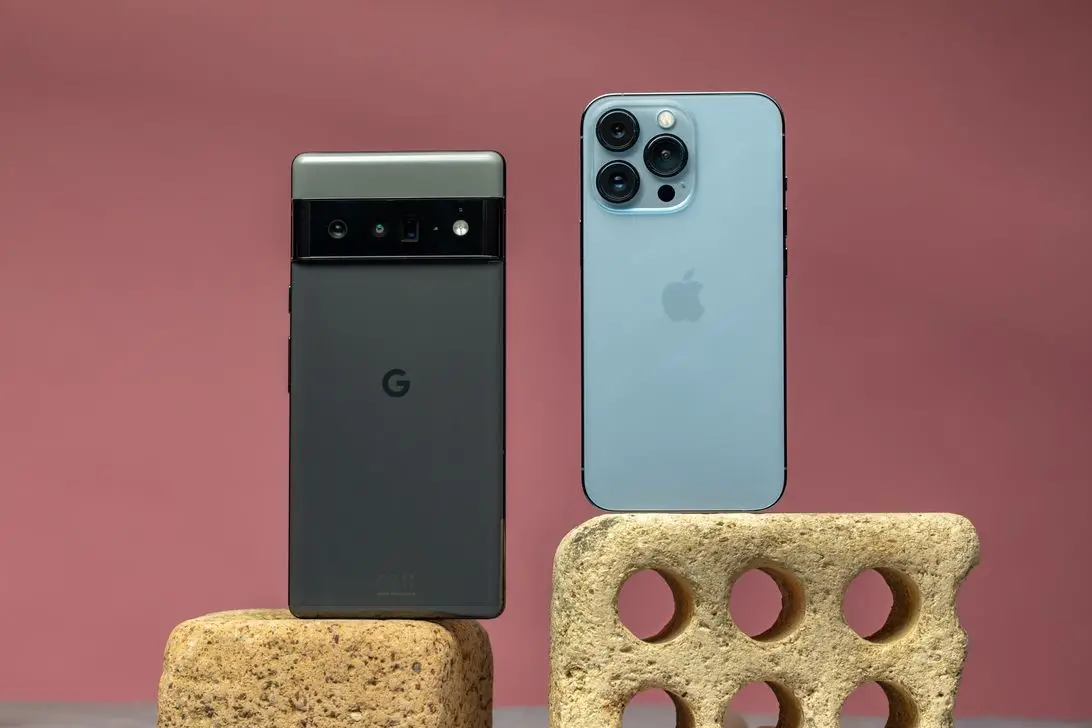

This is about the two primary terminals of Apple and Google, which are also the best representations of iOS and Android. To discover who reigns supreme, you must make a comparison.
The Pixel 6 Pro and iPhone 13 Pro Max also face off in a real-life speed test that we’ve all been waiting for. That’s because it’s the first time Apple’s most recent flagship SoC has a Google competitor.
Pixel 6 Pro vs. iPhone 13 Pro Max: Specifications
| iPhone 13 Pro Max | Google Pixel 6 Pro | |
| Dimensions | 16.08 x 7.81 x 0.76 cm | 16.39 x 7.58 x 0.89 cm |
| Weight | 238 g | 210 g |
| Screen | 6.7-inch Super Retina XDR OLED | 6.71-inch AMOLED LTPO |
| Resolution and density | 2,778 by 1,284 pixels, 458 dpi | 3,120 by 1,440 pixels, 512 dpi |
| Processor | A15 Bionic | Google Tensor |
| RAM | 6 GB | 12 GB |
| OS | iOS 15 | Android 12 |
| Storage | 128, 256, 512 GB and 1 TB | 128 and 256 GB |
| Cameras | Triple camera (12 + 12 + 12 Mp), LiDAR | Triple camera (50 + 48 + 12 Mp) |
| Battery | 28 hours of video playback | 5,000 mAh |
| Colors | Silver, Graphite, Gold and Alpine Blue | Black, White and Yellow |
| Others | Dual SIM, Dual eSIM, Face ID, IP68 water resistance 30 min at 6 meters, MagSafe, Ceramic Shield | Dual SIM with eSIM, IP68, fingerprint reader on the screen |
| Starting price | 1,259 euros | 899 euros |
Cameras
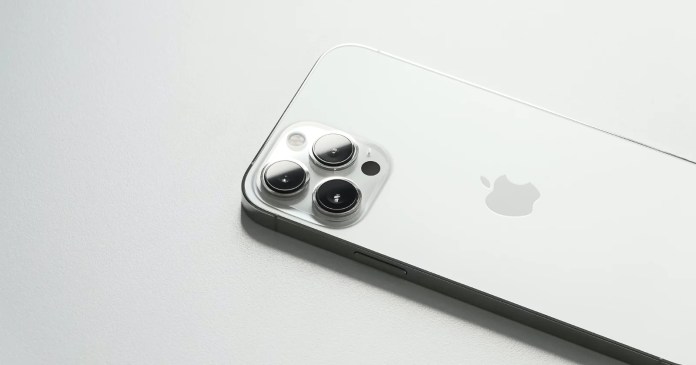
Camera quality is an essential component of a smartphone, and both iPhone and Pixel phones are frequently used as standards in this regard. Although we don’t know which is superior at this time, a photographic comparison between the two would be required; nevertheless, they appear to be quite equal.



Screen
This section, both devices are quite comparable. We’ve tested them with two different 6.7 inch OLED LTPO technology and high resolutions.
The two are able to change the refresh rate between 10 and 120 Hertz, and they’re both protected by a drop-resistant scream. The iPhone has Ceramic Shield, while the Pixel has Gorilla Glass Victus.
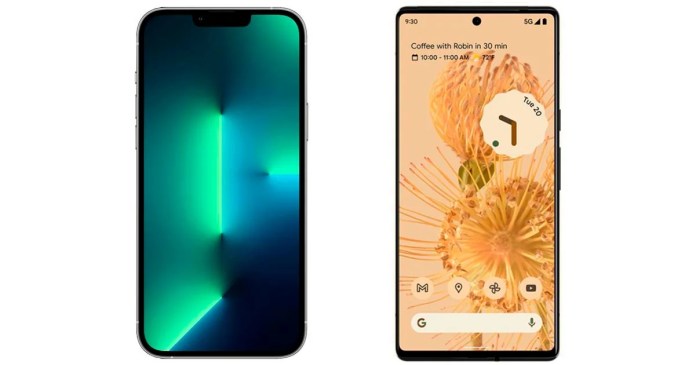
The iPhone 13 Pro Max’s display has been chosen as the best of the year, and we’ll see if the Pixel 6 Pro improves on it when properly evaluated.
Battery
We’ve arrived at one of the most difficult evaluations to do. Because the battery is so dependent on the operating system and processor, it’s not as simple to talk about capacity as it is to estimate how many hours of screen time it does each day or how long a video may be played. This data has not been provided by Google, so it is difficult to buy both terminals.
In terms of numbers, the iPhone 13 Pro Max credits a 4352 mAh battery, while the Pixel 6 Pro reaches up to 5,000 mAh.
When it comes to rapid charging, we have comparable alternatives. The iPhone 12 Pro Max is able of charging a 50 percent in 30 minutes with a 20W adapter, and we understand that it can handle up to 27W. Meanwhile, the Google Pixel 6 Pro supports fast cable charging via cables with a maximum power output of 30 watts.
Power
Google has decided to follow Apple’s lead and develop its own processors. Google now has its “Tensor” chips, like Apple has with the “A” series of iPhones. It is not an easy or simple road, but it is one that is filled with danger.
The Google Tensor chip is a 5nm octa-core processor that is up to 80% faster than the Pixel 5. It’s a processor in the mid-range that can’t compete with the A15 Bionic chip or Suns 6 cores.
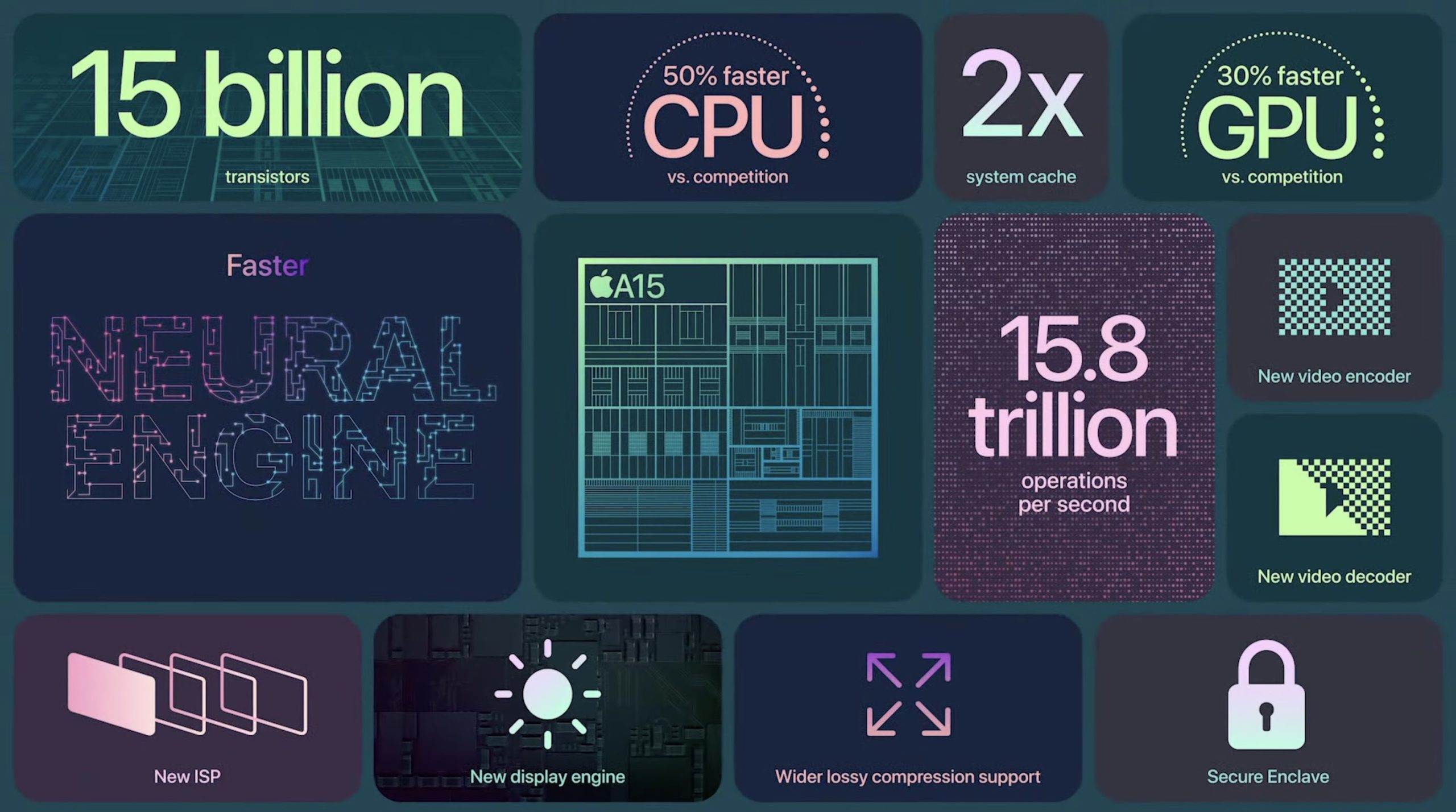
To be able to purchase them, all you have to do is pay attention to performance testing like Geekbench, which provide a numerical score. In terms of single-core and multi-core performance, this is what the data looks like:
- iPhone 13 Pro Max: 1742 and 4798 points.
- Google Pixel 6 Pro: 1052 and 2910 points.
As we can see, the A15 Bionic is far superior, both in single-core and multi-core performance.
As we see in this comparison, in terms of design, screen, and cameras, there are two devices that are very comparable. In terms of processing power, though, the iPhone 13 Pro Max plays in a different division.