
TechBriefly
  • Tech
  • Business
  • Crypto
  • Science
  • Geek
  • How to
  • About
    • About TechBriefly
    • Terms and Conditions
    • Privacy Policy
    • Contact Us
    • Languages
      • 中文 (Chinese)
      • Dansk
      • Deutsch
      • Español
      • English
      • Français
      • Nederlands
      • Italiano
      • 日本语 (Japanese)
      • 한국인 (Korean)
      • Norsk
      • Polski
      • Português
      • Pусский (Russian)
      • Suomalainen
      • Svenska
No Result
View All Result
TechBriefly
Home Science
China plans to build its own planetary radar system

China plans to build its own planetary radar system

Kerem GülenbyKerem Gülen
9 February 2021
in Science, Space
Reading Time: 2 mins read
Share on FacebookShare on Twitter

Currently, most of the asteroids that come close to the Earth are detected by optical telescopes, China has a better plan for this, they are going to build a new planetary radar system. Optical telescopes do not provide as much information as radio frequency telescopes because visible light does not provide as much information.

A team of military and government researchers in the country have urged the construction of this system. It would be the “largest radar system on the planet”. The system will use antennas in different parts of the country to monitor asteroids that could be a threat.

Only the United States has its own planetary radar system

Right now only the United States has one of these systems with the Goldstone radar in California, previously the Arecibo Observatory was also active until it ended up being blown to smithereens. Relying on the U.S. alone is not something the Chinese authorities like, as they seek independence and leadership for the country internationally in all possible areas.

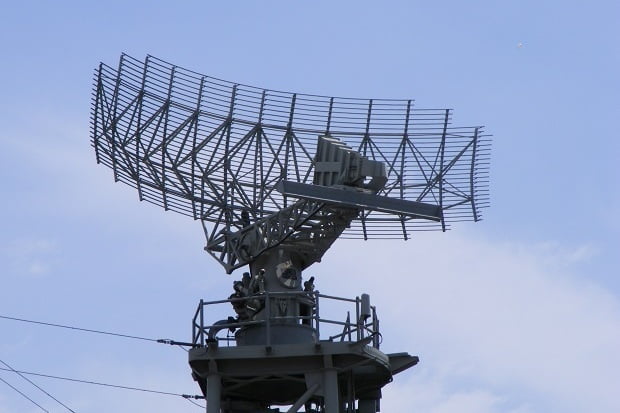
China‘s proposed system would use about four or five 35-meter-diameter radio antennas to send radio beams into space. According to the plan, the signals that will return by reflecting off objects in space will be collected by antennas deployed throughout the country. They plan to place those antennas in cities such as Jiamusi, Beijing, Tianjin, Shanghai, and Kunming.

Interference is the big problem with radio telescopes. That is why radio telescopes are usually located in deserts or far away from any human activity around them. Radio telescopes, in addition to being able to receive interfering signals from nearby devices, can affect the operation of vehicles and other devices by emitting their signals.
China plans to build its own planetary radar system

China would probably install these antennas somewhere where human activity is minimal and population density is low. The ideal candidate seems to be the Xinjiang area. On the other hand, the possibility of equipping FAST (the world’s largest radio telescope) with capabilities to function as a planetary radar was also raised, but upgrading it would be too costly.

China is becoming a superpower in space exploration

China, as the years go by, is becoming a superpower in space exploration. Recent evidence of this is its landing on the far side of the Moon, having the world’s largest radio telescope, bringing back lunar samples, or its mission to Mars that will attempt to land on the neighboring planet in a few days.


Tags: Chinaspacesystemunited statesUS
ShareTweet
Kerem Gülen

Kerem Gülen

Kerem from Turkey has an insatiable curiosity for the latest advancements in tech gadgets and a knack for innovative thinking.With 3 years of experience in editorship and a childhood dream of becoming a journalist, Kerem has always been curious about the latest tech gadgets and is constantly seeking new ways to create.As a Master's student in Strategic Communications, Kerem is eager to learn more about the ever-evolving world of technology. His primary focuses are artificial intelligence and digital inclusion, and he delves into the most current and accurate information on these topics.

Related Posts

NASA’s James Webb Space Telescope discovers PSR J2322-2650b

NASA’s James Webb Space Telescope discovers PSR J2322-2650b

19 December 2025
NASA confirms 3I/ATLAS is an interstellar visitor behaving unlike anything in our system

NASA confirms 3I/ATLAS is an interstellar visitor behaving unlike anything in our system

30 October 2025
SpaceX launches 84 Starlink satellites in five days

SpaceX launches 84 Starlink satellites in five days

27 October 2025
AI reasoning models’ carbon footprint varies greatly

AI reasoning models’ carbon footprint varies greatly

2 July 2025
Please login to join discussion

LATEST

New WhatsApp update brings 2026 stickers and video call effects

Leaker reveals Xiaomi plans for high end eSIM device in 2026

HP prepares OMEN OLED monitor reveal for CES 2026

High RAM costs from AI boom could delay next Xbox and PlayStation

LG to unveil its Gallery TV at CES 2026

Bitcoin drops 3% to $87,300 as altcoins decline

How to install mods and custom content in The Sims 2

Running Python files and fixing path errors on Windows

How to boot your PC into Command Prompt for troubleshooting

How to delete a virus using Command Prompt

TechBriefly

© 2021 TechBriefly is a Linkmedya brand.

  • Tech
  • Business
  • Science
  • Geek
  • How to
  • About
  • Privacy
  • Terms
  • Contact
  • | Network Sites |
  • Digital Report
  • LeaderGamer

Follow Us

No Result
View All Result
  • Tech
  • Business
  • Crypto
  • Science
  • Geek
  • How to
  • About
    • About TechBriefly
    • Terms and Conditions
    • Privacy Policy
    • Contact Us
    • Languages
      • 中文 (Chinese)
      • Dansk
      • Deutsch
      • Español
      • English
      • Français
      • Nederlands
      • Italiano
      • 日本语 (Japanese)
      • 한국인 (Korean)
      • Norsk
      • Polski
      • Português
      • Pусский (Russian)
      • Suomalainen
      • Svenska