
TechBriefly
  • Tech
  • Business
  • Crypto
  • Science
  • Geek
  • How to
  • About
    • About TechBriefly
    • Terms and Conditions
    • Privacy Policy
    • Contact Us
    • Languages
      • 中文 (Chinese)
      • Dansk
      • Deutsch
      • Español
      • English
      • Français
      • Nederlands
      • Italiano
      • 日本语 (Japanese)
      • 한국인 (Korean)
      • Norsk
      • Polski
      • Português
      • Pусский (Russian)
      • Suomalainen
      • Svenska
No Result
View All Result
TechBriefly
Home Science
Capella-2 satellite is capable of taking 50x50cm pictures of the Earth’s surface

Capella-2 satellite is capable of taking 50x50cm pictures of the Earth’s surface

Kerem GülenbyKerem Gülen
21 December 2020
in Science, Space
Reading Time: 2 mins read
Share on FacebookShare on Twitter

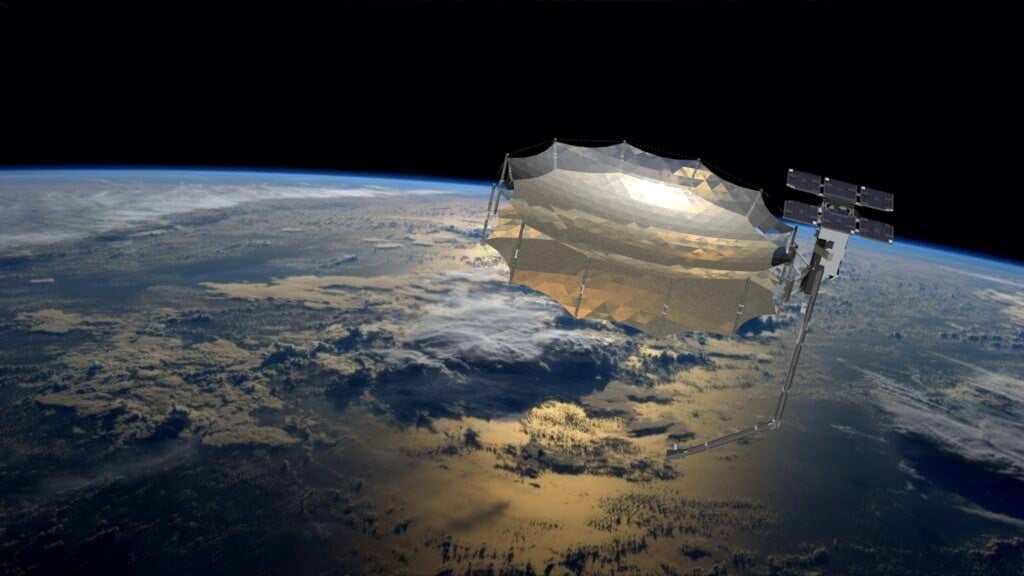
Cappella Space, a company dedicated to satellite imaging, has just put its new state-of-the-art satellite Capella-2 into orbit and it is capable of taking 50×50 cm images of the Earth’s surface. Plus, it is able to take those pictures in ridiculously high resolution. In addition, it uses unconventional technology, this way, clouds or night are no longer an obstacle to complete this task.

  • NASA begins assembling the Space Launch System
  • SpaceX successfully launches the 100th Falcon 9 mission
  • NASA certifies Crew Dragon spacecraft to fly to ISS

With only one satellite in orbit right now, the capabilities are limited to provide images quickly. However, the company plans to launch six more satellites in 2021. With them in orbit, customers (both government and private) can access a company website to purchase quality images from anywhere in the world.

Synthetic Aperture Radar (SAR)

What makes this satellite particularly interesting is undoubtedly the technology it uses to visualize what is happening on the earth’s surface. This is Synthetic Aperture Radar (SAR), a technology used by NASA for more than five decades. However, it is not as popular and accurate as Capella Space is doing right now. With this technology, Capella-2 is able to see details of the surface even at night or even when there are dense clouds in the way.

How do you get visibility then? By using radar. The SAR sends a 9.65GHz radio signal to Earth and picks up what is reflected back. As a result, the satellite details 3D images of the Earth’s surface whether it is day or night, clear or cloudy.

It should be noted that about half of the Earth is always dark. Therefore, Capella-2 automatically has more than 50% visibility than other satellites.

Which services Capella-2 offer?

Capella Space seems to have big plans with its service once it deploys all of the satellites. One of the options they say they will offer is Spotlight Mode. In this mode, they set a target on the earth’s surface and track it continuously with several satellites moving them to focus on the target.
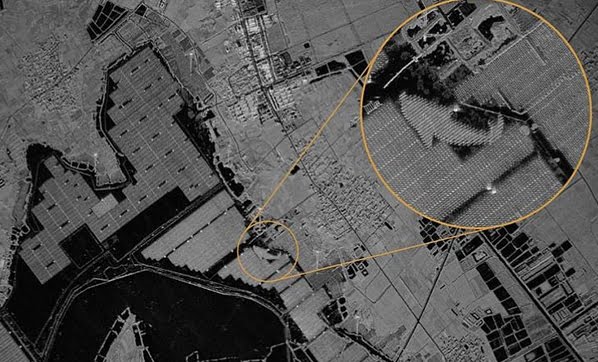
Capella-2 satellite is capable of taking 50x50 cm pictures of the Earth's surface
Capella-2 satellite is capable of taking 50×50 cm pictures of the Earth’s surface

In addition, the company offers a Capella Console, an on-demand service that will provide satellite content to anyone. The only condition is to having permission from the International Traffic in Arms Regulations. They have not disclosed any price, but having the possibility to see a picture of any part of the world detailed within half a meter, will certainly be expensive.
Tags: earthimageNASApicturesatellitesatellitesspace
ShareTweet
Kerem Gülen

Kerem Gülen

Kerem from Turkey has an insatiable curiosity for the latest advancements in tech gadgets and a knack for innovative thinking.With 3 years of experience in editorship and a childhood dream of becoming a journalist, Kerem has always been curious about the latest tech gadgets and is constantly seeking new ways to create.As a Master's student in Strategic Communications, Kerem is eager to learn more about the ever-evolving world of technology. His primary focuses are artificial intelligence and digital inclusion, and he delves into the most current and accurate information on these topics.

Related Posts

NASA’s James Webb Space Telescope discovers PSR J2322-2650b

NASA’s James Webb Space Telescope discovers PSR J2322-2650b

19 December 2025
NASA confirms 3I/ATLAS is an interstellar visitor behaving unlike anything in our system

NASA confirms 3I/ATLAS is an interstellar visitor behaving unlike anything in our system

30 October 2025
SpaceX launches 84 Starlink satellites in five days

SpaceX launches 84 Starlink satellites in five days

27 October 2025
AI reasoning models’ carbon footprint varies greatly

AI reasoning models’ carbon footprint varies greatly

2 July 2025
Please login to join discussion

LATEST

How to download free ringtones from Zedge

How to force stop apps and services on Android

Simple steps to install the latest Android patches

Paramount sues Warner Bros. over Netflix deal disclosures

Apple chose Google Gemini for Siri

Apple paid developers $550B since App Store launch

Amazon reveals 97% of shipped devices support Alexa+

Xiaomi to launch fully self-developed smartphone in 2026

New WhatsApp parental controls will block strangers

Galaxy Unpacked 2026: S26 Ultra arrives just before MWC

TechBriefly

© 2021 TechBriefly is a Linkmedya brand.

  • Tech
  • Business
  • Science
  • Geek
  • How to
  • About
  • Privacy
  • Terms
  • Contact
  • | Network Sites |
  • Digital Report
  • LeaderGamer

Follow Us

No Result
View All Result
  • Tech
  • Business
  • Crypto
  • Science
  • Geek
  • How to
  • About
    • About TechBriefly
    • Terms and Conditions
    • Privacy Policy
    • Contact Us
    • Languages
      • 中文 (Chinese)
      • Dansk
      • Deutsch
      • Español
      • English
      • Français
      • Nederlands
      • Italiano
      • 日本语 (Japanese)
      • 한국인 (Korean)
      • Norsk
      • Polski
      • Português
      • Pусский (Russian)
      • Suomalainen
      • Svenska