Advergaming is a new trend. In the wake of the pandemic, the creators of in-game advertising have discovered a market niche in the increasing number of gamers.
- Companies are betting on a lot of advertising insertion in free-to-download games.
- Gamers download more than one game a week from app stores.
- Although they prefer games with rewards, they criticize the saturation of advertising.
Despite the fact that it was frequently predicted that video game consumers would not readily accept advertisements in any form or on all channels, the reality is that download rates for free entertainment titles have increased, thus companies are hunting for every possible opportunity in certain categories, such as eSports.
Advergaming isn’t anything new; people who use digital platforms are accustomed to it. The form of advertising that video games provide, however, is a component of a collaborative strategy that continues to innovate, offering virtual rewards for downloaded titles and sensory experiences. In other words, the new advergaming of 2021 is a win-win for the partner brands.
Innovation in the pipeline
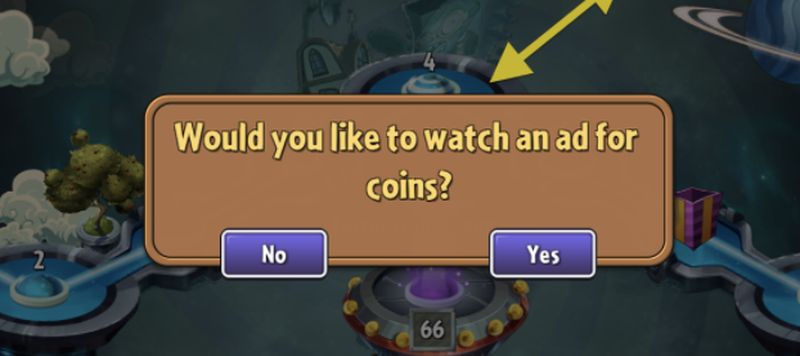
Precisely, as streaming and in-game ads are not a novelty and most users know that they must necessarily see a brand when they open an application or when they finish a game, the challenge now is to make advertising more attractive and attract the attention of consumers… but those who do pay for premium versions.
For example, the NBA 2K21 game is testing mandatory advertising insertion and, although it is only done in the United States, it seeks to measure player satisfaction, since the game is paid and both its PS4, Xbox, and PC versions have ads that must be seen in full if the gamer wants to continue.
ReignMan #NBA2K21 #XboxShare pic.twitter.com/fWu3v0BfPe
— SeattleRick206 aka “Slick Rick” (@SeattleRicky206) October 13, 2021
It also breaks stereotypes
Video gaming has already become a pillar of digital marketing, with the profile of the player shattering gender and age barriers and diversifying; an increasing number of women and adults over 30 and 40 years old are playing.
With the image of the typical geek erased, companies may now convey their offers and reach out to the appropriate sector with greater ease. They already do, but they could improve.
Marketers must do their homework before inundating the platforms, since the audience that uses them now prefers not to pay for games and accepts advertising willingly, but without much thought or attention to what they are offered, much less when it is not in their best interests.
There are ads… to ads
In 2022, in-game advertising will be a trend that will reach, yes or no, paying customers; nevertheless, this time around with less transmission time.
According to a study conducted by Toluna and Harris, video game experts, the advertisements that were most liked by 54% of respondents were those that offered rewards right from their league.
The other 50% of respondents (32 percent) preferred a more interactive advertisement than the one we’ve previously discussed; another 41% (28 percent) wanted it to include more incentives.
In the spotlight, a sector that is growing and growing
- 53 percent claim to have gambled online in the past year and without in-app purchases.
- 51 percent have kept the ad-supported gaming scheme.
- 45 percent use paid platforms, without in-app purchases.
- 25 percent are those users who make payments without in-app purchases.
- 23 percent of Internet users made their purchases in an actual way.
- 19 percent of respondents have both subscription methods.