
TechBriefly
  • Tech
  • Business
  • Crypto
  • Science
  • Geek
  • How to
  • About
    • About TechBriefly
    • Terms and Conditions
    • Privacy Policy
    • Contact Us
    • Languages
      • 中文 (Chinese)
      • Dansk
      • Deutsch
      • Español
      • English
      • Français
      • Nederlands
      • Italiano
      • 日本语 (Japanese)
      • 한국인 (Korean)
      • Norsk
      • Polski
      • Português
      • Pусский (Russian)
      • Suomalainen
      • Svenska
No Result
View All Result
TechBriefly
Home Science
This is how the Sun’s magnetic field influenced the formation of the planets

This is how the Sun’s magnetic field influenced the formation of the planets

Kerem GülenbyKerem Gülen
12 July 2021
in Science, Space
Reading Time: 3 mins read
Share on FacebookShare on Twitter

Did you know that the Sun’s magnetic field influenced the formation of the planets? The solar system has eight planets. I know that many of us are still not over the fact that Pluto is no longer classified as a planet, it is a reality that we must accept.

And think of it this way, this has left us with a very symmetrical solar system, with four rocky planets and four gaseous planets; which even have a boundary separating them called the asteroid belt.

It might seem that the four inner planets, the closest to the Sun, are completely different from each other, but they have a lot in common like a solid surface, formed mainly by silicate rocks.

Past the asteroid belt, there are the outer planets: those gas giants, which are rather made up of dense atmospheres of hydrogen, helium, and other gases.
This is how the Sun's magnetic field influenced the formation of the planets
This is how the Sun’s magnetic field influenced the formation of the planets

More and more clues are pointing to the fact that it is no coincidence that half of the planets in the solar system are so different from the other half.

The rocky planets are also called telluric or terrestrial, because of their geological resemblance to Earth.

Mercury, so small and with such extreme temperatures; Venus, a hellish place with acid clouds; Mars with its red landscapes and blue sunsets: they all have something in common with each other and with our planet.

Their composition in relation to their small size makes all terrestrial planets very dense, compared to the gaseous planets.

Not only because they have rocky silicate surfaces, but also because they have metallic cores, well-differentiated from the upper mantle.

These metallic cores mainly consist of iron, an element with magnetic properties.

The characteristics of the Earth’s iron and nickel core mean that our planet has a magnetosphere, it is an important magnetic field.

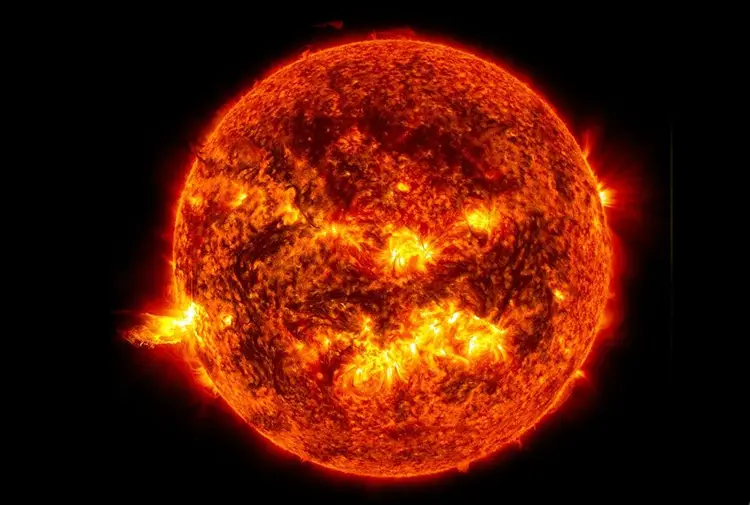
But not only planets can have magnetospheres: the Sun, our star, also generates magnetic fields, which we now know had much to do with the resulting conformation of the solar system.

Scientists proved that the Sun’s magnetic field influenced the formation of the planets

A model developed by two planetary scientists shows that the magnetic field of the young Sun had an influence on the formation and characteristics of the planets closest to it.

The researchers, William F. McDonough of the University of Maryland and Takashi Yoshizaki of Tohoku University correlated the distance to the Sun and the density of rocky planets.

The results were recently published in scientific journals.

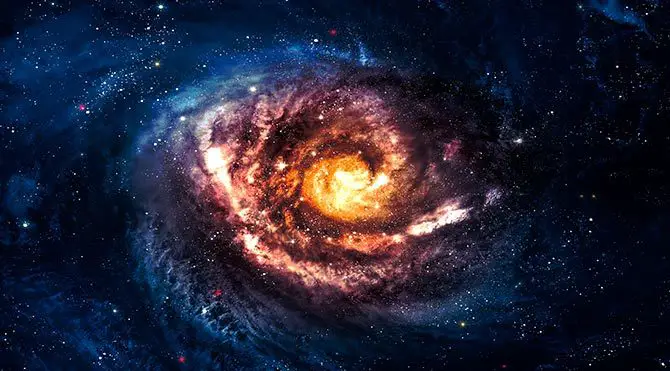
At the beginning of their lives, stars form an accretion disk around themselves.

This protoplanetary disk contains gaseous and solid materials, which revolve around the newborn star. Over time, some of these materials clump together and form planets.

McDonough and Yoshizaki’s findings show that the Sun’s magnetic field attracted magnetic materials to its vicinity.

This is how the Sun's magnetic field influenced the formation of the planets
This is how the Sun’s magnetic field influenced the formation of the planets

At first, these materials ended up colliding with the young star, but gradually as the protoplanetary disk cooled, these magnetic materials clumped together and gave rise to what would become the iron cores of rocky planets.

The model fits the characteristics of the solar system so well that it even shows the observed variations in the number of metallic materials on each planet.

The farther away the planets are from the Sun, the less metal content they have.

This gives us a better idea of how our solar system formed and can help us understand the formation of exoplanets in other stars.

But it also makes it clear that the Goldilocks zone of a solar system is undoubtedly privileged for life because of its distance from its star, not only because of the right temperatures but also because of the right magnetism.


Tags: earth
ShareTweet
Kerem Gülen

Kerem Gülen

Kerem from Turkey has an insatiable curiosity for the latest advancements in tech gadgets and a knack for innovative thinking.With 3 years of experience in editorship and a childhood dream of becoming a journalist, Kerem has always been curious about the latest tech gadgets and is constantly seeking new ways to create.As a Master's student in Strategic Communications, Kerem is eager to learn more about the ever-evolving world of technology. His primary focuses are artificial intelligence and digital inclusion, and he delves into the most current and accurate information on these topics.

Related Posts

NASA’s James Webb Space Telescope discovers PSR J2322-2650b

NASA’s James Webb Space Telescope discovers PSR J2322-2650b

19 December 2025
NASA confirms 3I/ATLAS is an interstellar visitor behaving unlike anything in our system

NASA confirms 3I/ATLAS is an interstellar visitor behaving unlike anything in our system

30 October 2025
SpaceX launches 84 Starlink satellites in five days

SpaceX launches 84 Starlink satellites in five days

27 October 2025
AI reasoning models’ carbon footprint varies greatly

AI reasoning models’ carbon footprint varies greatly

2 July 2025
Please login to join discussion

LATEST

How to choose the right reset method for Samsung Galaxy devices

What resetting end-to-end encryption does on iPhone, iPad or Mac

How to easily monitor your AT&T data usage and avoid overages

How to reset your Bosch dishwasher when buttons won’t respond

Disney+ brings TikTok-style scrolling to its streaming app

Xbox reveals lineup for next Developer Direct: Fable, Forza and more

FIFA and TikTok partner to stream live World Cup clips

YouTube updates search filters to separate Shorts from long videos

Google introduces AI Inbox to organize Gmail tasks and updates

Announcements made by Samsung Display at CES 2026

TechBriefly

© 2021 TechBriefly is a Linkmedya brand.

  • Tech
  • Business
  • Science
  • Geek
  • How to
  • About
  • Privacy
  • Terms
  • Contact
  • | Network Sites |
  • Digital Report
  • LeaderGamer

Follow Us

No Result
View All Result
  • Tech
  • Business
  • Crypto
  • Science
  • Geek
  • How to
  • About
    • About TechBriefly
    • Terms and Conditions
    • Privacy Policy
    • Contact Us
    • Languages
      • 中文 (Chinese)
      • Dansk
      • Deutsch
      • Español
      • English
      • Français
      • Nederlands
      • Italiano
      • 日本语 (Japanese)
      • 한국인 (Korean)
      • Norsk
      • Polski
      • Português
      • Pусский (Russian)
      • Suomalainen
      • Svenska