TechBriefly
  • Tech
  • Business
  • Crypto
  • Science
  • Geek
  • How to
  • About
    • About TechBriefly
    • Terms and Conditions
    • Privacy Policy
    • Contact Us
    • Languages
      • 中文 (Chinese)
      • Dansk
      • Deutsch
      • Español
      • English
      • Français
      • Nederlands
      • Italiano
      • 日本语 (Japanese)
      • 한국인 (Korean)
      • Norsk
      • Polski
      • Português
      • Pусский (Russian)
      • Suomalainen
      • Svenska
No Result
View All Result
TechBriefly
Home Tech Hardware
Intel announces Optane Memory H20 storage solution

Intel announces Optane Memory H20 storage solution

Barış SelmanbyBarış Selman
20 May 2021
in Hardware, Tech
Reading Time: 2 mins read
Share on FacebookShare on Twitter

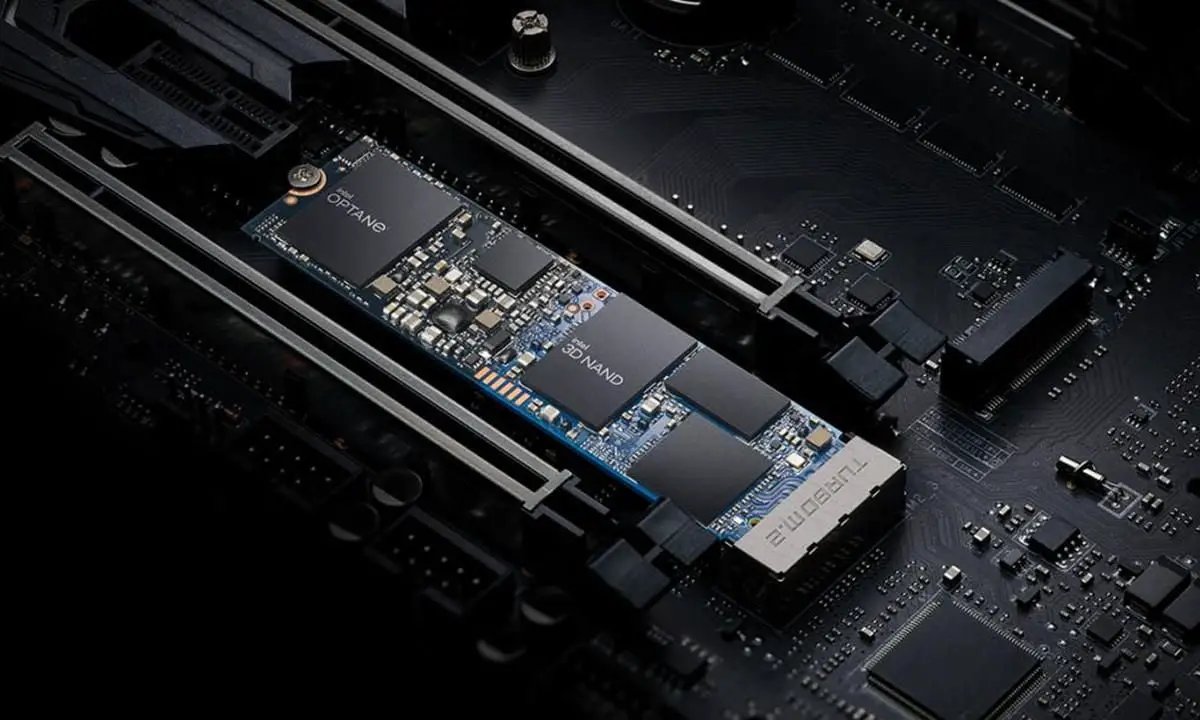
Intel Optane Memory H20 is the new version of the storage solution that combines Intel’s Optane memory technology with the storage capacity of a typical solid-state drive.

If you follow us regularly you will know that Intel developed together with memory manufacturer Micron a solution that sought to improve the performance of computers with a technology that acted as a fast cache unit between storage and memory. Although flash memory caching has been around for quite some time, Optane was intended to bring it to its full potential.

Intel marketed this solution as a single drive to accelerate performance and achieved this to a good degree in computers with hard disk drives. When SSDs took the market by storm, the natural step was to incorporate Optane into the SSD itself in a single PCIe NVMe module. Thus came to market the Intel Optane Memory H10 that we had the opportunity to review.
Intel announces Optane Memory H20 storage solution

Intel Optane Memory H20 specs

Although Intel continues to market individual drives (16 and 32GB Optane M15) to accelerate the performance of computers with SATA hard drives or SSDs, it was clear that Intel was going to follow the strategy of adding both technologies with a second-generation called H20.

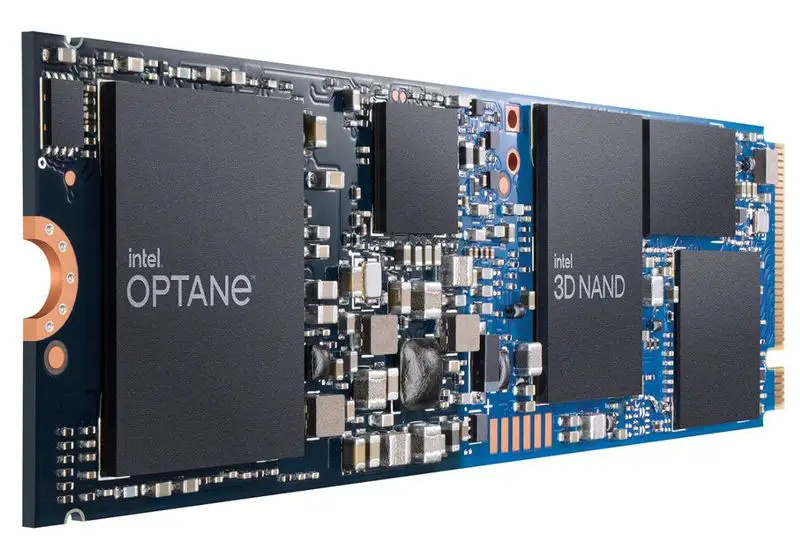
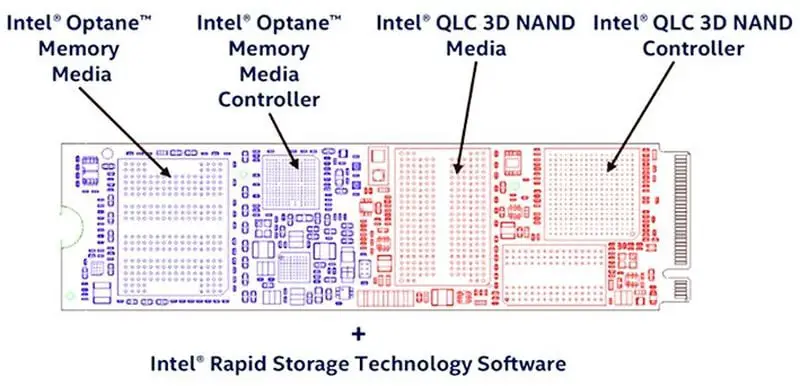
It is a standard M.2 2280 form factor module that includes four-bit-per-cell 3D NAND QLC memory for mass storage and Optane memory. All components are placed on a single side and thus allow installation in ultra-portable computers and other form factors where size matters, such as mini-PCs or “all-in-one” AIOs, which are its main destination.
Intel announces Optane Memory H20 storage solution

The drive promises sequential read and writes speeds of up to 3,300 / 2,100 Mbytes per second, the typical performance of a mid-range PCIe SSD employing the PCIe NVMe 3.0 x4 interface. Its advantage is the additional Optane cache, which is used as a high-speed, low-latency cache for the most frequently accessed data blocks, while QLC NAND is configured as the boot volume and for mass storage. The result is higher performance, especially in applications handling large data sets.

Intel Optane Memory H20 will hit the market in June in 512GB and 1TB storage capacities. Additional installed Optane memory capacity is 32GB. Intel talks about minimum durability of 185 / 370TB written and a mean time between failures of 1.6 million hours.

This solution will be released in new generation notebooks with Tiger Lake-H processors and later in mini-PCs or AIOs. Intel has not specified availability and price for retail sales and that users can use it in already commercially available equipment.

This would be of interest. We especially liked the H10 we tested when running heavy applications that handled large data sets, under other simultaneous loads, in multitasking, or with background processes. In these types of situations the fast cache offered by Optane works.

Tags: AnnounceshardwareInteltechnology
ShareTweet
Barış Selman

Barış Selman

A technology and gaming enthusiast by day, Barış is a passionate composer and black/death metal guitarist by night. He keeps his finger on the pulse of the intersection of art and technology whenever he can from his tours worldwide.

Related Posts

Anthropic launches health features for Claude

Anthropic launches health features for Claude

12 January 2026
Google removes AI Overviews from medical queries

Google removes AI Overviews from medical queries

12 January 2026
Instagram disputes Malwarebytes’ claim of massive data theft

Instagram disputes Malwarebytes’ claim of massive data theft

12 January 2026
X to open-source new recommendation algorithm in 7 days

X to open-source new recommendation algorithm in 7 days

12 January 2026
Please login to join discussion

LATEST

Simple ways to install and remove programs on Ubuntu

A guide to preventing accidental typing on Windows and Mac

Accessing your Google Chrome bookmarks

A guide to installing restricted extensions in Google Chrome

Anthropic launches health features for Claude

Google removes AI Overviews from medical queries

Instagram disputes Malwarebytes’ claim of massive data theft

X to open-source new recommendation algorithm in 7 days

How to choose the right reset method for Samsung Galaxy devices

What resetting end-to-end encryption does on iPhone, iPad or Mac

TechBriefly

© 2021 TechBriefly is a Linkmedya brand.

  • Tech
  • Business
  • Science
  • Geek
  • How to
  • About
  • Privacy
  • Terms
  • Contact
  • | Network Sites |
  • Digital Report
  • LeaderGamer

Follow Us

No Result
View All Result
  • Tech
  • Business
  • Crypto
  • Science
  • Geek
  • How to
  • About
    • About TechBriefly
    • Terms and Conditions
    • Privacy Policy
    • Contact Us
    • Languages
      • 中文 (Chinese)
      • Dansk
      • Deutsch
      • Español
      • English
      • Français
      • Nederlands
      • Italiano
      • 日本语 (Japanese)
      • 한국인 (Korean)
      • Norsk
      • Polski
      • Português
      • Pусский (Russian)
      • Suomalainen
      • Svenska