TechBriefly
  • Tech
  • Business
  • Crypto
  • Science
  • Geek
  • How to
  • About
    • About TechBriefly
    • Terms and Conditions
    • Privacy Policy
    • Contact Us
    • Languages
      • 中文 (Chinese)
      • Dansk
      • Deutsch
      • Español
      • English
      • Français
      • Nederlands
      • Italiano
      • 日本语 (Japanese)
      • 한국인 (Korean)
      • Norsk
      • Polski
      • Português
      • Pусский (Russian)
      • Suomalainen
      • Svenska
No Result
View All Result
TechBriefly
Home Tech Robotics
Scientists develop living skin for robots faces

Scientists develop living skin for robots faces

Scientists developed a self-healing living skin for robots that can repair itself and even smile, revolutionizing robotics and potentially impacting healthcare, cosmetics, and pharmaceuticals.

Barış SelmanbyBarış Selman
26 June 2024
in Robotics, Tech
Reading Time: 2 mins read
Share on FacebookShare on Twitter

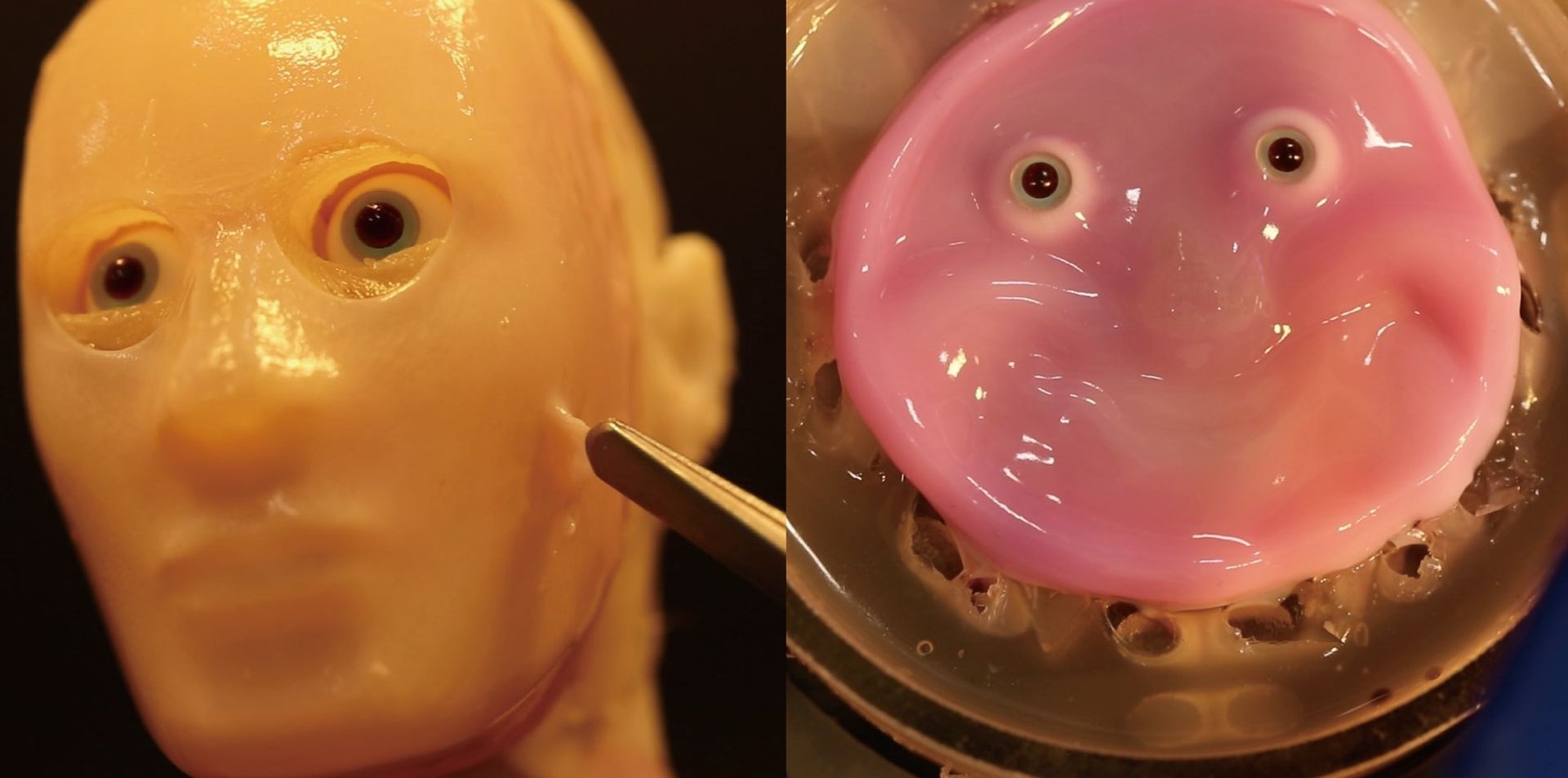
Scientists at the University of Tokyo have taken a groundbreaking step in robotics: They have developed a living skin layer that can heal itself and even smile.

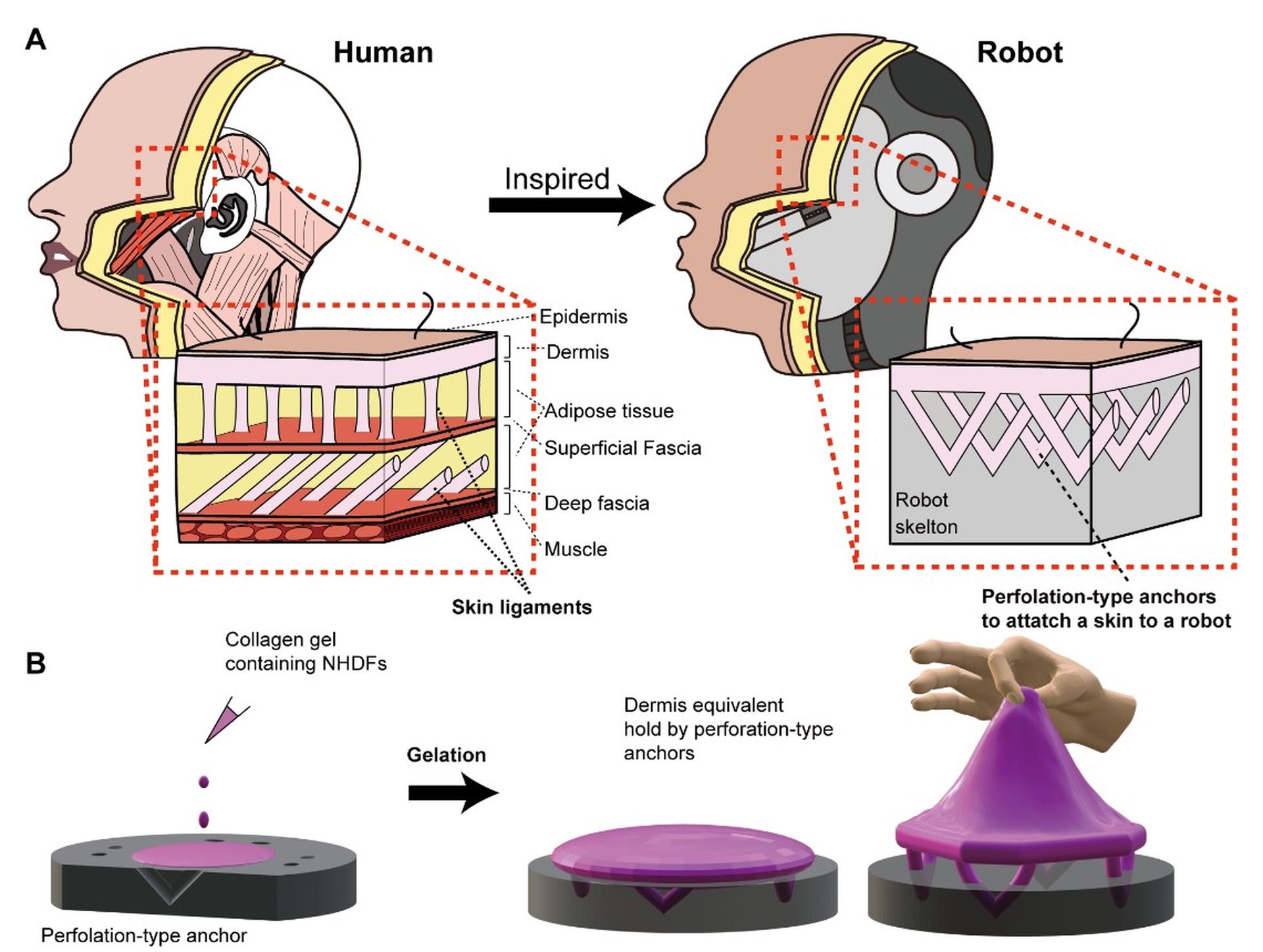
The innovative skin, obtained by replicating human skin cells on a collagen model in the laboratory, was placed on a 3D-printed resin base and successfully integrated into a robot face.

A big step towards human-like robots

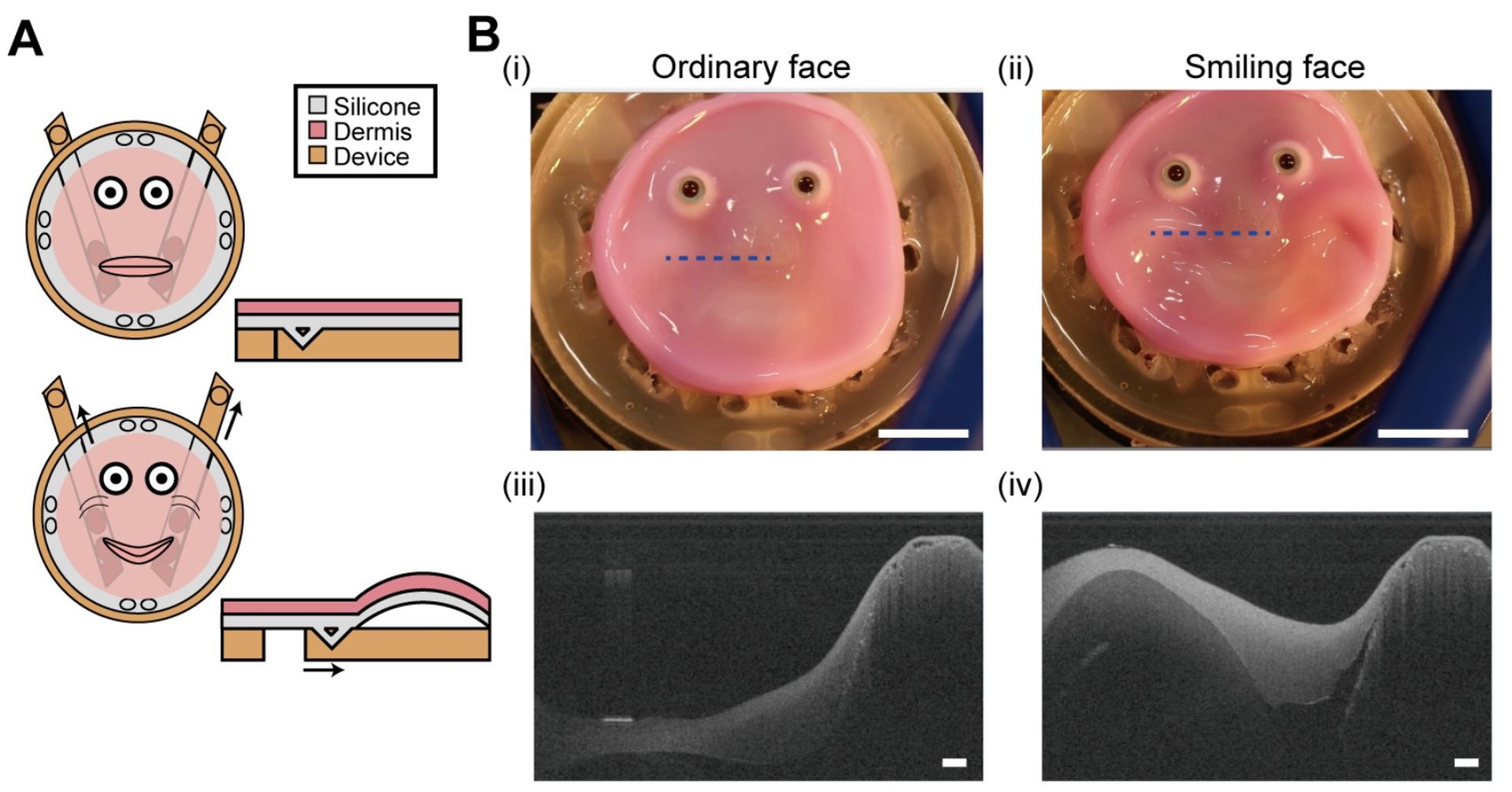
Beyond providing a lifelike appearance, living skin can repair itself when damaged, just like human skin. What’s more, it can mimic facial expressions such as smiling. This technology can potentially revolutionize healthcare, the service sector, companionship, and humanoid robots interacting closely with humans.

Professor Shoji Takeuchi, the project’s head, emphasizes that living skin will be particularly useful for robots that need human-like functions. “Skin can repair itself when damaged, similar to how human skin heals wounds. Integrating sensory functions such as touch and temperature sensing is more possible with living tissues.”
Scientists develop living skin for robots faces
The living skin was created by replicating human skin cells on a collagen model (Image credit)

Potential for the cosmetics and pharmaceutical industries

The researchers aim to create thicker, more realistic skin, including more complex skin structures such as sweat glands, sebaceous glands, pores, blood vessels, and nerves. This will allow robots to resemble humans and interact more naturally more closely.

Living skin has great potential not only in robotics but also in the cosmetics and pharmaceutical industries. Michio Kawai from Harvard University states that this technology can recreate wrinkle formation in a laboratory environment and be used to develop anti-wrinkle products.
Scientists develop living skin for robots faces
The skin can repair itself and even mimic facial expressions like smiling (Image credit)

Experts predict this groundbreaking technology could be widely used in robots interacting with humans within 10 years. This will drastically change not only the appearance of robots but also their functionality and interaction with humans. In the future, we may witness robots becoming indistinguishable from humans.

Featured image credit: The University of Tokyo

Tags: featuredRobots
ShareTweet
Barış Selman

Barış Selman

A technology and gaming enthusiast by day, Barış is a passionate composer and black/death metal guitarist by night. He keeps his finger on the pulse of the intersection of art and technology whenever he can from his tours worldwide.

Related Posts

Motorola unveils Moto Things accessories at CES 2026

Motorola unveils Moto Things accessories at CES 2026

7 January 2026
Lenovo unveils Qira AI assistant for PCs and Motorola phones

Lenovo unveils Qira AI assistant for PCs and Motorola phones

7 January 2026
iPolish unveils press-on acrylic smart nails at CES 2026

iPolish unveils press-on acrylic smart nails at CES 2026

7 January 2026
Meta unveils neural wristband expansions at CES 2026

Meta unveils neural wristband expansions at CES 2026

7 January 2026

LATEST

How to use the exit command in Windows Command Prompt

How to view your TikTok watch history

How to play the classic game of cribbage for beginners

Simple steps to create a stop-motion film using Photoshop

Motorola unveils Moto Things accessories at CES 2026

Lenovo unveils Qira AI assistant for PCs and Motorola phones

iPolish unveils press-on acrylic smart nails at CES 2026

Meta unveils neural wristband expansions at CES 2026

How to download and migrate your content from Microsoft Stream

Easy ways to make a YouTube music video with just pictures

TechBriefly

© 2021 TechBriefly is a Linkmedya brand.

  • Tech
  • Business
  • Science
  • Geek
  • How to
  • About
  • Privacy
  • Terms
  • Contact
  • | Network Sites |
  • Digital Report
  • LeaderGamer

Follow Us

No Result
View All Result
  • Tech
  • Business
  • Crypto
  • Science
  • Geek
  • How to
  • About
    • About TechBriefly
    • Terms and Conditions
    • Privacy Policy
    • Contact Us
    • Languages
      • 中文 (Chinese)
      • Dansk
      • Deutsch
      • Español
      • English
      • Français
      • Nederlands
      • Italiano
      • 日本语 (Japanese)
      • 한국인 (Korean)
      • Norsk
      • Polski
      • Português
      • Pусский (Russian)
      • Suomalainen
      • Svenska