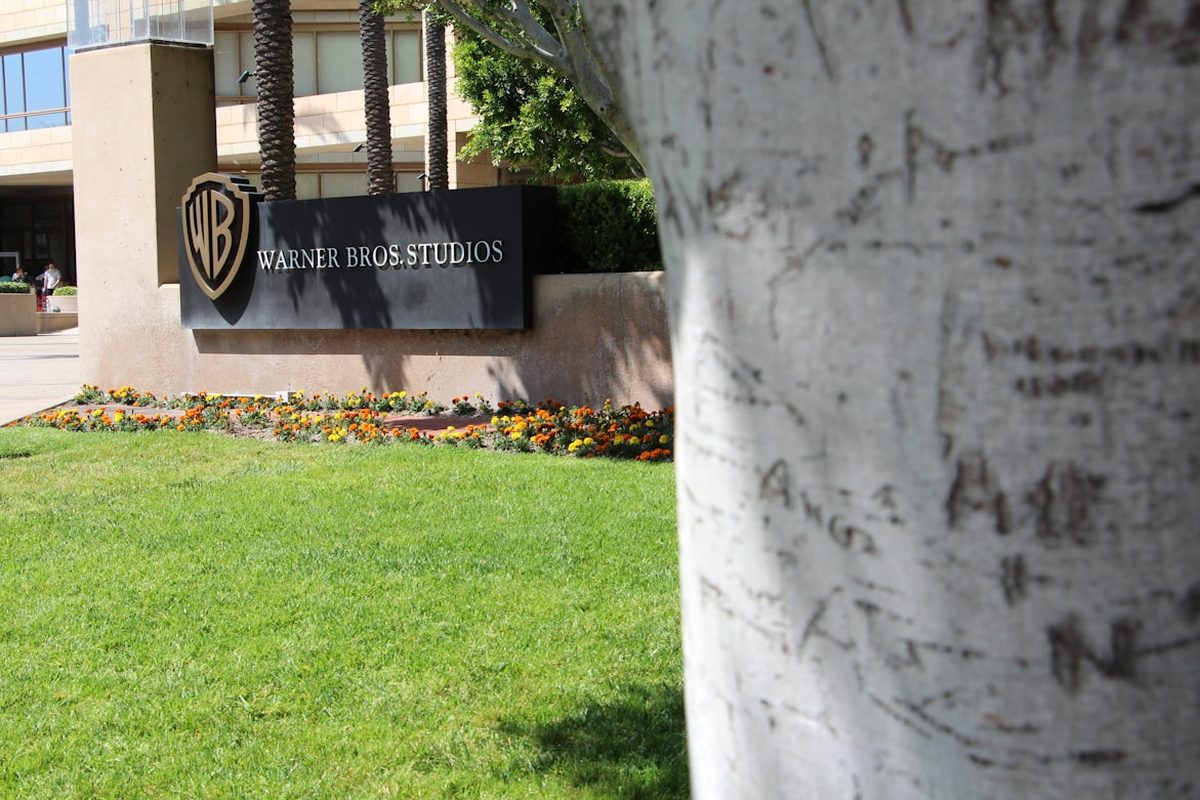

The media industry is undergoing significant consolidation, with new reports identifying Warner Bros. Discovery as a key acquisition target. The interest follows closely after Skydance Media, owned by David Ellison, completed an $8 billion acquisition of Paramount. Ellison is now reportedly interested in purchasing Warner Bros. Discovery, but he may face competition. New reports suggest that global streaming service Netflix is also considering a bid for the legacy studio’s assets.
The Netflix rumor was first reported by Dylan Byers of Puck News. Byers wrote that following news of Ellison’s interest, a “well-placed Hollywood source called to suggest to me that Netflix was also considering a bid for David Zaslav’s assets.” The report did not offer further details. Byers also noted that NBCUniversal may have explored an acquisition, with a source stating the company “spent the weekend ‘running the numbers on WBD.’” However, a source from parent company Comcast called a takeover “implausible,” especially while it was spinning off its subsidiary, Versant. The original publisher, Gizmodo, noted it had reached out to all three companies for comment.
Warner Bros. is considered a valuable asset due to its legendary status and extensive library. The studio’s recent creative output under CEO David Zaslav, however, has been described as inconsistent. The source article cited notable successes of his tenure, such as Barbie and Dune: Part Two, while also pointing to projects described as failures, including Red One and Joker: Folie à Deux. The report did observe that Zaslav’s tenure may conclude with an artistic success in Paul Thomas Anderson’s upcoming film, One Battle After Another. Based on early reviews, the article suggests the film could revive the studio’s prestige, stating it “may have brought a little bit of that 1970s magic back to WB.”
As the studio faces an uncertain future, the source article detailed distinct concerns associated with the two main rumored buyers. A potential acquisition by Netflix raised questions about the future of theatrical distribution for Warner Bros. films. The primary concern articulated was a potential strategic shift to a streaming-first model. The writer of the source article expressed a personal apprehension about this possibility, stating: “I don’t want to see his [Paul Thomas Anderson’s] next film in a commercial-laden format while doing laundry in my living room.”
Further criticism presented in the report was aimed at Netflix’s general content strategy and production quality. The author of the source material opined that the streaming platform is “mostly known for making a whole lot of garbage,” estimating its “garbage-to-gold ratio has to be somewhere in the region of 100:1.” An additional critique focused on the company’s visual style, referencing the “notorious ‘Netflix Look,’” which the article described as the “streamer’s ugly house visual style that seems to plague most of its original content.”
An acquisition by David Ellison, meanwhile, was framed as presenting a different set of concerns centered on what the article described as “visible political undertones.” These issues stem from the political activities of his father, Oracle co-founder Larry Ellison, who is reportedly a key figure in his son’s business dealings. The elder Ellison has been described as a personal “friend” of President Donald Trump. The source cited a New York Times report that after Trump’s presidential victory, Larry Ellison “appeared at Mar-a-Lago to sit in on a transition meeting.” The article also mentioned his visit to the White House as part of the Stargate Project, an AI infrastructure initiative.
These connections have led some observers to characterize David Ellison’s media acquisitions as “part and parcel of a broader ‘MAGA makeover’ happening within the media industry.” The implication of this characterization, as presented in the article, is that American media could become more conservative. The scale of the potential consolidation was also highlighted as a concern. With Skydance having already acquired Paramount, adding Warner Bros. would place a “huge percentage of Hollywood under the thumb of a guy whose dad is buddies with the president and also the one with the deep pockets.”
The article suggests that David Ellison is likely the best-positioned party to acquire the studio, citing his ample financial resources and recent history of dealmaking. Should the acquisition proceed, the report speculates that the creative direction of Warner Bros. could shift to favor content similar to Top Gun: Maverick. This style of film was characterized as “glossy, well-produced works of cinematic nationalism that eschew any sort of coherent political statement and play well with the Trump crowd.”