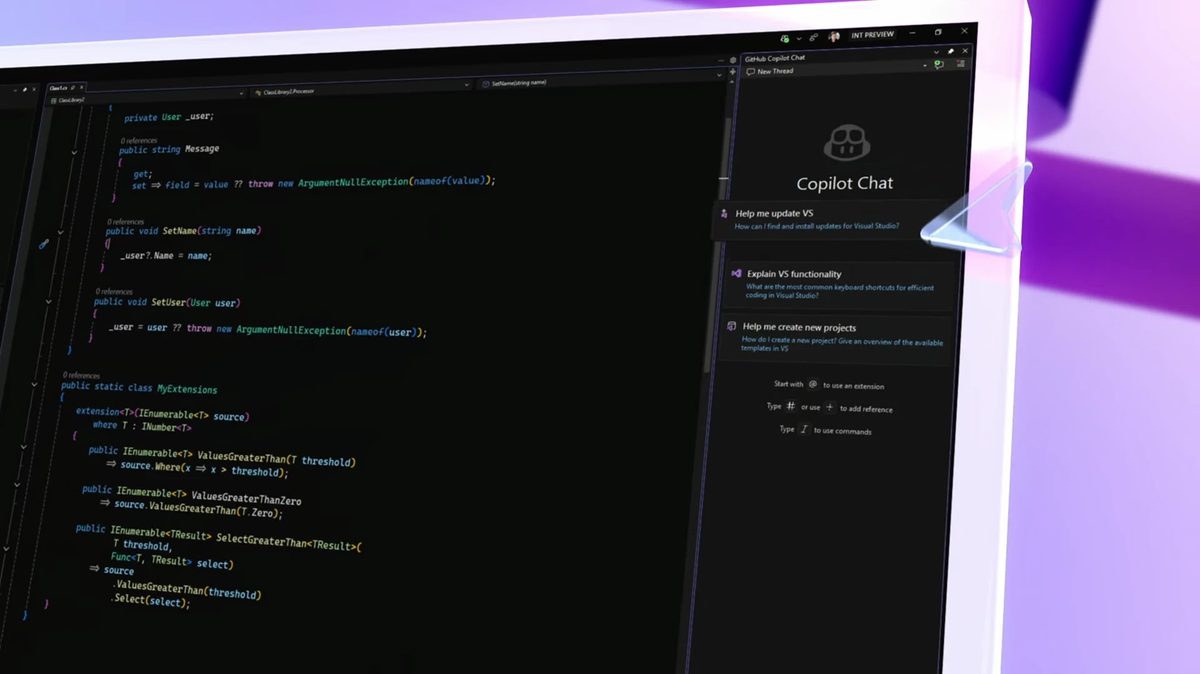

Microsoft has unveiled Visual Studio 2026, a major upgrade to its integrated development environment (IDE), emphasizing deeper artificial intelligence (AI) integration, enhanced performance, and a modernized design.
Mads Kristensen, Principal Product Manager at Microsoft, highlighted that the update incorporates AI directly into the developer workflow, introducing features like adaptive paste and the Profiler Agent, alongside a streamlined interface designed for greater focus.
Visual Studio 2026 represents the first significant upgrade since the release of Visual Studio 2022 in November 2021, marking a five-year interval between comprehensive version releases. This new edition also introduces the Insiders Channel, replacing the previous Preview program, to provide developers with early access to upcoming features. Kristensen emphasized the release’s objective to maintain developer flow by reducing friction in daily tasks and ensuring the IDE evolves in tandem with contemporary coding practices.
While Microsoft has not yet announced a specific release date, The Register suggests that general availability could coincide with the launch of .NET 10 in November.
The core design principles of Visual Studio 2026 prioritize speed, intelligence, and intuitiveness in everyday development tasks. The update encompasses improvements in performance, debugging, interface design, and expanded support for current frameworks and languages.
AI now plays a more prominent role, with GitHub Copilot integrated throughout the IDE to offer contextual suggestions, explanations, and fixes during coding. New AI-driven capabilities include adaptive paste, which tailors inserted code snippets to match project conventions, and a Profiler Agent that identifies performance bottlenecks and suggests improvements.
Copilot’s functionality extends to routine actions, such as right-click shortcuts, intelligent search corrections, and the ability to reference external URLs in chat. Developers can also integrate their own language models from providers such as Anthropic, Google, or OpenAI for customized AI support.
Performance enhancements are a key focus, with Microsoft claiming faster solution loading and tighter build loops to minimize downtime between coding and testing. Debugging improvements include inline post-return values for quicker identification of logic issues, along with a faster and more reliable Razor Hot Reload. Memory usage and overall performance for Razor and Blazor projects have been optimized to accommodate larger, more complex solutions.
Visual Studio 2026 features a refreshed Fluent UI design, offering sharper visuals, enhanced iconography, and a selection of new themes for workspace personalization. A streamlined settings system based on JSON simplifies configuration and facilitates sharing, while extension management has also been simplified, contributing to a lighter and more efficient IDE experience for extended coding sessions.
Several previously exclusive tools have been made more widely available. Code coverage, formerly limited to the Enterprise edition, is now accessible in the Community and Professional editions, enabling more developers to assess test effectiveness. Debugging capabilities have been enhanced with a search-inside-text visualizer, and GitHub integration now renders inline pull request comments with Markdown. Copilot also plays a larger role in code review, providing intelligent suggestions for potential issues before changes are committed.
Visual Studio 2026 offers full support for .NET 10 and C# 14, enabling developers to immediately utilize the latest framework and language features. The Razor editor has been revamped for improved speed and reliability, while C++ templates now default to C++20 with enhanced syntax highlighting for attributes. Simultaneously, legacy components are being phased out, with Microsoft confirming the deprecation of C++AMP, ARM32 tooling, and the /await flag.
Microsoft’s emphasis on integrating AI into Visual Studio reflects a broader industry trend. For example, Apple’s Xcode 26 Beta now supports models like GPT-5 and Claude, and introduces a redesigned tab system and workflow improvements. Other industry players are also deepening AI integration into their workflows. Anthropic’s Claude Code is introducing continuous security reviews that scan for vulnerabilities in real-time, while OpenAI’s Codex is evolving into an agent capable of generating code, writing tests, fixing bugs, and even proposing pull requests. These developments highlight the rapid emergence of AI-first development as the new standard across coding platforms.
Microsoft’s adoption of AI extends beyond Visual Studio, with its enterprise tools also undergoing significant changes as Claude gains prominence.