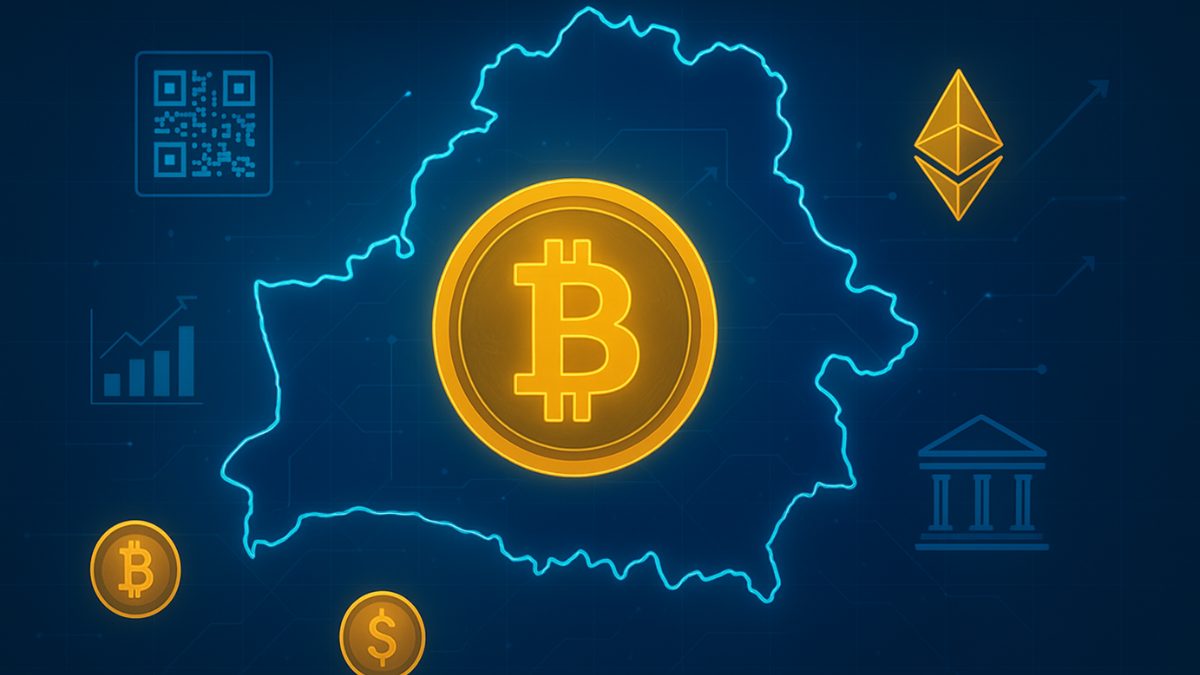

Belarusian President Alexander Lukashenko is urging the country’s banking sector to expand its use of cryptocurrencies, citing the impact of EU and US sanctions on the Belarusian economy. During a meeting with the heads of Belarus’ central and commercial banks, Lukashenko emphasized the need to increase the use of digital tokens, according to the state-owned Belarusian Telegraph Agency.
Lukashenko stated that the Belarusian economy and banking sector have faced challenges over the past five years, and he has instructed the government and the National Bank to act accordingly. This directive follows his call to lawmakers on Friday to establish transparent regulations for the cryptocurrency market, as the country’s economy has been negatively impacted by declining exports due to sanctions imposed for Belarus’s support of Russia’s invasion of Ukraine.
Cryptocurrencies have been utilized as a method for countries, including Russia and North Korea, to circumvent sanctions and facilitate trade due to their decentralized and anonymous nature.
Lukashenko highlighted the growing volume of payments processed through Belarusian crypto exchanges, projecting that they could reach $3 billion by the end of the year. “Today, cryptocurrency‑based transactions are more active than ever, and their role in facilitating payments is growing,” he said. Specifically, he noted that in the first seven months of the year, external payments through these exchanges totaled $1.7 billion. He also claimed that exchanges, including Binance, OKX and KuCoin, are on track to potentially double their external payment volumes by the end of the year.
In September of the previous year, Lukashenko signed a law prohibiting individuals from engaging in cryptocurrency trading outside of state-licensed Belarusian exchanges.
The president also advocated for increased adoption of digital payment systems, starting with QR codes, and the launch of an instant payment system by the end of the year. VTB Bank Belarus has already implemented QR code payment options linked to the ERIP online payment system.
Lukashenko stressed that Belarus’s digital strategy should prioritize biometric technologies, the creation of a dedicated IT company to reduce reliance on external providers, and the integration of artificial intelligence (AI) solutions. “Banks must try to make the most of modern technology. Digitalization is not an end in itself; it must deliver tangible economic results,” he added.
The number of cryptocurrency users in Belarus is projected to exceed 855,000 by 2026, representing approximately 9.57% of the country’s 9.1 million population, according to Statista. Belarus legalized cryptocurrency transactions in 2018, permitting the buying, selling, exchanging, and mining of digital assets.
Belarus’s stance on cryptocurrencies has been varied. In March, Lukashenko directed the energy minister to develop the country’s cryptocurrency mining industry, citing a surplus of electricity. However, in the summer of 2023, the Belarusian Ministry was considering a ban on peer-to-peer cryptocurrency transactions, such as Bitcoin.