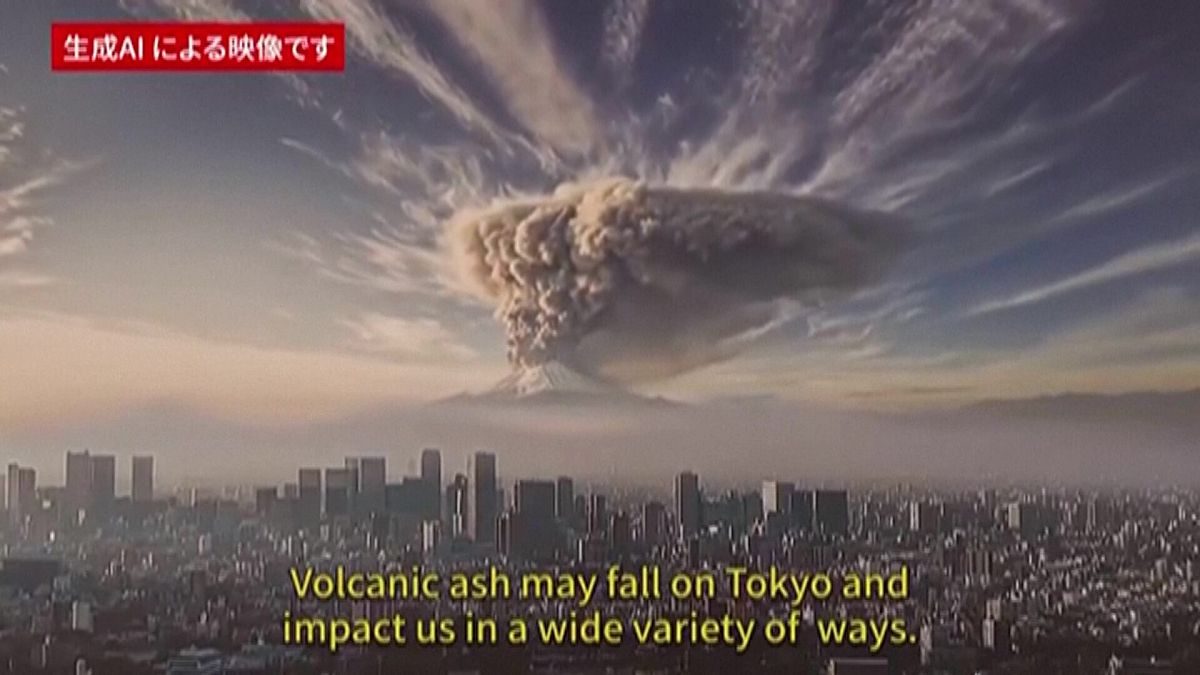

Japanese officials have released an AI-generated video simulating a potential violent eruption of Mount Fuji, aiming to raise awareness and preparedness among residents, particularly in Tokyo. The video was released on Volcanic Disaster Preparedness Day in Japan.
The simulation depicts a scenario where Tokyo is blanketed in volcanic ash within a short timeframe, potentially disrupting essential infrastructure and daily life. According to the Tokyo Metropolitan Government, volcanic ash could reach the capital in as little as one to two hours, depending on factors such as wind direction, the scale of the eruption, and weather conditions.
The video highlights the potential impact of an eruption on various aspects of life in Tokyo. It shows billboards displaying images of smoke clouds rising from Mount Fuji, accompanied by a narration warning that an eruption “may arrive without any warning.” The simulation illustrates how ash could paralyze transport links, disturb water supplies, and cause blockages and backflow in sewage and storm drain systems.
The video encourages residents to prepare for a potential disaster by stocking up on essential supplies. It depicts a family with a well-stocked pantry containing tinned food and a first-aid kit, emphasizing the importance of being equipped to cope with the aftermath of an eruption.
Japan is known for its vulnerability to natural disasters, including earthquakes, typhoons, floods, tsunamis, mudslides, and volcanic eruptions. The country has a long history of meticulous disaster planning and preparedness campaigns, which involve drills and educational activities.
Experts have noted that the video presents a “worst-case scenario,” but the events shown in the simulation are plausible. James Hickey, an associate professor in geophysics and volcanology at the University of Exeter, stated that the video is designed to “reproduce the worst-case scenario, prepare for the worst, hope for the best sort of thing.”
Volcanic ash poses several threats, including severe health risks and damage to buildings. Hickey explained that ash consists of ground-up pieces of volcanic rock that are sharp and jagged, essentially glass. This can irritate the ears, nose, and throat, especially for individuals with asthma or other respiratory illnesses. Large build-ups of volcanic ash, particularly when wet, can create a heavy, sludgy deposit on roofs, potentially causing structural damage or collapse.
Furthermore, volcanic ash can lead to airspace closures and halt railwork. While the risk of Mount Fuji erupting remains low, Hickey believes that AI simulations can help Tokyo residents better understand the potential consequences of a large eruption.
“We can’t really do much to stop the volcano from erupting. So the only way to reduce the risk from an eruption is to try and improve the resilience of people around that volcano or to reduce the things that are exposed to the volcano,” Hickey said.
Mount Fuji’s most recent large-scale eruption occurred in 1707. Because there are limited visual records of that event, AI simulations can supplement the lack of photographs or videos. Hickey stated that “We don’t have any lived memory of that eruption. We only have a painting, for example. So we can’t use specifics from Fuji to educate people about Fuji. You could show them pictures of Mount Pinatubo or Mount St Helens, but it’s hard for them to transplant that knowledge from one volcano to another.”
The Tokyo government has stated that there are currently no signs of Mount Fuji erupting. However, the release of the AI-generated video underscores the importance of preparedness and awareness in the face of potential natural disasters.