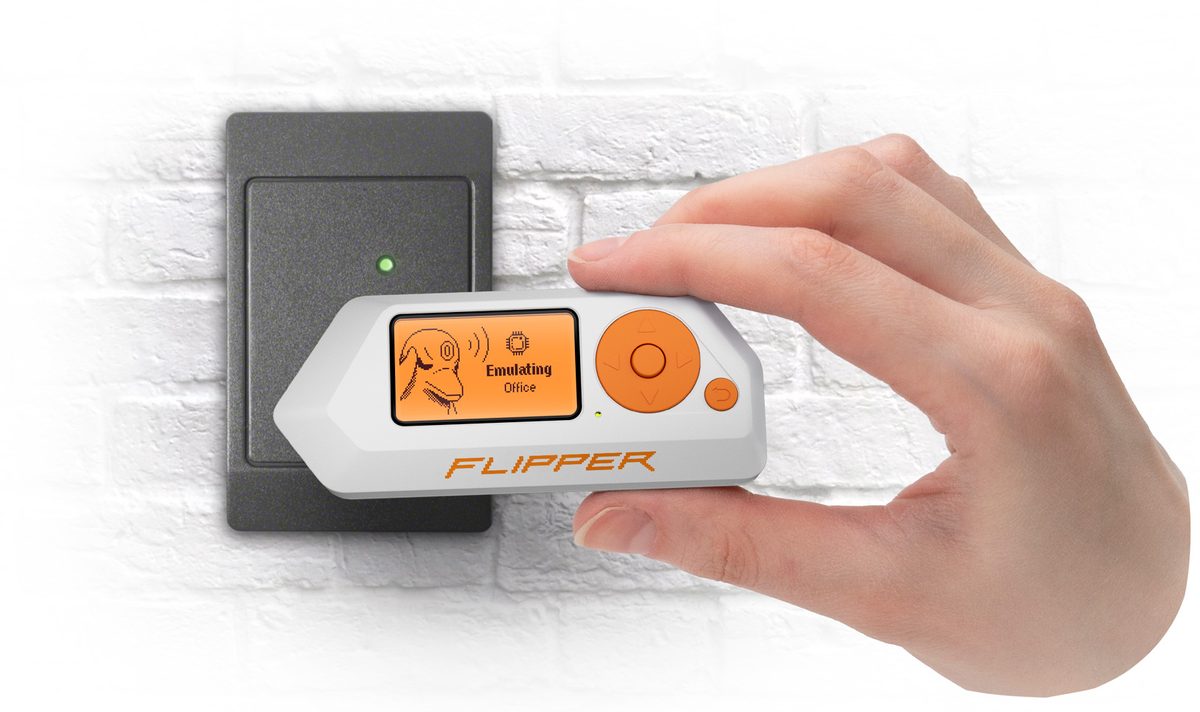

The Flipper Zero, known for its hacking capabilities disguised in a toy-like design, gained notoriety and subsequent bans from governments concerned about its security implications. The device, capable of cloning key cards and manipulating garage doors, sparked controversy and widespread attention.
Now, rumors are circulating about a new device from the same team, purportedly named the Flipper One. This new device is rumored to be a departure from its predecessor, focusing on being a pocket-sized Linux computer rather than a direct successor to the Flipper Zero.
Pavel Zhovner and the Flipper team are reportedly behind the Flipper One’s design. They have taken into account the regulatory challenges faced by the Flipper Zero. To avoid similar issues, the Flipper One is rumored to exclude the radio features that caused controversy with the Flipper Zero, such as RFID, NFC, sub-gigahertz, and infrared capabilities. Instead, it would function as a Linux-based platform with a screen and a modular design.
This modular approach could allow regulators to evaluate specific radio modules individually, similar to how apps are regulated on smartphones. Users would then have the option to add only the wireless features they need. This could potentially transform a compliance issue into a business opportunity.
The rumored engineering choices point to significant ambition. The Flipper One is expected to incorporate a dual-processor setup, balancing battery life and performance. A smaller, efficient chip would handle background tasks, while a more powerful processor manages user-facing applications. Full Linux support would enable the device to run desktop applications, and Android compatibility would grant access to a wide array of existing apps. There are also rumors about a custom Kali Linux distribution, featuring user-friendly interfaces for security tools typically requiring command-line knowledge.
Despite the internal changes, the Flipper One is expected to maintain a similar aesthetic to the Flipper Zero, featuring a landscape design and an orange backlit LCD display. The screen resolution is rumored to be 256×144 pixels, chosen specifically to accommodate a usable multilingual keyboard on the screen. The device is also expected to include eight physical buttons, a directional pad, and a small joystick.
One of the more ambitious rumors is the open-sourcing of the operating system. This would transform the Flipper One from a hardware product into a platform for pocket computers. This vision is either a stroke of genius or an unrealistic endeavor.
The cyberdeck community has been involved in similar projects for years, building custom devices that require fabrication skills. The Flipper One could potentially make this kind of technology more accessible.
The validity of these rumors remains uncertain. However, if Flipper Devices can deliver on these specifications, they could create the first commercially viable pocket computer designed for computer enthusiasts. This could be a revolutionary step or an overly ambitious project, but given the team’s history of turning controversial hacking tools into mainstream products, it may be unwise to dismiss their potential. If successful, the Flipper One could become the benchmark for portable Linux computers in the future.
In summary, the rumored Flipper One is shaping up to be a pocket-sized Linux computer with modular capabilities, designed to avoid the regulatory issues that plagued its predecessor, the Flipper Zero. It aims to provide a platform for security professionals and computer enthusiasts, potentially revolutionizing the portable computing landscape.