
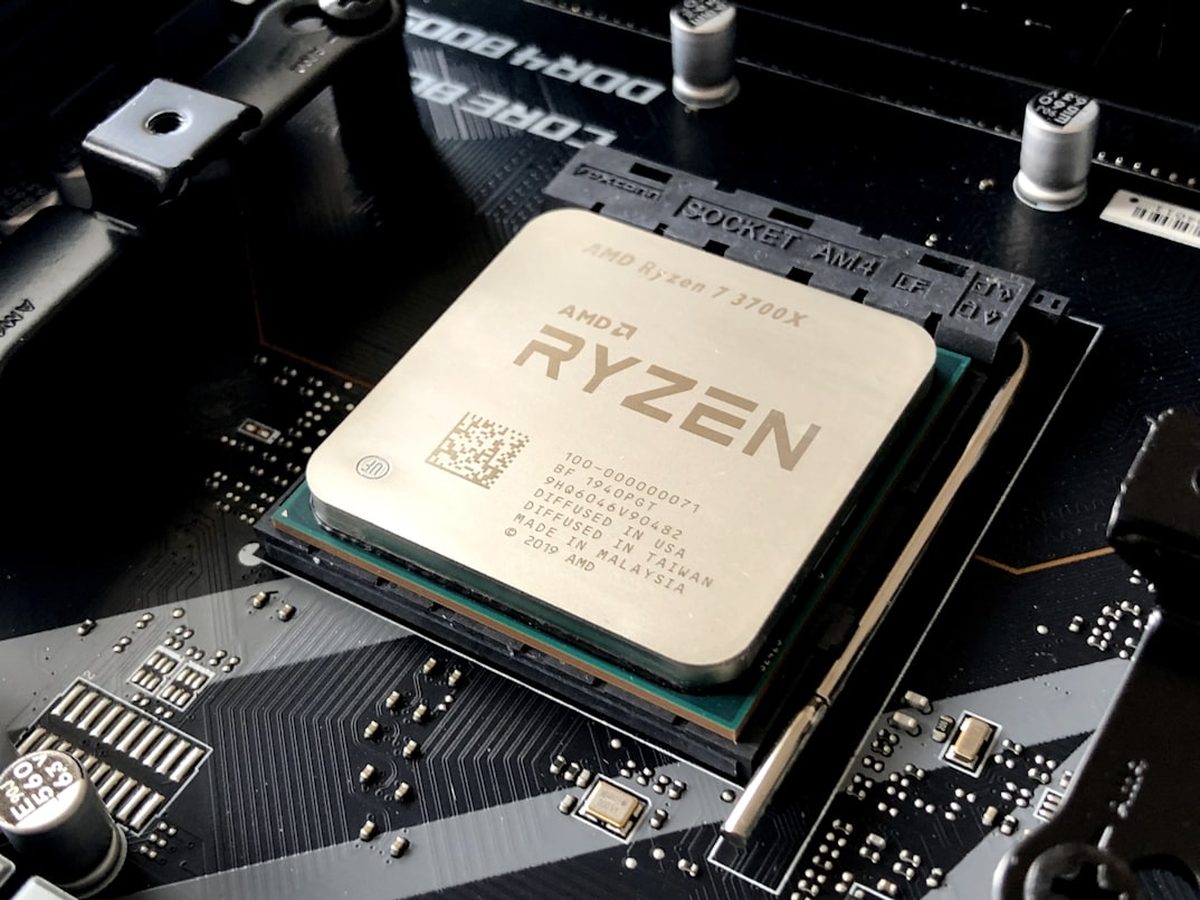

AMD is reportedly preparing to launch its latest enterprise-focused Ryzen Pro CPUs, powered by the Zen 5 architecture. This information stems from a post on X by self-proclaimed leaker @momomo_us. These new chips, while sharing similarities with the consumer-grade Ryzen 9000 (Granite Ridge) CPUs, are specifically tailored for business environments, incorporating enhanced security and management features.
Historically, Ryzen Pro chips prioritize efficiency and cost-effectiveness for various builds, typically exhibiting lower Thermal Design Power (TDP) compared to their non-Pro counterparts, even if their raw performance is slightly lower. The previous Ryzen Pro lineup, based on the Zen 4 architecture, was released approximately a year after the consumer Ryzen 7000 CPUs in 2022. That series included the Ryzen Pro 7945, 7745, and 7645, featuring 12, 8, and 6 cores, respectively. The rumored naming convention for the new Ryzen Pro chips aligns with these past releases, suggesting a consistent product segmentation strategy.
According to the leaked information, the upcoming Ryzen Pro 9000 series chips appear to be quite similar to their predecessors in terms of core specifications. Both generations are rumored to feature identical L3 cache sizes: 64 MB for the higher-end Ryzen 9 Pro chips and 32 MB for the Ryzen 7 and Ryzen 5 Pro CPUs. Furthermore, the TDP ratings are expected to remain consistent with the previous AMD Ryzen 7000 Pro models, with every chip in the lineup reportedly capping out at a 65W TDP.
When comparing specific models, the leaked data indicates some minor clock speed variations. The 12-core Ryzen 9 Pro 7945, from the previous generation, reportedly possesses a slightly higher base clock speed of 300 MHz compared to the rumored Ryzen 9 Pro 9945. For the 8-core CPUs, the Ryzen 7 Pro 9745 and Ryzen 7 Pro 7745 are said to have equal base clock speeds. Conversely, the 6-core Ryzen 5 Pro 9645 is anticipated to be 100 MHz faster than its predecessor, the Ryzen 5 Pro 7645. Boost clock speeds for the new series were not disclosed in the leak.
Despite the apparent lack of significant raw performance improvements on paper, the primary motivation for businesses to upgrade to the new Ryzen Pro 9000 series lies in the adoption of the Zen 5 architecture. Zen 5 cores are noted for a 16% improvement in Instructions Per Clock (IPC), which is expected to translate into higher overall performance even at potentially lower clock speeds. Given that Ryzen Pro chips are designed with robust security features such as AMD Memory Guard and AMD Platform Secure Boot, the integration of Zen 5 is expected to enhance these existing technologies.
A crucial anticipated advancement with the Ryzen 9000 Pro CPUs is the introduction of new and enhanced AI capabilities. Building on the improved AI features and performance seen in the consumer-grade Ryzen 9000 chips, which offer better processing for creative software and Microsoft Copilot+, this progression is seen as a natural evolution for the Ryzen Pro counterparts. The Ryzen 7000 Pro series previously introduced AI-dedicated CPUs for business computers, indicating a clear focus on AI integration. Consequently, companies looking to implement or expand AI workflows within their operations may find the Ryzen Pro 9000 processors particularly appealing.


