
TechBriefly
  • Tech
  • Business
  • Crypto
  • Science
  • Geek
  • How to
  • About
    • About TechBriefly
    • Terms and Conditions
    • Privacy Policy
    • Contact Us
    • Languages
      • 中文 (Chinese)
      • Dansk
      • Deutsch
      • Español
      • English
      • Français
      • Nederlands
      • Italiano
      • 日本语 (Japanese)
      • 한국인 (Korean)
      • Norsk
      • Polski
      • Português
      • Pусский (Russian)
      • Suomalainen
      • Svenska
No Result
View All Result
TechBriefly
Home Tech Security
New malware hides in your PC’s brain

New malware hides in your PC’s brain

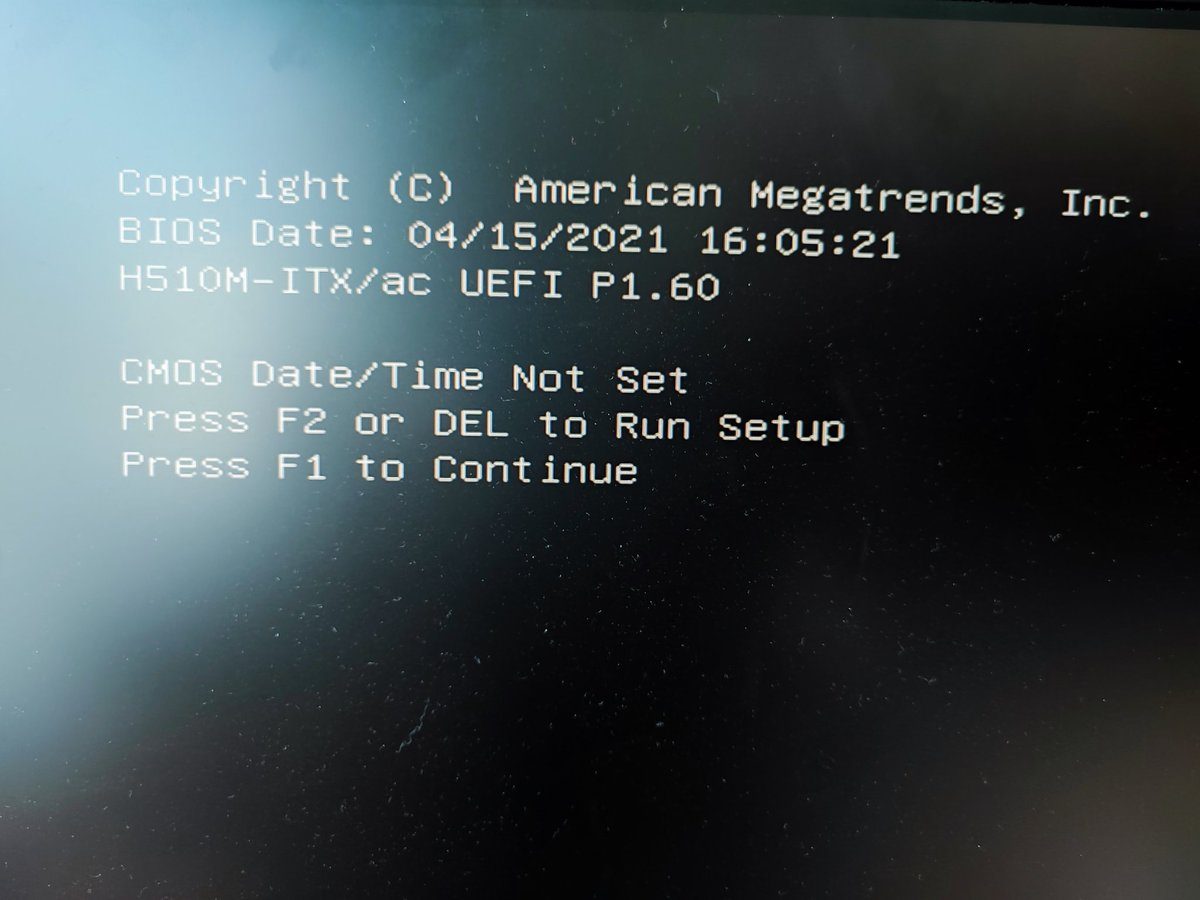
Shade BIOS fundamentally differs from conventional UEFI (Unified Extensible Firmware Interface) threats like rootkits or bootkits. While UEFI malware exploits firmware persistence to run before the OS loads, it ultimately relies on the OS to interact with hardware and execute malicious tasks—exposing it to antivirus, endpoint detection (EDR/XDR), and OS security tools.

Aytun ÇelebibyAytun Çelebi
4 August 2025
in Security, Tech
Reading Time: 2 mins read
Share on FacebookShare on Twitter

Security researchers have unveiled a novel technique called “Shade BIOS” that enables malware to operate entirely within a computer’s foundational firmware, rendering traditional security measures powerless. Kazuki Matsuo of FFRI Security will detail the method at Black Hat 2025, highlighting its unprecedented evasion capabilities by bypassing the operating system (OS) entirely.

Shade BIOS fundamentally differs from conventional UEFI (Unified Extensible Firmware Interface) threats like rootkits or bootkits. While UEFI malware exploits firmware persistence to run before the OS loads, it ultimately relies on the OS to interact with hardware and execute malicious tasks—exposing it to antivirus, endpoint detection (EDR/XDR), and OS security tools. Shade BIOS eliminates this dependency, allowing attackers to run malicious code exclusively within the BIOS environment even after the OS boots.

Historically, UEFI malware’s OS reliance creates vulnerabilities. Attackers must anticipate and disable specific security programs during startup—a complex task requiring knowledge of kernel drivers and mechanisms. Matsuo notes that no existing UEFI malware bypasses critical Windows defenses like Event Tracing for Windows (ETW). Furthermore, disabling all security tools would likely alert users. Shade BIOS circumvents these issues by operating independently, making malicious activities invisible to OS-level protections.

Technical execution

The breakthrough involves deceiving the OS loader during startup. When control shifts from BIOS to OS, UEFI typically destroys firmware resources. Shade BIOS subverts this by altering the UEFI memory map—the component detailing memory allocation. “I’m deceiving the OS loader by changing the memory map,” Matsuo explains. The manipulated map convinces the loader that BIOS regions must remain active during OS runtime, retaining BIOS functionalities in memory.

This creates a parallel, hidden environment akin to a “miniature OS” where malware operates using BIOS-specific protocols (e.g., disk I/O) instead of standard OS APIs. Malware can be written in C, leveraging BIOS drivers for tasks like file creation. Matsuo contends this approach is potentially simpler than developing traditional UEFI bootkits: “It doesn’t require binary manipulation, hooks, or pattern matching.”

Shade BIOS poses a universal threat due to UEFI standardization. Malware developed for it would function identically across PCs, servers, and motherboards—requiring no hardware-specific adaptation. Detection is exceptionally difficult, as security software cannot scan the BIOS runtime environment. The only defense is proactive, unscheduled memory dumping and analysis to identify suspicious code—even without prior suspicion of compromise.

Matsuo will demonstrate memory analysis using the open-source tool “Kraftdinner” at Black Hat 2025 to streamline detection. However, he emphasizes that Shade BIOS attacks remain niche, primarily relevant to high-security contexts: “UEFI threats are not really popular outside of national security.” The technique is most pertinent for government agencies during PC procurement inspections to uncover firmware backdoors.

This research underscores a critical evolution in offensive capabilities—malware persistence completely divorced from the OS—demanding new defensive paradigms for high-value targets.

Tags: shade BIOS
ShareTweet
Aytun Çelebi

Aytun Çelebi

Starting with coding on Commodore 64 in elementary school moving to web programming in his teenage years, Aytun has been around technology for over 30 years, and he has been a tech journalist for over 20 years now. He worked in many major Turkish outlets (newspapers, magazines, TV channels and websites) and managed some. Besides journalism, he worked as a copywriter and PR manager (for Lenovo, HP and many international brands ) in agencies. He founded his agency, Linkmedya in 2019 to execute his way of producing content. He is recently interested in AI, automation and MarTech.

Related Posts

New WhatsApp update brings 2026 stickers and video call effects

New WhatsApp update brings 2026 stickers and video call effects

30 December 2025
Leaker reveals Xiaomi plans for high end eSIM device in 2026

Leaker reveals Xiaomi plans for high end eSIM device in 2026

30 December 2025
HP prepares OMEN OLED monitor reveal for CES 2026

HP prepares OMEN OLED monitor reveal for CES 2026

30 December 2025
High RAM costs from AI boom could delay next Xbox and PlayStation

High RAM costs from AI boom could delay next Xbox and PlayStation

30 December 2025

LATEST

New WhatsApp update brings 2026 stickers and video call effects

Leaker reveals Xiaomi plans for high end eSIM device in 2026

HP prepares OMEN OLED monitor reveal for CES 2026

High RAM costs from AI boom could delay next Xbox and PlayStation

LG to unveil its Gallery TV at CES 2026

Bitcoin drops 3% to $87,300 as altcoins decline

How to install mods and custom content in The Sims 2

Running Python files and fixing path errors on Windows

How to boot your PC into Command Prompt for troubleshooting

How to delete a virus using Command Prompt

TechBriefly

© 2021 TechBriefly is a Linkmedya brand.

  • Tech
  • Business
  • Science
  • Geek
  • How to
  • About
  • Privacy
  • Terms
  • Contact
  • | Network Sites |
  • Digital Report
  • LeaderGamer

Follow Us

No Result
View All Result
  • Tech
  • Business
  • Crypto
  • Science
  • Geek
  • How to
  • About
    • About TechBriefly
    • Terms and Conditions
    • Privacy Policy
    • Contact Us
    • Languages
      • 中文 (Chinese)
      • Dansk
      • Deutsch
      • Español
      • English
      • Français
      • Nederlands
      • Italiano
      • 日本语 (Japanese)
      • 한국인 (Korean)
      • Norsk
      • Polski
      • Português
      • Pусский (Russian)
      • Suomalainen
      • Svenska