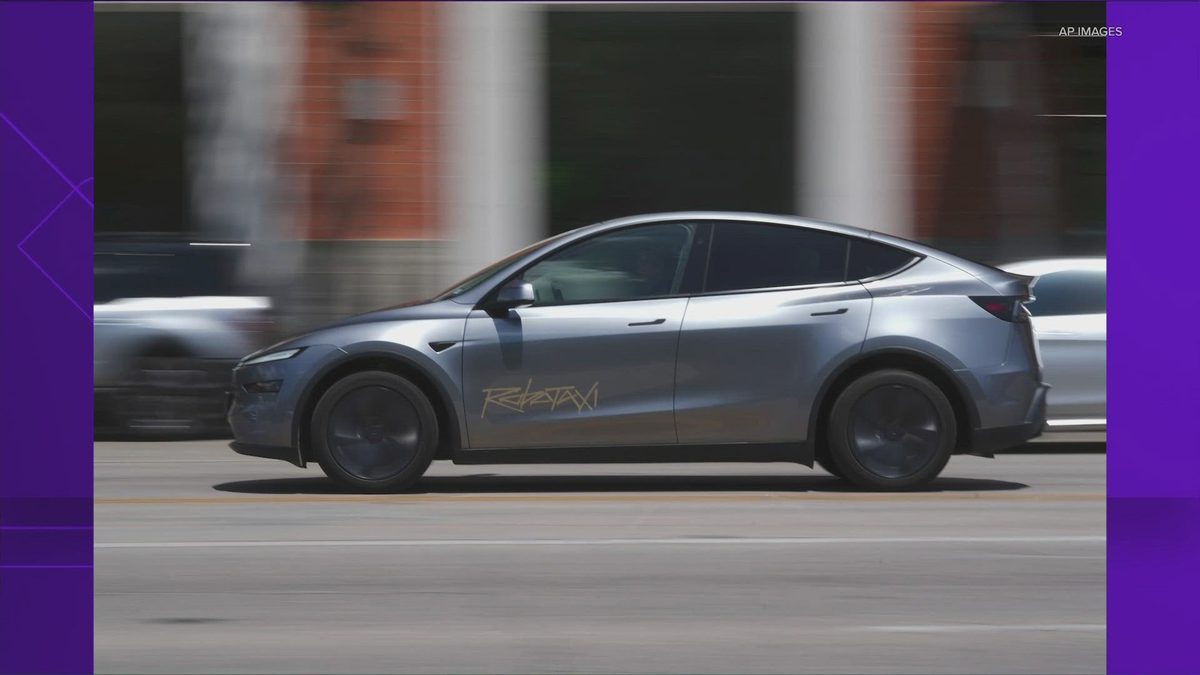

Tesla has officially launched its highly anticipated Robotaxi service in Austin, Texas, marking a significant milestone in the company’s autonomous driving ambitions. The service, which opened to the public on June 22, 2025, follows a focused beta testing phase conducted internally with Tesla employees for just over a month. This launch represents a critical step for Tesla, as the company has long touted autonomous ride-hailing as a cornerstone of its future strategy and profitability.
Currently, the Tesla Robotaxi service utilizes Tesla Model Y vehicles, which have been adapted for autonomous operation. However, the initial rollout is subject to several important caveats, indicating that the service is still in its nascent stages. For instance, the Robotaxi service is presently confined to a relatively small segment of South Austin. Furthermore, access to the service is restricted exclusively to members of an “Early Access” group, effectively making it a form of closed beta program. A crucial operational detail is the presence of a Tesla employee in the passenger seat of each autonomous vehicle. While the cars are driving themselves, this employee is on hand to monitor the ride, ensuring safety and potentially intervening if necessary. This setup highlights the ongoing development and cautious approach Tesla is taking with its autonomous technology in a public setting.
Early user experiences have been largely positive. Sawyer Merritt, a notable Tesla enthusiast, shared his multiple rides in a Tesla Robotaxi, characterizing the experience as “smooth and comfortable.” Similarly, X user Zack described his journey as “incredible,” specifically commending the “extremely smooth stops” executed by the autonomous vehicle. In a nod to popular culture, and perhaps a touch of Elon Musk’s characteristic humor, the price for all Robotaxi rides has been fixed at $4.20. This pricing choice is widely interpreted as a playful reference to cannabis culture, a recurring theme in some of Musk’s past public statements and product launches.
Concurrent with the service launch, Tesla also unveiled a dedicated Robotaxi website. The site prominently features the tagline, “Future of autonomy is coming soon,” underscoring Tesla’s long-term vision. The website also provides a glimpse into future developments, explicitly mentioning “Cybercab,” which is described as a “fully autonomous vehicle” that will eventually offer rides. The site includes a form for interested individuals to sign up for updates, although it currently offers limited additional functionality beyond this. This suggests a strategic move to build anticipation and a user base for future expansions of the service.
The operational approach of Tesla’s Robotaxi service distinguishes it from other driverless taxi services already operating or testing in Austin. Competitors like Alphabet-owned Waymo and Amazon-owned Zoox are also active in the city’s autonomous vehicle landscape. However, a key technical difference lies in their sensor suites. Waymo and Zoox vehicles are typically equipped with a range of additional sensors, including LiDAR (light detection and ranging) systems, which provide highly detailed 3D mapping of the environment. In contrast, Tesla’s Robotaxi service, utilizing standard Model Y vehicles, relies solely on cameras and Tesla’s proprietary self-driving software. This ‘vision-only’ approach has been a point of differentiation and debate within the autonomous vehicle industry, with Tesla betting on advanced artificial intelligence and neural networks to interpret camera data effectively.
Elon Musk, Tesla’s CEO, has framed the Robotaxi launch as the “culmination of a decade of hard work,” emphasizing the extensive effort invested in its development. He further highlighted that “both the AI chip and software teams were built from scratch within Tesla,” showcasing the company’s commitment to in-house innovation. Musk has consistently viewed the Robotaxi service as one of the most critical elements for Tesla’s long-term prospects, envisioning a future where both Tesla as a company and individual Tesla car owners can generate revenue by dispatching their vehicles to autonomously transport passengers. This vision of an expansive, revenue-generating autonomous fleet has been a driving force behind Tesla’s self-driving initiatives for many years.
Despite the excitement surrounding this launch, it is important to acknowledge that the full realization of Tesla’s ambitious Robotaxi vision may still be some time away. Tesla has been diligently working for years to elevate its Full Self-Driving (FSD) software to a level where its vehicles can operate autonomously in a wide array of situations. While the current Robotaxi service demonstrates significant progress, its operation within a very limited geographic area indicates that broader deployment still presents substantial challenges. The pace at which Tesla can scale its Robotaxi service to accommodate more passengers and expand into additional cities will be a crucial indicator of its future success and the ultimate impact of its autonomous technology on urban mobility.