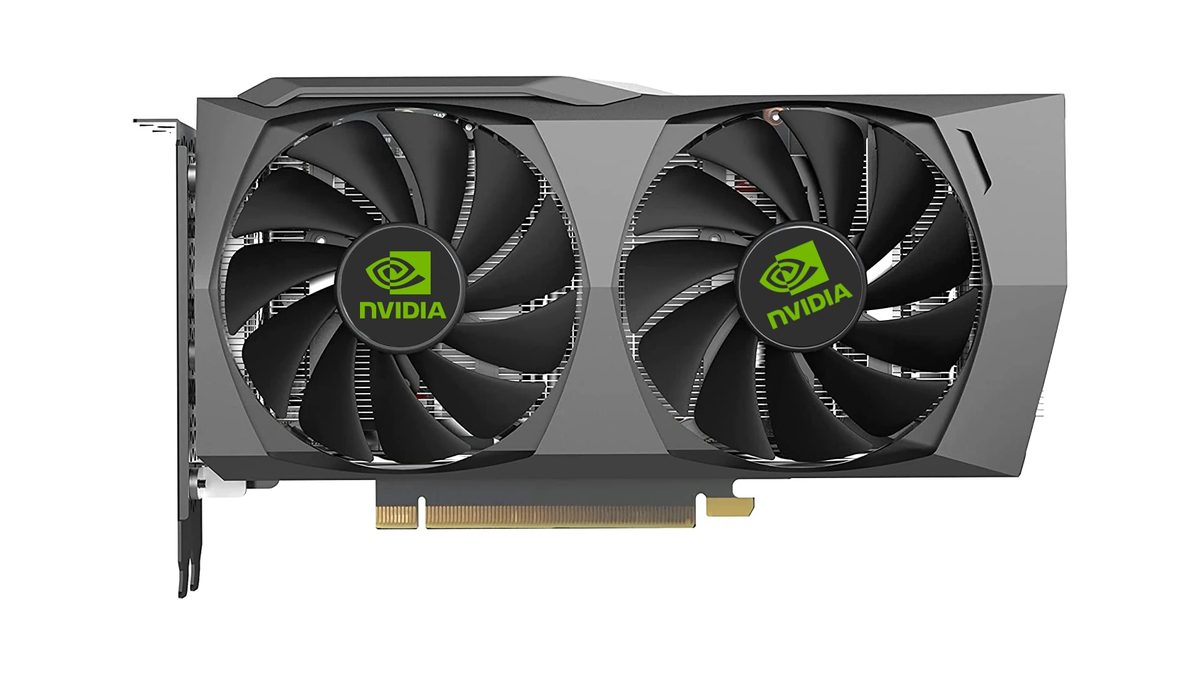

Nvidia has officially unveiled the GeForce RTX 5050, the latest addition to its 50-series graphics card lineup, positioning it as an accessible entry point for gamers and creators. This new GPU is set to launch in the second half of July 2025 with a starting price of $249, aiming to deliver next-generation performance to a broader market segment.
The RTX 5050 is built upon the cutting-edge Blackwell architecture, utilizing the new GB207 die. This architecture introduces significant advancements, including 2560 CUDA cores. To put this into perspective, this core count represents approximately two-thirds of the CUDA cores found in the RTX 5060, which was introduced earlier in April. This strategic scaling allows Nvidia to offer a diverse range of performance tiers within its new generation. Consistent with other cards in the 50-series, the RTX 5050 incorporates 5th generation Tensor cores and 4th generation RT cores. These specialized cores are crucial for leveraging advanced features such as DLSS 4 (Deep Learning Super Sampling) with multi-frame generation, which uses AI to boost frame rates and image quality, and the much-anticipated Reflex 2 technology, designed to reduce system latency for a more responsive gaming experience.
Under the hood, the RTX 5050 GPU boasts impressive clock speeds, with a base clock of 2.31GHz that can dynamically boost up to 2.57GHz. For memory, the card is equipped with 8GB of GDDR6 memory across a 128-bit interface. This makes it a notable distinction within the current 50-series lineup, as it is the only card announced so far not featuring the newer, faster GDDR7 memory standard. Connectivity options are comprehensive, including three DisplayPort 2.1b outputs and one HDMI 2.1b port, ensuring compatibility with a wide array of modern displays and high-resolution setups. Furthermore, the RTX 5050 integrates a 9th generation NVENC encoder and a 6th generation NVDEC decoder. These dedicated hardware blocks are essential for efficient video encoding and decoding, significantly improving performance for tasks such as live streaming, video editing, and media playback.
In terms of power requirements, the RTX 5050 has a power consumption of 130W. It offers flexible power input options, capable of utilizing either a single 8-pin power connector from the power supply unit or a 300W or greater PCIe Gen 5 cable, providing convenience for a variety of system configurations. Nvidia has provided performance metrics indicating a substantial improvement over previous generations. The company claims that the RTX 5050 is, on average, 60% faster in raster performance compared to the RTX 3050, a card that was released over three years ago. This significant generational leap highlights the architectural efficiencies and raw power improvements of the Blackwell platform. Moreover, preliminary assessments suggest that the performance of the RTX 5050 is generally in the ballpark of the RTX 4060, a card that launched approximately two years prior, further emphasizing its competitive positioning within the mid-range GPU market.
Unlike some of Nvidia’s higher-end offerings, the GeForce RTX 5050 will not have a Founders Edition model directly from Nvidia. Instead, the card will be exclusively available through a wide network of major board partners. This includes prominent manufacturers such as ASUS, Colorful, Gainward, Galaxy, GIGABYTE, INNO3D, MSI, Palit, PNY, and ZOTAC. This strategy ensures broad availability and allows consumers to choose from a variety of custom designs, cooling solutions, and factory overclocks offered by these partners.
In parallel with the desktop release, a mobile version of the RTX 5050 is already making its way into the market. This mobile variant began shipping immediately upon announcement and is integrated into new laptops, with prices for these devices starting from $999. This early availability in the mobile segment underscores Nvidia’s commitment to bringing its latest GPU technology to portable computing solutions, catering to a diverse range of users from casual gamers to professionals requiring powerful on-the-go performance.