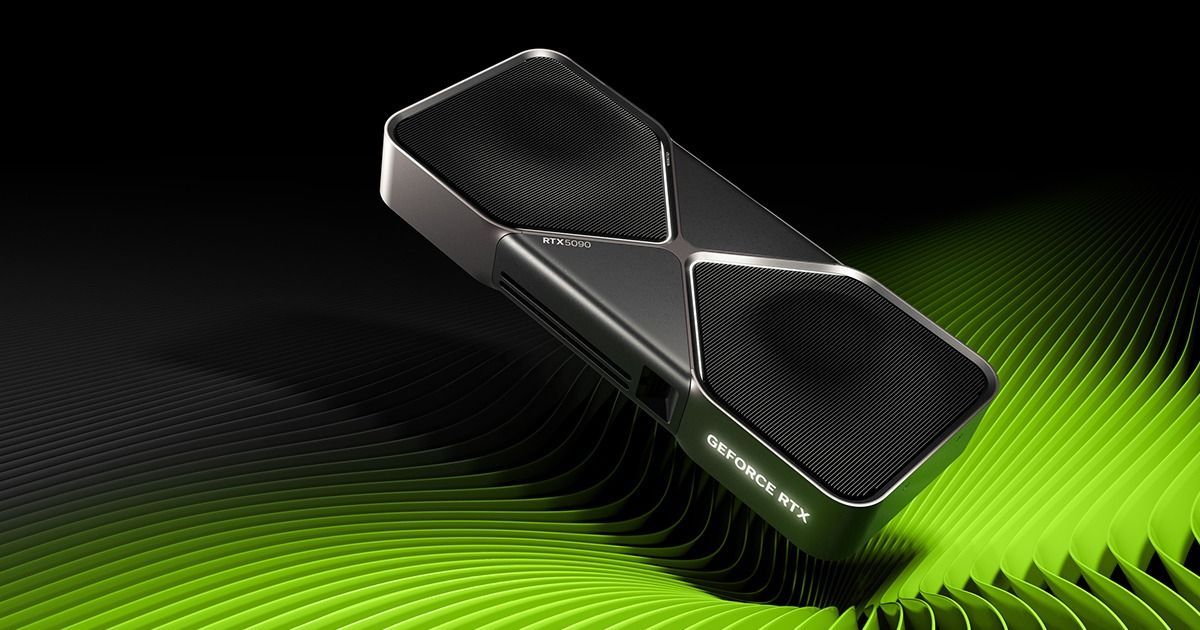

NVIDIA released the 570.86.16 beta Linux driver today, adding support for the new GeForce RTX 5080 and RTX 5090 graphics cards, alongside numerous enhancements over the previous 565 driver series.
NVIDIA 570.86.16 Beta Linux Driver Features
The NVIDIA 570.86.16 beta driver incorporates several improvements. It transitions the NVIDIA Settings control panel to utilize NVML instead of the NV-CONTROL API for fan and clock control, and supports Variable Refresh Rate (VRR) on systems with multiple displays.
Other enhancements include performance improvements for recent games, notably Indiana Jones, support for the Vulkan incremental present (VK_KHR_incremental_present) extension, and 32-bit compatibility for the NVIDIA GBM back-end. The driver also supports the systemd suspend-then-hibernate feature, offers low latency display interrupts, and accommodates updates for newer Linux kernel versions.
Notably, the new driver enables GPU overclocking by default through the NVIDIA Settings GUI, eliminating the need for the previous “CoolBits” configuration option to manually enable this feature.
Further details and downloads for the NVIDIA 570 series Linux driver beta are available on NVIDIA’s official website.
DLSS 4 Launch and Enhancements
NVIDIA also introduced DLSS 4 with Multi Frame Generation, enhancing performance in over 75 games and applications. This new version generates up to three additional frames per traditionally rendered frame, significantly boosting frame rates by up to 8X compared to traditional rendering methods.
On the GeForce RTX 5090, DLSS 4 with Multi Frame Generation enables fully ray-traced gaming at resolutions up to 4K with frame rates reaching up to 240 FPS. The upgrade also halved PC latency for more responsive gameplay and improved image quality.
DLSS 4 represents the largest upgrade to NVIDIA’s AI models since DLSS 2.0, integrating a transformer architecture that enhances image quality by improving temporal stability, reducing ghosting, and increasing detail in motion. This is applicable across DLSS Super Resolution, DLSS Ray Reconstruction, and DLAA.
The DLSS Frame Generation AI model has also been upgraded to reduce VRAM usage and boost performance on the GeForce RTX 50 and 40 series GPUs.
Game Integration of DLSS 4
DLSS 4 with Multi Frame Generation is integrated into titles including Alan Wake 2, Cyberpunk 2077, and Hogwarts Legacy, among others. The technology enhances gameplay and visual fidelity across a range of games.
For instance, in Alan Wake 2, DLSS 4 allows GeForce RTX 50 Series players to experience performance multipliers averaging 8.7X over traditional rendering while maintaining full ray tracing at frame rates up to 230 FPS. The update includes NVIDIA RTX Mega Geometry, which reduces visual anomalies and CPU/GPU load while enabling real-time updates.
Cyberpunk 2077 players can achieve up to 290 FPS at 4K with full ray tracing enabled using DLSS 4, with performance up to 460 FPS at 1920×1080. Hogwarts Legacy has also been updated, allowing players to experience up to 210 FPS under max settings with ray tracing enabled, overcoming previous performance bottlenecks.
Upcoming updates will also enhance titles like Star Wars™ Outlaws, Black Myth: Wukong, Marvel Rivals, and others with DLSS 4 technologies. DOOM: The Dark Ages is set to launch on May 15, incorporating DLSS 4.
Marvel’s Spider-Man 2 will receive DLSS 4 with Multi Frame Generation in a future update, enhancing ray-tracing effects and overall gameplay performance across supported GPUs.
Featured image credit: Nvidia