
TechBriefly
  • Tech
  • Business
  • Crypto
  • Science
  • Geek
  • How to
  • About
    • About TechBriefly
    • Terms and Conditions
    • Privacy Policy
    • Contact Us
    • Languages
      • 中文 (Chinese)
      • Dansk
      • Deutsch
      • Español
      • English
      • Français
      • Nederlands
      • Italiano
      • 日本语 (Japanese)
      • 한국인 (Korean)
      • Norsk
      • Polski
      • Português
      • Pусский (Russian)
      • Suomalainen
      • Svenska
No Result
View All Result
TechBriefly
Home How to
How do you set your gender on Google Meet?

How do you set your gender on Google Meet?

Like wearing a digital name tag, Google Meet's pronoun feature for business and edu users lets you display your preferred pronouns, making virtual meetings more comfortable for everyone.

Bünyamin Furkan DemirkayabyBünyamin Furkan Demirkaya
22 October 2024
in How to
Reading Time: 3 mins read
Share on FacebookShare on Twitter

Getting everyone’s pronouns right can be challenging when you’re on a Google Meet call. It can make you say things you weren’t sure of how others wanted to be addressed. Sharing pronouns is not easy to say — heck, verbal is not easy most of the time — and having to say it on every call can get exhausting.

Luckily, regarding pronouns in Meet, Google has a simple solution for users inside Google (Enterprise and Edu) accounts: an easy way to set and display your pronouns right next to your name. This feature works if the system administrator has turned it on; then, your pronouns would be shown in Meet, Google Chat, Calendar, and even Docs.

How do you set your pronouns on Google Meet: Is the feature available?

Before diving into this tutorial, you must ensure that your system administrator has allowed pronouns for your Google account. Google limits this option to business or edu users, so it won’t be available if you use a personal account. Visit the Pronouns Page in your account settings to see if that’s you. If it’s not enabled, you’ll get an error message, and no amount of clicking will change that.

Users with access can easily set their Google Meet pronouns. Follow these steps, and your pronouns will be visible to all in your organization or (those you choose) who are in your organization.

  • Head to your profile settings: Start by navigating to the “About Me” section in your Google Account. To do this, you visit the URL. Once there, you will see all your basic account info, like your name and profile picture. That’s where you can personalize your pronouns and more.

How do you set your gender on Google Meet
Google limits this option to business or edu users, so it won’t be available if you use a personal account
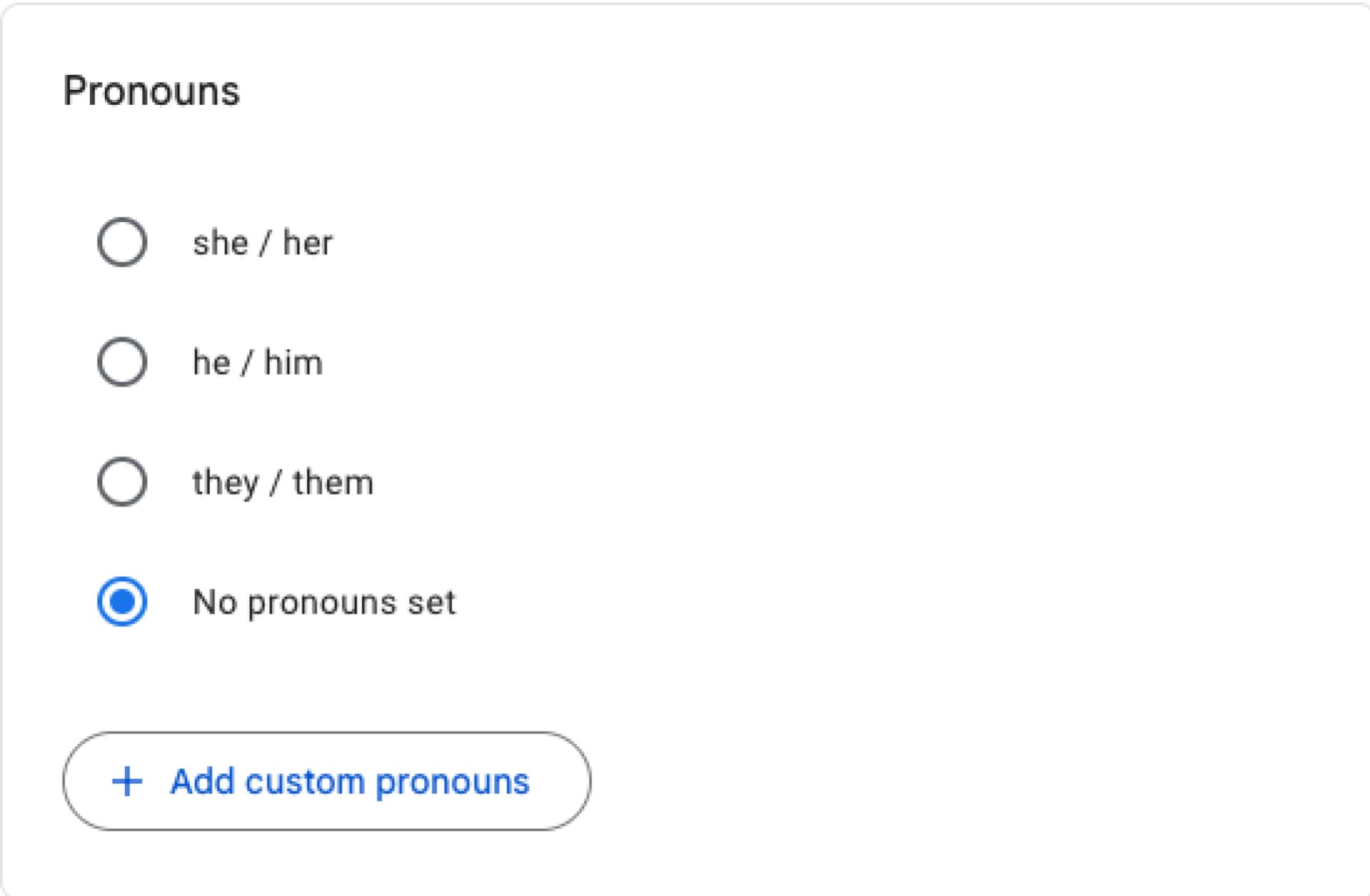
  • Select your pronouns: In the “Basic Info” box, you’ll find an option to add your pronouns. Google offers a few default selections—”she/her,” “he/him,” “they/them”—and there’s even a custom option if none of these fit. Beyond that, you have to click on the pronouns field and select whatever pronouns fit best for how you’d like to be referred. Google also reminds us about local laws, which you may not want to forget depending on where you live.
How do you set your gender on Google Meet
If you’ve set your pronouns and are not seeing them in a Google Meet call, the device you’re using might be the reason
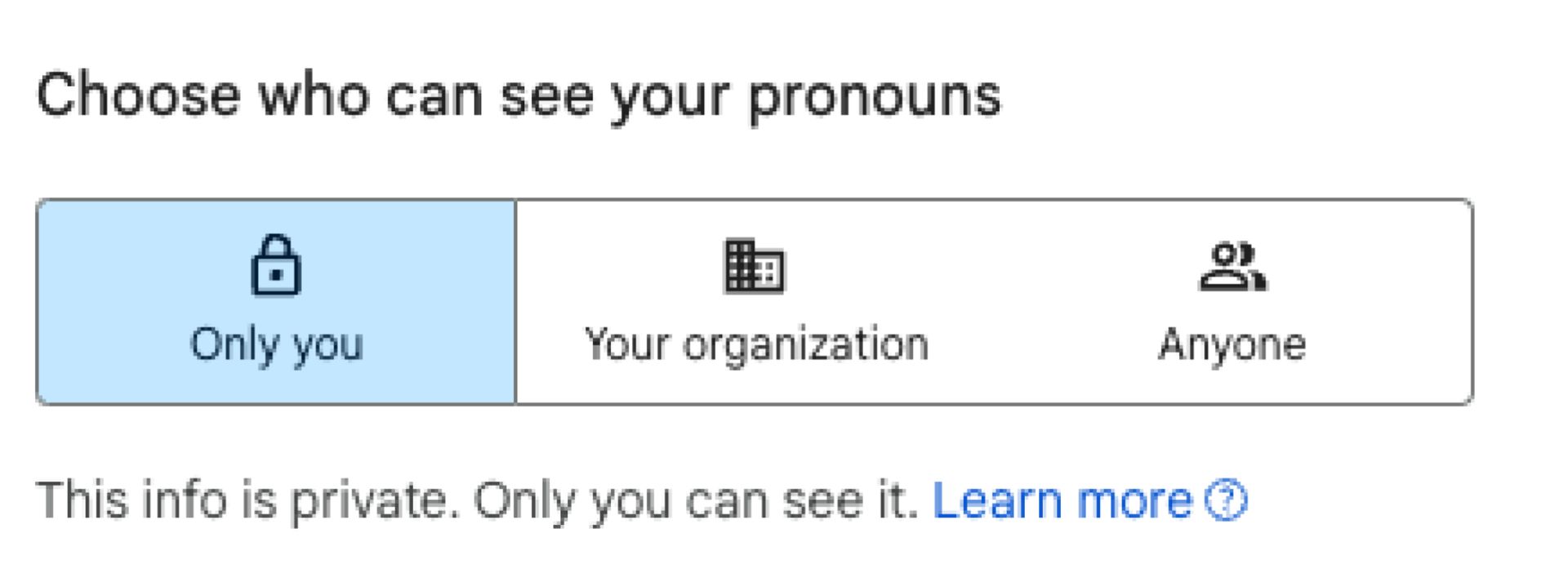
  • Decide who can see your pronouns: They don’t have to be for everyone to see them. You can decide who can see them – only you, your organization, everyone. If you want your pronouns to be visible in Google Meet calls, you must set the option to “your organization” or “anyone.” It is easier for people to know how they identify you rather than always portray it to people.
How do you set your gender on Google Meet
Google isn’t yet available for personal accounts; however, business and edu users have a simple way to make their Google experience more their own

Mobile devices may limit visibility

If you’ve set your pronouns and are not seeing them in a Google Meet call, the device you’re using might be the reason. Google Meet is only available in its web version; pronouns are not viewable. If you join from a mobile device, they won’t appear, and nobody else on the call will see them unless they use the web version of participants.

By letting your pronouns be set automatically on Google Meet, you can make it easier for everyone in your meetings to say your name correctly and skip the guesswork and awkward moments. Google isn’t yet available for personal accounts; however, business and edu users have a simple way to make their Google experience more their own.


Image credit: Furkan Demirkaya/Ideogram/Google

Tags: Googlegoogle meethow to
ShareTweet
Bünyamin Furkan Demirkaya

Bünyamin Furkan Demirkaya

Related Posts

How to download free ringtones from Zedge

How to download free ringtones from Zedge

13 January 2026
How to force stop apps and services on Android

How to force stop apps and services on Android

13 January 2026
Simple steps to install the latest Android patches

Simple steps to install the latest Android patches

13 January 2026
Simple ways to install and remove programs on Ubuntu

Simple ways to install and remove programs on Ubuntu

12 January 2026

LATEST

How to download free ringtones from Zedge

How to force stop apps and services on Android

Simple steps to install the latest Android patches

Paramount sues Warner Bros. over Netflix deal disclosures

Apple chose Google Gemini for Siri

Apple paid developers $550B since App Store launch

Amazon reveals 97% of shipped devices support Alexa+

Xiaomi to launch fully self-developed smartphone in 2026

New WhatsApp parental controls will block strangers

Galaxy Unpacked 2026: S26 Ultra arrives just before MWC

TechBriefly

© 2021 TechBriefly is a Linkmedya brand.

  • Tech
  • Business
  • Science
  • Geek
  • How to
  • About
  • Privacy
  • Terms
  • Contact
  • | Network Sites |
  • Digital Report
  • LeaderGamer

Follow Us

No Result
View All Result
  • Tech
  • Business
  • Crypto
  • Science
  • Geek
  • How to
  • About
    • About TechBriefly
    • Terms and Conditions
    • Privacy Policy
    • Contact Us
    • Languages
      • 中文 (Chinese)
      • Dansk
      • Deutsch
      • Español
      • English
      • Français
      • Nederlands
      • Italiano
      • 日本语 (Japanese)
      • 한국인 (Korean)
      • Norsk
      • Polski
      • Português
      • Pусский (Russian)
      • Suomalainen
      • Svenska