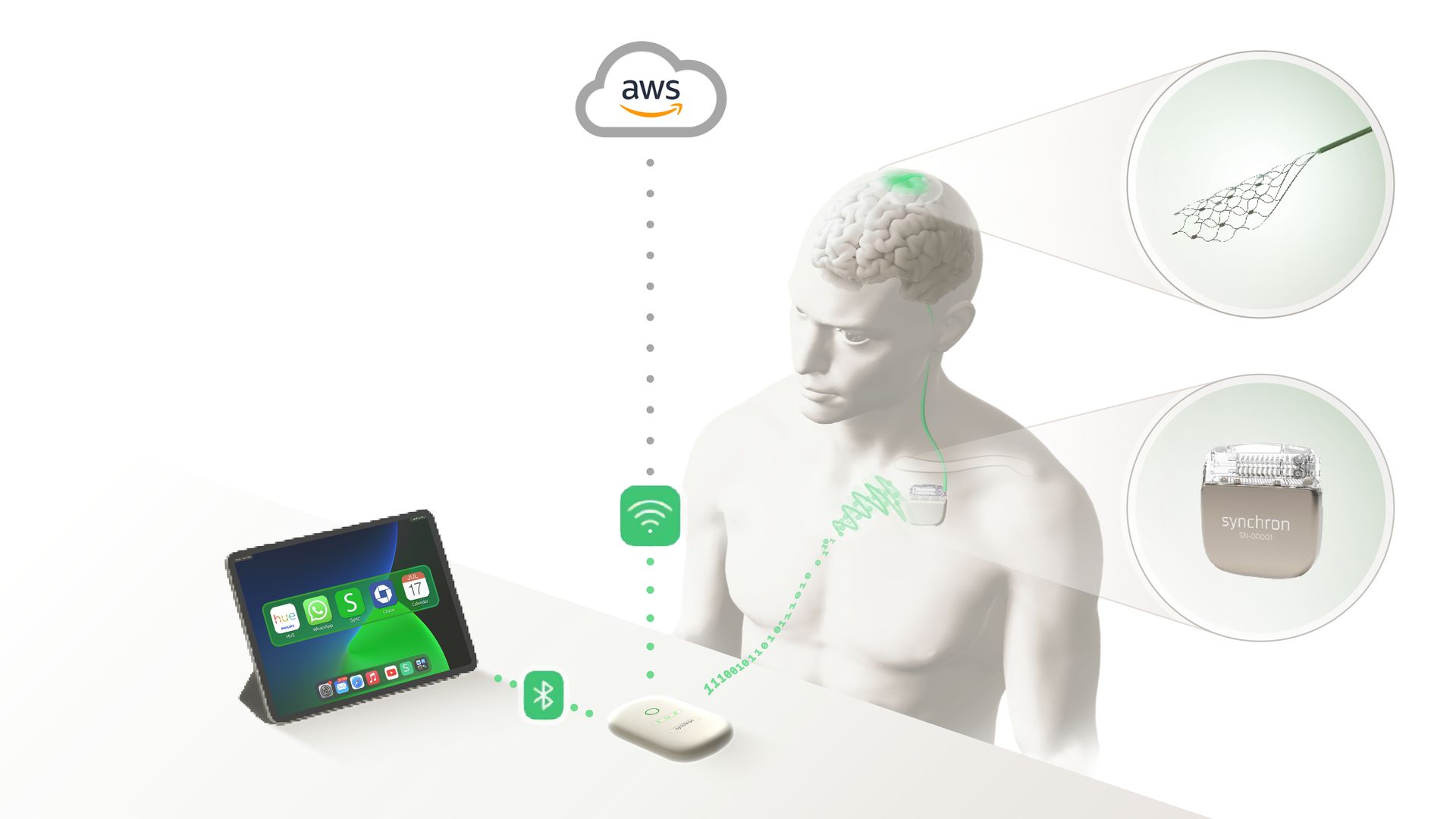

Seriously groundbreaking feature, Amazon’s Alexa can now be controlled by thought alone. This innovation is made possible by Synchron, a neurotechnology company working to improve accessibility for people with limited mobility. Thanks to a brain implant, users can interact with the entire Amazon smart home ecosystem without speaking or touching a device.
It marks a major shift in the way people interact with smart home technology. Because it opens up new possibilities for those with disabilities. In a recent demonstration, an ALS patient was shown using the implant to control Alexa and manage tasks such as turning off lights, controlling security cameras, and controlling a Fire TV – all by simply guiding a cursor with his mind.
How does Alexa work with thought power?
Synchron’s brain implant technology bypasses the need for traditional inputs such as voice or touch. Instead, it sends signals directly from the brain to control devices. In the case of Alexa, the implant allows users to interact with the system by controlling the cursor on a tablet. For example, a patient using the “Tap to Alexa” option can turn off a lamp just by thinking of the action.
This technology is particularly useful for people with conditions such as ALS, who may lose the ability to speak or use their limbs. The implant, which does not require invasive surgery, is inserted into the carotid artery, where it sends signals to blood vessels on the surface of the brain. This non-invasive approach sets Synchron apart from other companies working on brain-computer interfaces (BCI), such as Elon Musk’s Neuralink, which involves more complex surgical procedures.
Expanding access to the smart home
The ability to control Alexa is just one aspect of this technology’s wider potential. The same patient in the demonstration was also able to access Blink security cameras, make video calls, and fully operate a Fire TV. In short, in a fully automated home, you can have full control of the house with an implant in your body. Let’s take an example from smart home appliances. The power of controlling robot vacuums or smart white goods with your thoughts is like being in a game. While the patient in the test could have performed these actions using voice commands, the real value lies in the potential to assist individuals who are unable to speak or move.

Synchron’s expanding vision
Currently, Synchron’s brain-computer interface is being tested in six patients in the US. The company is actively exploring further collaborations to integrate this technology with more smart devices and services. According to Synchron CEO Thomas Oxley, the company is already in talks with other companies to expand the implant’s applications.
Synchron’s BCI promises to change the way individuals with severe movement disorders interact with technology. By eliminating the need for voice or touch, it has the potential to transform accessibility across a range of digital platforms.
And this could extend not just to individuals with disabilities, but to humanity as a whole. While it’s a very expensive technology at the moment, let’s imagine that in the future the implant will be available without the need for surgical intervention. This is where science fiction movies start to come true.
Image credits: Synchron